

























































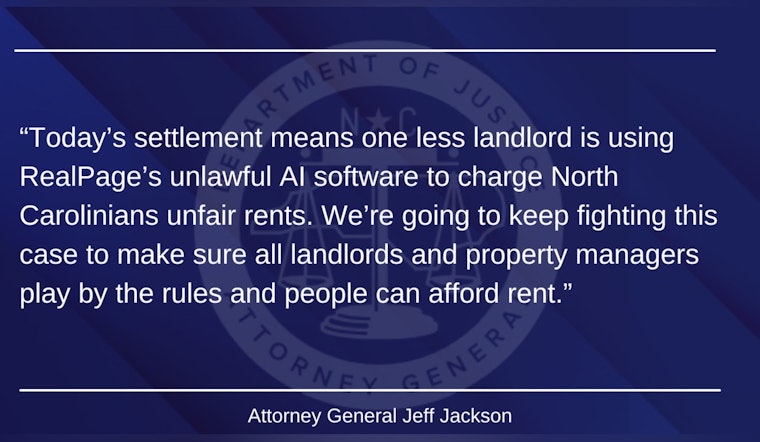
Two major corporate landlords with properties across the Charlotte area have agreed to stop using RealPage’s rent‑setting software in North Carolina, Attorney General Jeff Jackson announced. The decision is the latest in a growing wave of state and federal crackdowns on algorithm‑driven pricing that prosecutors say helped push rents higher than they should have been.
Jackson said the new settlements bar the companies from using RealPage to set rents anywhere in North Carolina and will directly affect Charlotte‑area renters. As reported by Queen City News, Jackson added on social media, “we’ve got four more to go and then RealPage itself.”
The deals follow earlier resolutions with two of the state’s biggest property managers. The N.C. Attorney General’s Office announced a $7 million settlement with the state’s largest landlord in November 2025, according to the N.C. Department of Justice, and an April 2025 agreement with another large operator that bans the use of nonpublic competitor data to set rents, per a separate release from the N.C. Department of Justice.
Those state cases stack on top of a headline‑grabbing federal move: the U.S. Department of Justice sued RealPage in 2024 and later negotiated limits on the company’s revenue‑management tools. Reporting by the AP notes that the federal terms include restrictions on the use of real‑time data and added oversight of how the software operates.
What It Means for Charlotte Renters
According to state filings and local reporting, the alleged conduct touched roughly a third of one‑ and two‑bedroom apartments in the Raleigh, Durham‑Chapel Hill, and Charlotte metros, and the landlords named in the suits manage more than 70,000 units statewide. That is a lot of leverage sitting in one software system.
Local coverage points out that blocking more landlords from using the algorithm could bring back rent discounts and concessions that have been drying up in recent years. That shift could ease at least some pressure on Charlotte tenants, according to Spectrum News.
Legal Fallout and What’s Next
The state cases are civil antitrust actions that seek court‑ordered restrictions, ongoing oversight, and enforcement powers if companies violate their consent terms. At the federal level, prosecutors describe RealPage’s system as a way for competing landlords to share sensitive pricing information, and filings outline remedies such as an independent monitor and tight limits on how data can be used, according to the U.S. Department of Justice and related court documents.
Jackson has signaled he is prepared to take RealPage to trial if he cannot secure a settlement he considers fair, local reporting notes. For now, judges still have to sign off on proposed consent judgments and monitoring plans, and prosecutors could bring more companies into the fold or end up in courtroom fights if landlords push back.
For renters across Charlotte, the real‑world impact will hinge on how aggressively courts enforce these new rules and how many more landlords ultimately agree to similar limits, according to federal filings and local coverage.




