

























































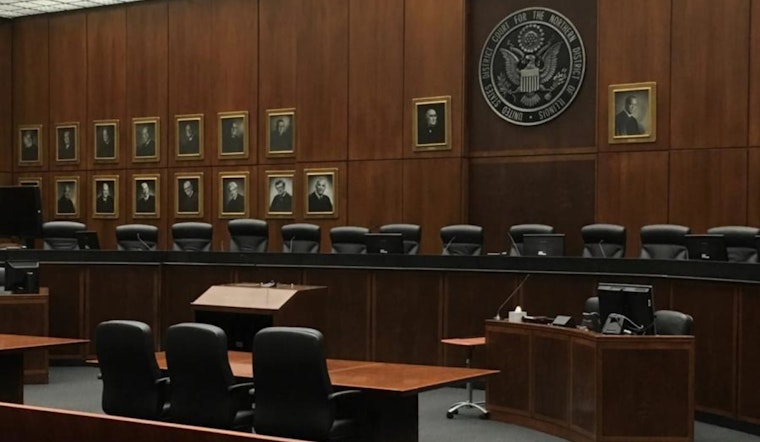
Chicago’s federal prosecutors are being bumped from supporting cast to starring role in the fight against trade fraud. The U.S. Attorney’s Office here has been picked as a lead prosecutorial partner in the Justice Department’s new Trade Fraud Task Force, putting local feds at the center of a national push against tariff evasion, mislabeling and smuggling schemes. The designation pairs traditional civil recoveries with a more aggressive criminal playbook aimed at supply‑chain fraud, raising the stakes for importers, manufacturers and freight operators that move goods through the region.
The move was announced Tuesday in a press release from the U.S. Attorney’s Office for the Northern District of Illinois. "Trade compliance is a key concern for not only our region’s economic security, but also that of our entire nation’s," U.S. Attorney Andrew S. Boutros said in the release, which noted that Chicago prosecutors will work alongside Justice Department lawyers and agents from the Department of Homeland Security and the Environmental Protection Agency. The office also used the announcement to encourage voluntary disclosures and False Claims Act filings to surface serious trade‑fraud schemes, according to the U.S. Attorney’s Office, Northern District of Illinois.
Cody Matthew Herche, head of the Trade Fraud Task Force, publicly confirmed Chicago’s front‑line role during remarks Monday at a trade‑investigations forum in Arlington, Virginia. Legal analysts say Herche’s speech signals a tougher, data‑driven focus on criminal prosecutions for deliberate misclassification, transshipment and forged safety documents, as analyzed by Mayer Brown.
Why Chicago?
Officials pointed to Chicago’s status as a major inland port, with rail, air and trucking routes funneling imports through the region, and to Boutros’s track record on trade‑fraud prosecutions, in explaining the choice. Local reporting notes that Boutros helped lead cases sometimes dubbed "Honeygate," which federal officials have described as among the largest food‑fraud and trade‑fraud matters in U.S. history, as reported by WTTW.
What the Task Force Will Target
According to federal officials, the task force will focus on duty evasion, below‑market imports that can destabilize domestic industries and the smuggling of prohibited goods that threaten public health, intellectual property and national security. The cross‑agency effort uses civil tools such as the Tariff Act of 1930 and the False Claims Act in tandem with criminal prosecutions, penalties, forfeitures and seizures, as outlined by the Department of Justice when it launched the task force last year.
Legal And Business Risks
Practitioners say the government’s enforcement posture is shifting. Prosecutors at the Justice Department are increasingly willing to bring criminal charges where they find intentional mislabeling, HTS‑code drift, double invoicing or forged certificates. Mayer Brown notes that the government is prioritizing individual accountability and data‑driven lead generation, effectively putting compliance officers on the front lines. Recent civil outcomes, including a $54.4 million customs‑duty settlement tied to tariff‑evasion allegations, show how regulatory exposure can turn into multi‑million‑dollar liability for companies, per local coverage of that case at $54.4 million customs-duty settlement. That kind of price tag tends to get boardrooms’ attention.
What To Watch
Advisers say companies with complex global supply chains should not wait for a subpoena to start cleaning house. They recommend immediate review of country‑of‑origin records, tariff classifications and internal audit trails. Consultants such as PwC urge voluntary self‑disclosure when firms uncover errors and note that cooperation can heavily influence both civil and criminal outcomes.
Venue is another quiet but powerful piece of the puzzle. Federal law allows a trade‑fraud offense involving importation to be prosecuted in any district "from, through, or into" which the imported object moves. That broad rule, set out at 18 U.S.C. § 3237 and available on LII, gives Chicago’s newly elevated prosecutors even more latitude in deciding which cases land on their docket.




