

























































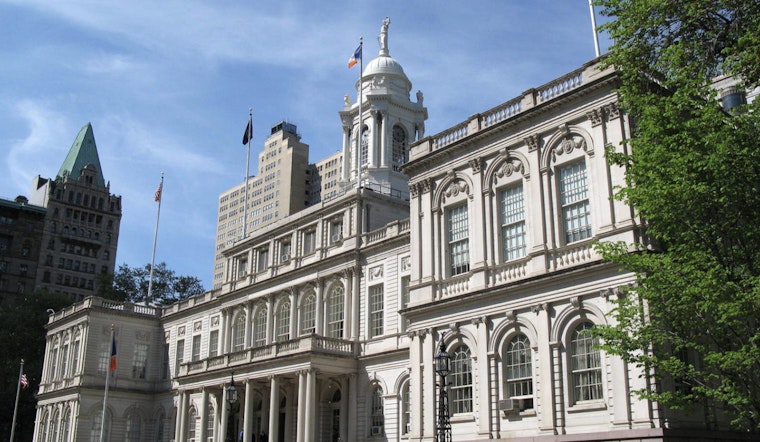
Chants and homemade signs filled the steps of City Hall on Wednesday as supporters rallied behind a package of City Council bills that would guarantee safe entry to schools and houses of worship during protests. The demonstration unfolded just as the Council's Committee to Combat Hate was set to take up the measures inside the Council Chambers, with backers framing the bills as a response to a recent string of harassment incidents outside religious sites and schools.
What the package would do
Speaker Julie Menin rolled out the bills on Jan. 29 as part of a five‑point action plan to combat antisemitism and shore up community safety. The centerpiece is a Schools and Houses of Worship Access and Safety Act that would require the NYPD to set up safety perimeters at entrances and exits when harassment is anticipated. The broader plan also calls for a public hotline to report hate incidents and more funding for security at nonpublic schools, according to the New York City Council. The Council also flagged the show of support by announcing that the rally was streaming live on X.
Bill revisions after talks with NYPD
On the eve of the hearing, Council leaders stripped out language that would have locked in a mandatory 100‑foot perimeter. Instead, the revised bills give the NYPD leeway to recommend how large those safety zones should be and how they would work in practice. The amendments set firm deadlines for the police commissioner to hand in proposed and final plans within 45 and 90 days, with implementation required within 120 days, and a law‑enforcement source told reporters the NYPD would back the new framework. As reported by amNewYork, Deputy Commissioner Michael Gerber is expected to testify in favor of the package.
Supporters say it is about safety, not silencing dissent
Menin and other sponsors insist the legislation is content‑neutral and is aimed at curbing harassment that can physically block worshippers and students from getting through the door, not at shutting down protest. "This effort is deeply personal to me," Menin said in a City Council statement that detailed the bills and highlighted NYPD data showing antisemitic incidents made up a majority of reported hate crimes in 2025, according to the New York City Council. Supporters argue the measures follow long‑standing legal models that try to protect access to buildings while preserving free speech rights on public sidewalks.
Critics warn the bills could chill protest
Civil‑liberties groups and protest organizers see it very differently. They argue the bills would hand too much discretion to the NYPD and could be used to chill lawful demonstrations. The New York Civil Liberties Union and other legal advocates have raised constitutional red flags about the proposals, according to reporting by Gothamist. Grass‑roots groups including NYC for Abortion Rights and PAL‑Awda say they will keep fighting the bills even after revisions, warning that a policing‑heavy model risks uneven and discriminatory enforcement, as noted by amNewYork.
Legal risks and precedent
Legal scholars point out that any law creating protest buffer zones has to be narrowly tailored if it is going to survive in court. In McCullen v. Coakley (2014), the Supreme Court struck down a sweeping 35‑foot buffer around clinics for putting too heavy a burden on speech, while in Hill v. Colorado (2000) it upheld a more modest eight‑foot buffer. That mixed track record makes precision crucial, according to court records and summaries from Justia.
What to watch next
The Committee to Combat Hate was scheduled to take testimony and debate the bills Wednesday at 10 a.m. in the Council Chambers at City Hall, according to the City Council calendar. Advocates on both sides say they intend to pack the hearing and make their case, with amendments and hours of public comment likely to shape whatever final version reaches the full Council.
The rally underscored just how raw and unresolved the politics of protest, public safety and policing remain in New York City. As councilmembers edge toward eventual votes, both supporters and opponents say the coming weeks will be pivotal for tweaking the bill language and bracing for the legal battles that could follow.





