

























































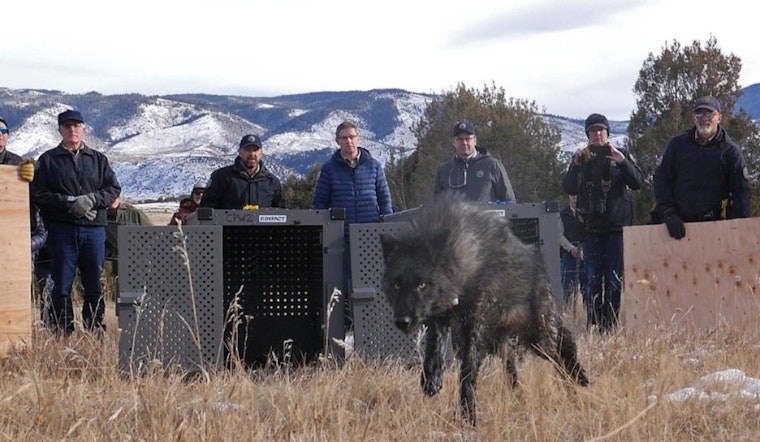
A routine recollaring run on the King Mountain Pack in Routt County ended in tragedy on Jan. 28, when a breeding male wolf died during a Colorado Parks and Wildlife operation to swap out low-battery GPS collars. Earlier in the same effort, biologists had successfully captured and fitted an adult female and one pup, and staff reported seeing the pack's other pups nearby. The agency has now put all additional capture and re-collaring work on hold while investigators sort out what happened.
In a statement to Denver7, Colorado Parks and Wildlife Acting Director Laura Clellan said staff and contractors followed CPW Animal Care and Use Committee guidelines throughout the operation. She said that when the wolf was delivered to CPW staff, it was unresponsive, and resuscitation efforts did not succeed. Denver7 reports the work took place on Jan. 28, that CPW halted capture operations pending an internal review, and that the agency plans to wait for necropsy and lab results before drawing any conclusions about the cause of death.
Necropsy, pathologist and federal review
According to KKTV, a necropsy was conducted at a Fort Collins health lab, with an independent third-party veterinary pathologist present to confirm the findings. CPW told reporters that the U.S. Fish and Wildlife Service backed the push to move the review along quickly and that final lab testing is still in progress. The agency emphasized that any wildlife capture involves risk, and said investigators will use the necropsy results to determine whether underlying health problems or something in the capture process itself played a role in the wolf’s death.
Which wolf died
CPW and media reports identify the animal as a three-year-old breeding male, black in color, and weighing about 93 pounds. As detailed in Colorado Parks and Wildlife's December 2023 translocation release, he was one of the Oregon wolves brought to Colorado and is listed as a 93-pound male from the Noregaard Pack.
Why biologists were re-collaring
CPW said collars on the King Mountain Pack needed to be replaced because their batteries were running low, and that the agency’s goal under the Colorado Wolf Restoration and Management Plan is to keep at least two wolves per pack wearing GPS collars. Those collars provide near real-time tracking data that biologists use for monitoring the animals, managing conflicts, and deciding when to send in range riders or other tools, according to Denver7.
Officials: The pack will be monitored
“It’s not yet possible to understand the long-term implications to the King Mountain Pack as a result of this mortality,” CPW Wolf Conservation Program Manager Eric Odell said, adding that the agency will keep a close eye on the pack to see how it contributes to building a self-sustaining wolf population in the state. Odell’s comments were reported by KKTV, which also notes that CPW plans to use collar data to track the wolves’ movements and any potential conflicts that arise.
The death lands in the middle of a tense chapter for Colorado’s wolf reintroduction program, which is already under the microscope after earlier mortalities and depredation-related removals, as covered by The Colorado Sun. Critics have pushed for changes to capture techniques and conflict-minimization strategies, while CPW has maintained that some mortality is expected in any large-scale restoration effort and has said it will release the necropsy findings once they are available. The agency has also said it will decide whether any procedural adjustments are needed before it restarts recollaring operations.





