

























































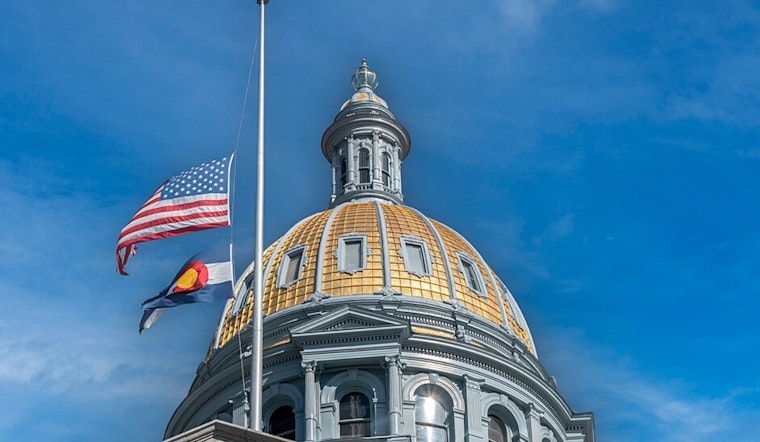
Colorado lawmakers are moving quickly on a proposal that could turn certain psychedelics into routine pharmacy pickups instead of political footballs. SB26‑031, introduced this month, aims to fast‑track access to prescription versions of psychedelic drugs and has already cleared its first Senate committee with a unanimous vote. Supporters say the bill would let FDA and DEA-cleared, pharmaceutical‑grade psychedelics move through Colorado's system like any other prescription, rather than waiting on separate state rescheduling for each new drug, a shift veterans' advocates say cannot come soon enough.
What's in SB26‑031
Under SB26‑031, any "prescription drug product" that contains a Schedule I controlled substance would automatically come off Colorado’s Schedule I list once that product is approved by the U.S. Food and Drug Administration and designated or rescheduled by the Drug Enforcement Administration. At that point, Colorado would regulate the product in the same way the DEA does, rather than building its own parallel schedule. Full bill language and fiscal details are available from the Colorado General Assembly.
Backers press urgency, veterans testify
Sen. Dafna Michaelson Jenet, the bill's primary sponsor, told CBS News Colorado that late‑stage clinical trials have shown promising results for PTSD, anxiety, and depression, and that federal approvals for certain psychedelic therapies could come within a few years. Combat veteran Luke Schartiger, who has spoken publicly about benefits he attributes to a psychedelic treatment, testified in favor of the bill and urged lawmakers not to wait on expanding access once federal regulators act. Supporters frequently cite the U.S. Department of Veterans Affairs estimate of roughly 17.6 veteran suicides per day in 2022 as a stark backdrop for the debate.
Builds on Colorado’s natural‑medicine shift
SB26‑031 does not arrive in a vacuum. In 2022, voters approved Proposition 122, which decriminalized certain naturally occurring psychedelics and set up a regulated access program for supervised use, according to the Colorado Secretary of State. Lawmakers then followed with a narrower prescription pathway in HB25‑1063 that specifically authorized FDA‑ and DEA‑cleared crystalline psilocybin products for prescription use in Colorado, as reflected in the state legislative record for HB25‑1063, according to the Colorado General Assembly. SB26‑031 would expand that same federal‑driven mechanism beyond psilocybin so that other Schedule I substances, once approved as prescription drugs at the federal level, could be prescribed in Colorado without additional state rescheduling.
Where the science stands
Several companies and research teams are pushing psychedelic medicines through late‑stage trials. Compass Pathways, for instance, is running Phase‑3 studies of its COMP360 psilocybin program, while other sponsors are advancing comparable products, according to company filings and investor updates. Backers of SB26‑031 stress that these are tightly controlled, synthetically produced, pharmaceutical‑grade compounds with standardized dosing, which they argue are far easier for regulators and clinicians to manage than unstandardized natural preparations. At the same time, medical experts caution that psychedelic therapies are highly potent interventions that require rigorous screening, supervised administration, and follow‑up integration services to manage both safety and outcomes, as noted by UCLA Health.
Legal and regulatory implications
Because SB26‑031 ties state access directly to federal decisions, a psychedelic drug product would only become available for prescription in Colorado after the FDA approves it and the DEA reschedules or otherwise designates it under federal law. That federal process involves its own scientific reviews, advisory input, and administrative steps, so the bill does not short‑circuit national safeguards so much as it pre‑syncs Colorado with them. States differ in how they plug federally rescheduled substances into local systems, and even if SB26‑031 passes, Colorado agencies will still have to write rules on clinician training, licensing, and where therapies can be administered, such as specialized clinics. The federal scheduling framework itself rests on statutory scientific review and interagency recommendations, as outlined by NCBI, which helps explain why advocates want Colorado’s rules aligned in advance of potential federal moves.
What happens next
SB26‑031 remains before the Senate Health & Human Services Committee. If it advances from there, the bill will still need approval from the full Senate, the House, and ultimately the governor's signature before it can become law. In the meantime, lawmakers, regulators, providers, and patient advocates are watching federal clinical trial results and DEA scheduling decisions closely as they weigh how to balance faster access to emerging psychedelic treatments with guardrails for safety in Colorado's evolving natural‑medicine landscape.





