

























































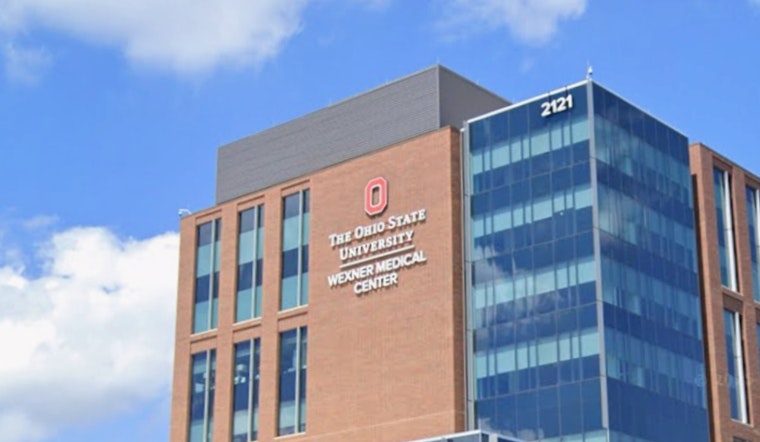
The Department of Justice's newly released Epstein files indicate that Dr. Mark Landon, the longtime chair of obstetrics and gynecology at The Ohio State University Wexner Medical Center, received payments from Jeffrey Epstein’s money management firm in the early 2000s. Email threads and shipping records in the trove describe a regular retainer pegged at about $75,000 a year, although the documents do not say what, if any, clinical services Landon actually provided. FedEx receipts dating back to 2001 list his name but do not identify what was in the packages, leaving the specifics of the arrangement unclear and raising fresh local questions about how the university has handled ties to donors with problematic histories.
According to records released by the U.S. Department of Justice, an email exchange between Epstein and his lawyer Darren Indyke lays out payment details. Indyke notes that Landon’s agreement calls for quarterly checks of $30,000, points out that a previous payment went out for $25,000 instead, and asks whether the next disbursement should be $25,000 or $30,000. Epstein’s entire response, “75 per year,” appears to lock in an annual figure in that range. The same batch of documents includes multiple FedEx airbills that reference Landon but do not describe the contents.
In a statement to WOSU, Landon said, "I was a paid consultant for the New York Strategy Group regarding potential biotech investments," and he denied providing clinical care to Epstein or his victims. He added that he had no knowledge of criminal activity and expressed sympathy for Epstein's victims.
What the records show
Within the email release, Indyke writes that "Landon's agreement requires quarterly payments of $30k" and describes the contract as "terminable at will on 15 days' prior notice," while also noting that the most recent payment had been for $25,000 instead of $30,000. He asks Epstein whether the next installment should be $25,000 or $30,000. Epstein replies, "75 per year," a shorthand that appears to confirm an annualized amount of roughly $75,000.
The accompanying FedEx receipts, which stretch back to 2001, list Landon’s name but do not indicate what, if anything, was being shipped. Without invoice details or accompanying contracts in the public file, the precise nature of the consulting arrangement remains an open question. These items appear in the public folder posted by the Department of Justice.
Landon's role at Ohio State
Dr. Mark Landon has served on Ohio State's faculty since 1987 and is chair of the Department of Obstetrics and Gynecology at the Wexner Medical Center, where, according to his university profile, he leads research programs focused on diabetes and pregnancy. His long tenure and senior leadership role make the new disclosures particularly notable for local patients and colleagues who rely on the medical center for care. The faculty page outlines Landon's clinical and research credentials and his position within the college of medicine.
Why this matters locally
The documents are part of a larger Justice Department release that in late January made millions of pages, images and videos public and has triggered renewed scrutiny of figures tied to Epstein, as reported by CBS News. Separately, House Oversight materials show the committee has moved to compel testimony and documents from people connected to Epstein, including motions that would reach Leslie Wexner and estate executors, underscoring the broader congressional interest in the files. Congressional records detail authorizations related to that oversight.
Legal and institutional implications
The items in the release do not, on their face, accuse Landon of a crime. The records show payments and shipping logs, not criminal charges or verified wrongdoing. Even so, universities and oversight bodies routinely treat documentation like this as a starting point for follow up, asking for contracts, invoices and, at times, testimony to determine whether any policies were violated or whether additional review is warranted.
Locally, the story folds into long running debates about donor relationships and how institutions account for past gifts and outside consulting work. Lawmakers and university trustees now have additional material to examine, and because the records are public, patients, alumni and other stakeholders are likely to press for clarity about the history of these payments and how closely such arrangements were monitored.





