

























































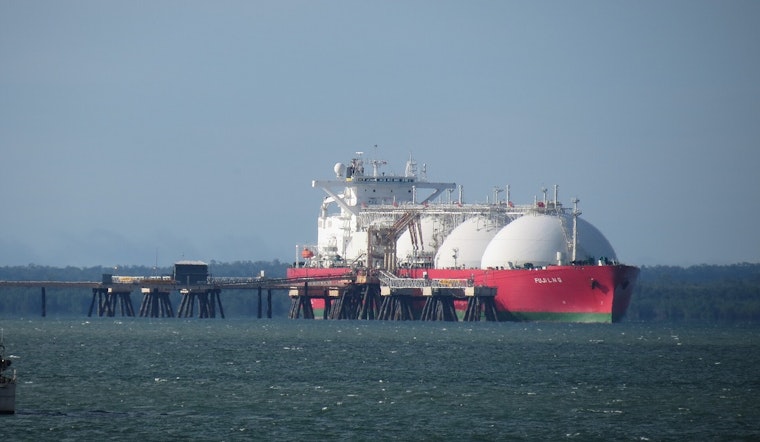
Washington is turning up the heat on Europe this week, pushing EU governments to loosen import rules and clear the way for a lot more American oil and gas. The move straddles trade, climate policy and diplomacy, with U.S. officials urging Brussels to tweak technical standards and carve out exemptions that would speed U.S. shipments into the bloc. That effort is already meeting resistance from climate-focused lawmakers and setting up a potential showdown over how Europe powers itself in the post‑Russian era.
According to a U.S. paper shared with EU capitals, Washington is asking for a string of technical and regulatory changes meant to smooth American exports into Europe, including simplified reporting and temporary exemptions for U.S. producers. The push follows a 2025 framework deal built around a $250 billion‑a‑year energy target and reflects just how sharply Europe’s supply map has shifted, with Russian gas imports into the EU falling from about 203 billion cubic metres in 2019 to roughly 38 billion in 2025 while U.S. LNG shipments climbed from about 14 bcm to nearly 83 bcm, as reported by Reuters.
What Washington Is Asking For
The standout request in the U.S. document is a delay or exemption for American oil and gas under the EU methane import regime until 2035, along with broad recognition of U.S. monitoring and reporting as “equivalent” wherever possible. Washington presents this as a pragmatic way to keep energy flowing while Europe replaces Russian supplies. Critics counter that it would weaken the bloc’s flagship effort to crack down on methane emissions. Both the U.S. pitch and the backlash from lawmakers are detailed by Euronews.
IEA Ultimatum From Washington
In a parallel front, U.S. Energy Secretary Chris Wright has put the International Energy Agency on notice, telling the Paris‑based body to drop its net‑zero‑by‑2050 scenario or risk losing the United States as a member. Wright has given the agency about a year to change course. "There has been such a group mentality, 10 years invested in a destructive illusion of net zero by 2050," he said, describing the demand as part of a broader effort to put energy security and industrial competitiveness back at the center. His remarks are covered by Investing.com.
U.S. Firms Move Fast In The Mediterranean
While regulators argue, American oil majors are already staking their claims. A Chevron‑led consortium has signed exclusive leases to explore four deep‑sea blocks south of Crete, and Exxon has joined other ventures in western Greece, in projects that governments say are meant to help diversify away from Russian supplies. The deals still need approvals and years of appraisal, but they show private contracts racing ahead of the political wrangling. The developments are outlined by MarketScreener.
The Politics And The Math
Analysts have flagged that the $250 billion‑a‑year target will be hard to hit without a major reshuffling of global energy flows, rapid build‑out of terminals and some serious price shifts. In other words, political promises may run into market gravity. The pledge, agreed in last year’s framework deal, has triggered skepticism over whether Europe can or should divert that much U.S. supply, according to reporting by CNBC. That tension between diplomatic ambition and commercial reality is one reason Brussels is treading carefully.
Legal And Trade Risks
Any special exemptions for U.S. producers could be read in Brussels as an attempt to create a carve‑out that weakens the purpose of the methane rules and invites trade disputes or formal challenges. At the same time, pressure from industry to slow or soften monitoring, reporting and verification requirements has been intense, with advocacy groups tracking a familiar playbook. InfluenceMap has documented how oil and gas interests have pushed for delays and “equivalence” pathways that could trim back enforcement, as detailed in its briefing on methane lobbying, available at InfluenceMap.
For now, the real battle is unfolding in technical working groups, behind closed doors in bilateral trade talks and inside a handful of national delegations weighing supply security against climate credibility. How Brussels responds will determine whether Europe takes in more U.S. molecules on terms that fit its climate rulebook, or whether Washington’s pressure ends up rewriting the transatlantic energy bargain.





