

























































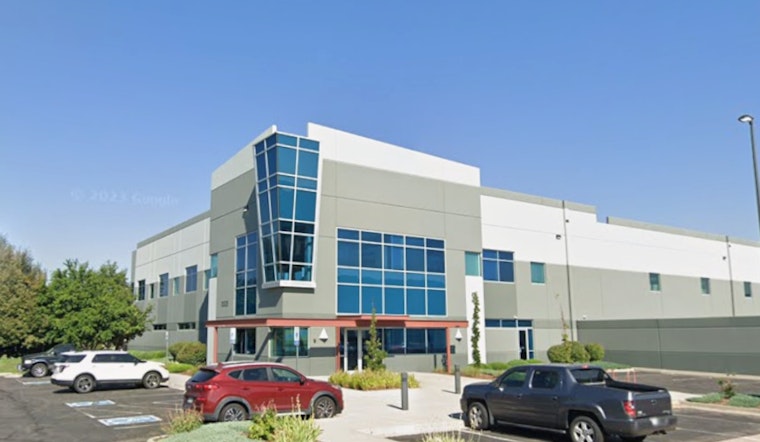
In a low-key industrial bay in Denver, a small team at Xcimer Energy is wiring up ultraviolet lasers and control electronics on a schedule that, if it holds, could upend how the world makes electricity. The company is talking about a sprint from a Phoenix prototype in 2026 to a larger Vulcan facility that aims for engineering breakeven around 2030, a progression that would move Xcimer from lab-scale experiments to something that looks a lot more like a power plant. For Denver, that could mean high-tech manufacturing and new supply-chain work. For global energy markets, it raises uncomfortable questions about how long oil and gas can count on business as usual.
Xcimer was founded in 2022 by Conner Galloway and Alexander Valys and lists its headquarters in Denver, where it has built a laser bay and prototyping facility, according to the company’s media page. The startup was selected as one of eight teams in the U.S. Department of Energy’s Milestone-Based Fusion Development Program and received a 9 million dollar award to advance its excimer-laser approach, according to Xcimer. Company leaders say that federal backing helps de-risk the march toward a grid-connected fusion plant.
LPK milestone and the path to Phoenix
In June 2025, Xcimer completed what it calls the Long Pulse Kinetics platform, an electron-beam-pumped krypton-fluoride (KrF) excimer laser that the firm describes as the first privately built system of its kind in more than two decades. Optics.org and other trade outlets covered the milestone and noted that LPK is meant to generate the experimental data Xcimer will use to tune Phoenix, the prototype system the company expects to finish in 2026.
How Xcimer’s KrF lasers differ
Instead of the solid-state glass lasers used at the National Ignition Facility, Xcimer is betting on krypton-fluoride excimer lasers, ultraviolet gas lasers already familiar in semiconductor lithography. The company argues that this choice allows longer pulses, higher efficiency and a lower cost per joule. Axios has laid out the basic tradeoffs and why excimer architectures look appealing to teams chasing commercially viable inertial fusion. At the same time, industry reporting is blunt that serious engineering hurdles still stand between a promising prototype and a plant that can run steadily at a price utilities will accept.
What a Vulcan plant could mean for Denver
Xcimer’s next big target, Vulcan, is a multimegajoule laser complex the company says could hit engineering breakeven around 2030 and serve as the bridge to grid-connected fusion plants in the mid-2030s. The firm has started a multistate site search for Vulcan and projects that the facility could employ hundreds of physicists, technicians and support staff, according to a company site update. Xcimer is also expanding U.S. manufacturing capacity as it prepares to scale up production of larger laser amplifiers and associated hardware.
The company has attracted sizable private backing, including a 100-million-dollar Series A reported last year, which puts total disclosed funding well above 100 million dollars. BusinessWire detailed the funding round and investor list. Materials from the U.S. Department of Energy’s Milestone program are explicit that the initiative is designed to stretch relatively modest federal money into larger private investment and faster technical progress. The Energy Department describes the program’s goal as accelerating commercially credible fusion pathways through public-private partnerships.
Some observers have already skipped ahead to the geopolitical implications. A recent piece in Green Prophet framed Xcimer’s potential economics as a long-term threat to petrostates if fusion power becomes cheap and abundant. That storyline depends on a long chain of technical, regulatory and market assumptions that have not yet been proven outside controlled experiments, and everyone in the field is aware of how many ways it could still go sideways.
For Denver residents, the near-term question is less about the fate of oil kingdoms and more about which companies, suppliers and trades the city can attract as fusion firms scale up. Xcimer’s recent public tours and technical briefings, which brought in Energy Department officials and members of Congress, signal that this work is moving out of the purely theoretical realm and into physical hardware that visitors can walk around. The company’s public updates also highlight an aggressive hiring push. On LinkedIn, Xcimer showcases its outreach to policymakers, researchers and local partners who may have a front-row seat if Denver’s fusion bet pays off.





