

























































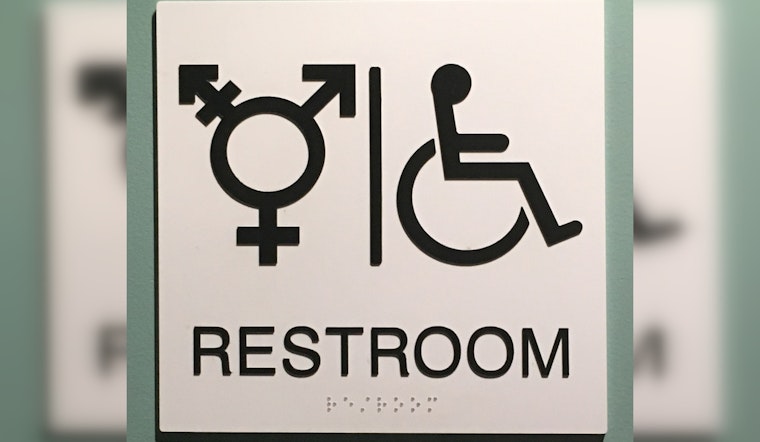
The Equal Employment Opportunity Commission on Thursday ruled that federal agencies may bar transgender employees from using restrooms and locker rooms aligned with their gender identity, rejecting an appeal from a civilian Army IT specialist at Fort Riley, Kansas. The 2-1 vote overturns part of a decade-old federal-sector finding and narrows protections for transgender federal workers. The ruling covers federal workplaces only and does not automatically change policies for private employers or federal courts.
What the EEOC Said
In a press release, the EEOC said its federal-sector appellate decision holds that "Title VII permits a federal agency employer to maintain single-sex bathrooms and similar intimate spaces" and that agencies may exclude "trans-identifying" employees from opposite-sex facilities. EEOC Chair Andrea Lucas said the opinion is "consistent with the plain meaning of 'sex' as understood by Congress" and added, "Biology is not bigotry." The commission said the opinion overturns a prior federal-sector ruling on restroom access for transgender federal employees.
The Fort Riley Case
The appeal centered on a civilian IT specialist who, according to reporting by ClickOnDetroit, informed supervisors in the summer of 2025 that she identified as a woman and asked to use women's bathrooms and locker rooms. The Army denied the request and later dismissed her agency complaint. The EEOC's opinion cites President Trump's January 2025 executive order on sex and gender as part of its legal framing. The decision applies only within the EEOC's federal-sector process and does not bind federal courts or private employers.
How This Departs From Past Precedent
The agency said Bostock v. Clayton County, the 2020 Supreme Court decision that extended Title VII protections to LGBTQ workers, did not definitively resolve the question of access to bathrooms and locker rooms. Relying on traditional statutory-construction tools, the commission concluded that agencies can maintain single-sex facilities that exclude transgender workers whose gender identity differs from their sex assigned at birth.
The decision overturns part of the EEOC's 2015 Lusardi ruling, which had found the Army liable for barring a transgender employee from a common women's restroom. More on Lusardi is available from the EEOC. That shift changes the legal terrain for federal employees and leaves the issue open to litigation in the courts.
Reaction
Reaction from lawmakers and civil-rights advocates was swift and sharply critical. Congressional Equality Caucus Chair Rep. Mark Takano said the commission had "abandoned its duty" and accused the EEOC chair of undermining minority workers' rights, according to the Congressional Equality Caucus. The Human Rights Campaign called the opinion a "green light for discrimination" and warned it would make federal workplaces less safe for transgender employees.
Legal Options and What Comes Next
The federal employee at the center of the case can seek reconsideration with the EEOC within 30 days or file a new case in federal district court within 90 days, according to ClickOnDetroit. Because EEOC federal-sector appellate decisions do not bind federal courts, lawyers say the next round of fights over restroom access is likely to unfold in federal courtrooms and through agency-by-agency policies. Several lawsuits and injunctions tied to the administration's executive order and agency guidance are already pending, and this opinion will feed into those legal challenges.
For the roughly 2.3 million civilian federal employees, the ruling hands discretion back to agency leaders to define who may use single-sex facilities at work. Expect the decision to trigger a wave of new policy memos, further appeals, and more courtroom battles over how federal law balances sex, gender identity, and privacy on the job.





