

























































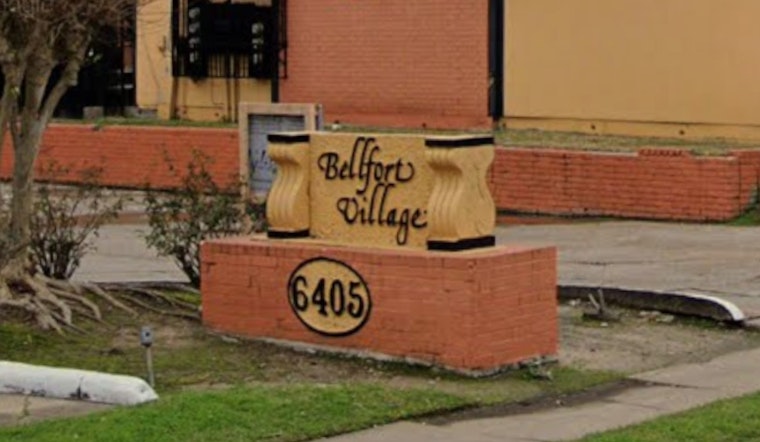
Fannie Mae has taken the owner of a southwest Houston apartment complex to federal court, accusing the landlord of claiming repairs that never really happened and leaving tenants to live with safety hazards. The dispute centers on Bellfort Village Apartments on West Bellfort Street and a $13.2 million multifamily loan that Fannie Mae says it has already accelerated into default. The lender wants a federal judge to appoint a receiver and is seeking damages, attorneys’ fees and costs as the property heads toward a possible foreclosure sale, as reported by Mortgage Professional.
Case details from the complaint
According to Mortgage Professional, Fannie Mae filed its lawsuit on Feb. 18 in the U.S. District Court for the Southern District of Texas. The complaint says the loan was originally made in August 2022 through Greystone Servicing Company LLC and later assigned to Fannie Mae. In the suit, the lender alleges breach of contract and asks for specific performance in the form of a court-appointed receiver, along with damages, attorneys’ fees and other costs.
Bellfort Village and its owner
Commercial property listings identify Bellfort Village at 6405 West Bellfort Ave and describe the site as a garden-style complex of roughly 196 units, according to Crexi. The named borrower, Kajal Housing Group LLC, appears in public business records and federal small-business program filings tied to Houston, per ProPublica.
Inspections and alleged cover-ups
Fannie Mae says the trouble started after a September 2025 property condition assessment flagged deteriorating exterior staircases, sidewalk trip hazards, wood rot and microbial growth. The borrower was given a Dec. 20, 2025 deadline to handle urgent repairs. A demand letter sent in November 2025 called for corrective work and a deposit of $826,150, and the complaint alleges the borrower did not comply. A follow-up inspection on Feb. 9, 2026 reportedly found staircases still rusted and unstable, workers painting over rust, sinking concrete, exposed wiring, broken windows and missing safety devices. Fannie Mae accelerated the loan in January and posted a foreclosure notice scheduling a sale for March 3, 2026, according to Mortgage Professional.
Why a receiver matters
Under Texas practice, a court-appointed receiver can be used to preserve property, manage day-to-day operations and collect rents when a mortgage holder shows the asset is in danger of being lost or materially injured. Receiverships give the court or its appointed manager broad authority to operate or sell the property and to pay receiver fees from the asset itself, which makes the tool a relatively fast and blunt way to enforce a lender’s rights. For background on how receivership works in Texas, see Kreig LLC and the Texas Legislature.
What to watch next
The lawsuit is still at an early stage and no court rulings have been issued. If the court grants Fannie Mae’s request, a receiver could move in quickly to take operational control and decide whether to keep pushing repairs, market the complex for sale or hold rents for the benefit of creditors. The foreclosure sale date Fannie Mae posted, March 3, 2026, is a key near-term marker, although court action could delay or reshape that schedule depending on how judges respond to the lender’s requests. Local tenants and property managers are likely to feel any practical effects first if a receiver is appointed.
Legal implications
The complaint’s core claims are civil, alleging breach of contract and seeking specific performance to have a receiver named, and they remain unproven unless and until a judge rules. If Fannie Mae prevails, a receivership would typically allow the lender to stabilize operations and pursue recovery through a sale or managed operations, while the borrower could face additional exposure under any contractual repurchase or indemnity provisions tied to the loan.





