

























































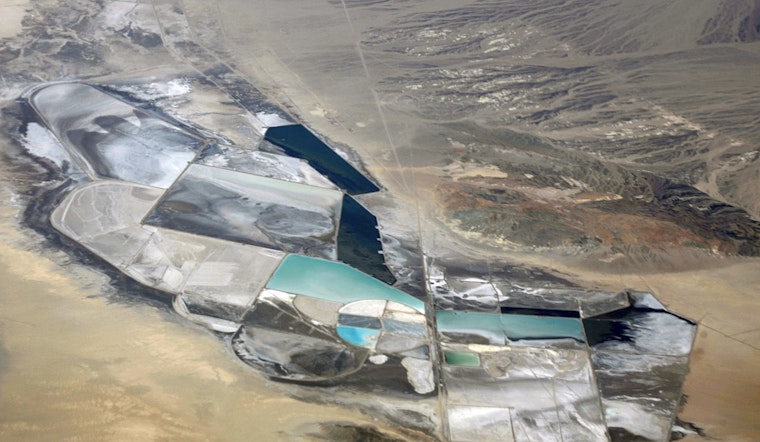
Federal officials on Friday, Feb. 27, 2026, signed off on a major expansion of the Silver Peak lithium operation in Esmeralda County, giving Albemarle the go-ahead to operate across roughly 8,058 acres, including about 1,601 acres of public land, and to formalize new pump stations, evaporation ponds, and pipelines. The move centers on the only producing lithium mine in the United States and, by federal estimates, could allow new processing technology that boosts lithium recovery by as much as 100 percent from the same brine inputs. For Tonopah-area residents and anyone watching the battery supply chain, the decision folds long-running fights over air quality, water rights, and cultural resources into the broader national push to secure critical minerals at home.
What the BLM approved
In its decision, the Bureau of Land Management authorized Albemarle's plan to expand the Silver Peak footprint to 8,058 acres and to build two transfer pump stations, two weak-brine ponds and associated pipelines, along with future drilling of production wells. The agency also retroactively approved certain facilities that had already been constructed without prior authorization. The project is listed on the federal FAST-41 transparency dashboard, which tracks major infrastructure and resource developments.
What Albemarle says and plans
Albemarle, which has run Silver Peak since the 1960s, says the federal approval backs its effort to ramp up production capacity and improve efficiency, the company says. Public filings and a detailed technical report describe plans to rehabilitate and add evaporation ponds and to upgrade processing systems in order to increase sustained output and bring recovery closer to already permitted pumping levels, according to an SEC technical report.
Regulatory complaints and air concerns
The expansion approval lands on top of an uneven compliance record. State regulators previously called out the Silver Peak operation for air-quality problems. The Nevada Division of Environmental Protection held an enforcement conference after finding particulate emissions exceedances and recordkeeping failures at the plant, as reported by the Las Vegas Review-Journal. An enforcement letter from the Nevada Division of Environmental Protection lists multiple exceedances and lays out required corrective actions along with tighter compliance tracking.
Legal fights over water rights
Behind the federal greenlight is a separate fight over water in Clayton Valley. Rival developers have accused Albemarle of holding water allocations they say they need, and that dispute has wound its way through the courts. In an order filed Feb. 20, 2026, the Nevada Supreme Court reversed a lower-court ruling tied to an extension of time for Albemarle's water permits. Legal analysts say the outcome reinforces judicial deference to the State Engineer's technical findings. Details appear in the Nevada Supreme Court order and in a legal commentary that summarizes the opinion.
How this fits the national picture
The Silver Peak decision arrives as other Nevada lithium projects move ahead with their own baggage. Ioneer's Rhyolite Ridge project has cleared federal permitting but still faces litigation over potential harm to the endangered Tiehm's buckwheat. Lithium Americas' Thacker Pass project is under construction on a schedule that targets first production around 2027. Together, the permits, federal support and active lawsuits highlight how fast the United States critical-minerals landscape is shifting, even while environmental groups along with tribal and local stakeholders continue to push for tighter oversight, according to company releases such as Lithium Americas' announcement.
What happens next
With the BLM decision now final, Albemarle can proceed with the construction work authorized in the agency's release, including new ponds, pump stations and related infrastructure. State air-permit oversight and the ongoing water-rights litigation remain in play as other checks on the project. Planning documents and the full decision are available on the BLM NEPA register and on the FAST-41 dashboard for readers who want to track timelines and agency findings in more detail.





