

























































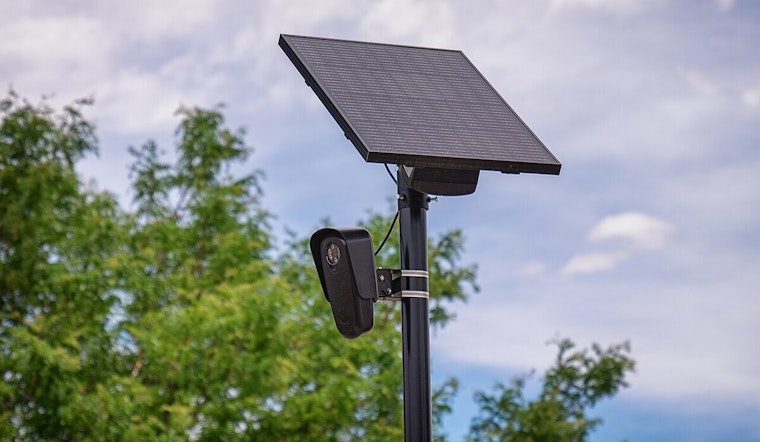
Federal agencies quietly tapped into Mountain View’s Flock license plate camera network without the police department’s blessing, city officials acknowledged this week, after an internal audit uncovered months of outside access.
The review found that a “national lookup” setting on a camera at Charleston Road and San Antonio Road was active for roughly three months in 2024, and that a separate “statewide lookup” setting left the entire network searchable until early January. City leaders say those settings are now off and that a report to the City Council is in the works as they reassess the department’s relationship with vendor Flock Safety.
What the audit showed
At least six offices from four federal agencies queried Mountain View’s first Flock camera between August and November 2024, according to local reporting. As detailed by SFGate, the city’s audit identified nationwide searches of that early camera.
Local records shared with reporters name agencies that include regional offices of the Bureau of Alcohol, Tobacco, Firearms and Explosives, the U.S. General Services Administration’s inspector general, and personnel tied to Air Force bases in Langley, Va., and in Ohio, per reporting by the Palo Alto Daily Post. The city says it was not notified when the national lookup setting was enabled.
How widespread the searches were
The department’s audit also found that a “statewide lookup” setting had been active across Mountain View’s Flock network from the program’s start until Jan. 5, allowing other California agencies to query the system, according to reporting by the Mountain View Voice. Documents and the police dashboard indicate roughly 75 California agencies were granted access, and that more than 250 external agencies ran searches of Mountain View’s network.
Those records show about 600,000 queries against the system between December 2024 and December 2025, though many entries have the “reason” field redacted, the Voice reports. The department says it has begun revoking access for agencies flagged in the audit while it examines whether searches complied with city policy.
Police and vendor responses
Police Chief Mike Canfield told local media he was “very disappointed in the relationship with Flock Safety and in their failures to create a system that met our expectations and that performed in a manner which was expected and required by our contract,” according to the Mountain View Voice. City officials say they turned off the statewide and national lookup settings as an immediate remedial step.
Flock, for its part, told local outlets it would cooperate with the department. “We value our relationship with the Mountain View Police Department and we will address these concerns directly with the Chief,” a Flock spokesperson said in a statement quoted by the Mountain View Voice.
Legal and privacy stakes
The disclosure comes amid broader legal fights over the sharing of automatic license plate reader data. California’s attorney general has sued another city, arguing state law bars sharing license plate data with out-of-state or federal agencies, and that litigation is ongoing. As the California Department of Justice outlined in a recent press release, the state is seeking to stop unlawful cross-border sharing and to reaffirm protections under state law. Attorney General Rob Bonta has made enforcement against improper ALPR sharing a priority.
Privacy advocates and local reporting have also documented cases where Flock networks were queried in ways that raised immigration and civil liberties concerns. Outlets such as KPBS have traced how the technology can be shared across jurisdictions and the oversight gaps that can create back-door or side-door access.
What is next for Mountain View
Mountain View officials say they will present a full review of the ALPR pilot to the City Council in the coming months and are auditing partner agencies and past searches, according to local reporting. Hoodline covered the initial disclosures in an earlier item on the initial disclosures, and television coverage of the city’s statement is available from KRON4.
For now, officials say the city has disabled the settings that made the queries possible and is weighing whether to continue with the vendor that runs the cameras. Residents who want updates can watch for the department’s council report and any public materials the city posts as it audits the program.





.jpg)