

























































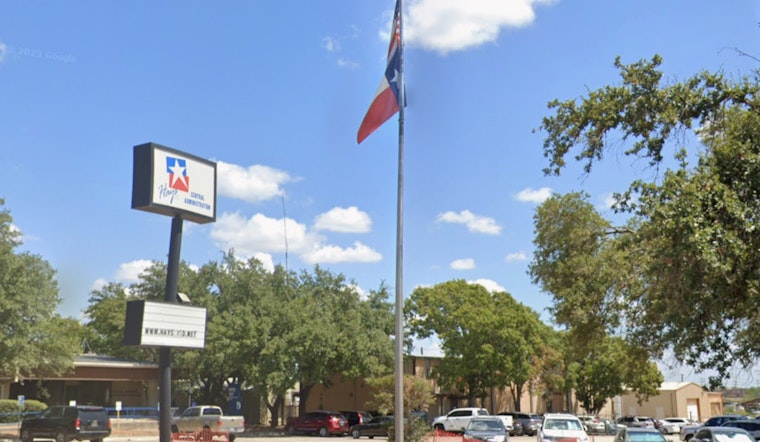
Hays Consolidated ISD is trying to tap a new state grant to put rifle‑rated shields and breaching tools on every campus, a move district leaders say would help them catch up with fresh safety mandates while police agencies scramble to staff officers at all schools.
On Feb. 17, trustees signed off on applying for the state Active Attack Response Equipment Grant, a program pitched as a way to help districts meet new 2025 “Uvalde Strong” law requirements without swallowing the full local cost of the gear. District officials told the board they expect awards to be announced in late spring and stressed that state money would ease what they described as a heavy price tag.
According to Community Impact, the board approved the grant application through the Office of the Governor at its Feb. 17 meeting. The official grant listing showed a Feb. 12 application deadline, meaning trustees took their recorded vote after that date. District documents cited by the outlet say state officials plan to name the winning districts later this spring.
The program is being run by the Governor’s Public Safety Office through the state’s eGrants portal. The funding announcement posted there anticipates about $15 million available for FY 2027. According to the notice, applications opened Dec. 15, 2025, and were due Feb. 12, 2026, with PSO set to weigh requests based on factors such as how many officers a district has and what each equipment set will cost. The rules spell out that districts can use money for breaching tools and NIJ‑rated ballistic shields and that training for shield users, including ALERRT, is one of the eligibility considerations.
What HB 33 requires
House Bill 33, often branded the “Uvalde Strong” Act, tightened the state’s expectations for how schools and law enforcement handle active incidents. The law added annual planning requirements between districts and local agencies, standardized training and incident reporting rules, and new equipment obligations for campuses.
The measure was carried by Rep. Don McLaughlin, cleared the Texas House on April 29, 2025, and the engrossed version took effect Sept. 1, 2025, according to the official bill text on LegiScan. One provision specifically orders districts to provide a breaching tool and a ballistic shield at each campus, the same basic kit the state grant is designed to underwrite.
How it fits in Hays CISD
Hays CISD serves communities including Kyle, Buda, and parts of San Marcos and operates roughly 26 campuses. District officials told trustees they still do not have a full‑time officer at every school, in part because local law enforcement agencies are struggling to fill those posts.
Spectrum reported that Hays CISD budgets for armed personnel at all campuses, but that only about 16 of the 26 schools currently have a full‑time officer on site. If the district lands the state grant, officials say each campus would receive one response set: a breaching tool and rifle‑rated shield meant to help the first person on scene get inside and protect themselves during an in‑progress attack. That setup is explicitly listed in the state’s funding notice.
What happens next
For now, Hays CISD has filed its application and is essentially in a holding pattern while the Governor’s Office sorts through requests. District documents cited by Community Impact say the state expects to announce awards in late spring.
If Hays is selected, the district would move ahead with purchasing approved breaching tools and ballistic shields, then follow through with the training, documentation, and reporting the grant program and state law require. Trustees described the application as a practical step to close an equipment gap while they continue pushing for more stable, long‑term funding and staffing solutions.
Legal and policy notes
HB 33 layers new legal obligations on school districts and responding agencies, but stops short of solving the underlying staffing shortages that have frustrated local leaders. Districts across Texas have urged lawmakers to provide more sustained funding so they can consistently meet the planning, training, and officer benchmarks written into law.
The statute is also designed to standardize incident command and reporting protocols in an effort to prevent the kinds of coordination breakdowns documented in the Robb Elementary investigation. At the same time, some advocates warn that stocking up on equipment and running more drills is only one slice of a broader school safety strategy that also has to account for prevention, mental health support, and community trust.




