

























































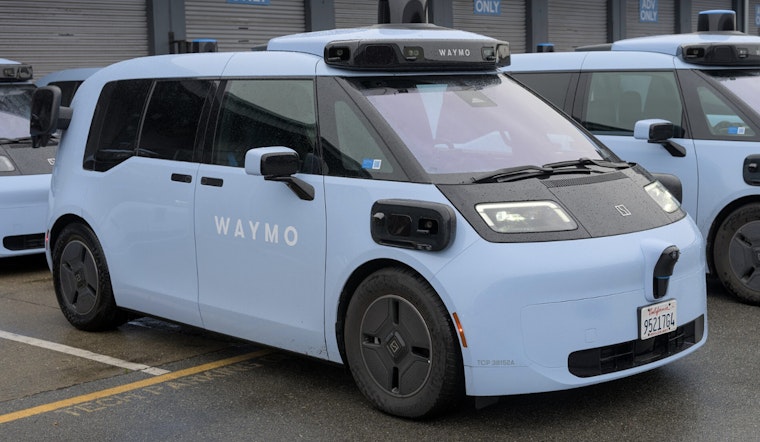
Gov. Kathy Hochul has quietly slammed the brakes on New York’s big robotaxi experiment, pulling a key proposal from her executive budget that would have opened the door to commercial driverless pilots outside New York City. Her office confirmed the move to Bloomberg on Thursday, instantly cooling hopes that the state was finally ready to let autonomous vehicles move beyond small test runs.
The reversal keeps New York in its familiar role as a cautious regulator while companies such as Waymo pour money into expanding in friendlier states. For firms that had been eyeing upstate and suburban markets, the change is less a speed bump and more a surprise detour.
What Hochul’s Scrapped Plan Would Have Done
The robotaxi language was not some throwaway line. It appeared in Hochul’s State of the State materials and in her executive budget earlier this year, setting out a blueprint for the “next phase” of New York’s autonomous-vehicle pilot program. The goal, according to New York State’s State of the State materials, was to allow “limited deployment of commercial for-hire autonomous passenger vehicles outside New York City.”
In practice, the proposal would have let AV companies apply to run commercial services without a human safety operator in the front seat, so long as they cleared strict safety requirements and had local backing. TechCrunch’s reporting at the time noted that New York City’s five boroughs were explicitly carved out, and that any approvals would flow through state agencies such as the Department of Motor Vehicles and the Department of Transportation.
Then, quietly, the language vanished from the budget paperwork. The governor’s office acknowledged the removal to Bloomberg but did not immediately roll out a detailed public explanation, leaving industry players to read the political tea leaves on their own.
Why Waymo Was Banking On New York
The timing is especially awkward for Waymo, which has been gearing up for an aggressive 2026 expansion after a major funding round that industry coverage pegged at roughly $16 billion. With that kind of war chest, the company has been working to scale its driverless fleet across the country.
In that context, Hochul’s budget language looked like a rare, concrete path into one of the toughest regulatory markets in the country. AV firms saw it as a legal on-ramp for fully driverless commercial rides in upstate cities and suburban corridors that sit outside New York City’s borders.
With the provision now pulled, the road map gets a lot fuzzier. The timetable for any broad driverless rollout in New York is uncertain again, and companies that had penciled the state into their 2026 plans are back to waiting on Albany.
Drivers Cheer, Labor Breathes Easier
While robotaxi operators may be frustrated, human drivers and their unions are not exactly mourning the loss. Labor groups that represent New York’s sprawling for-hire workforce had already been sounding alarms that autonomous fleets could decimate jobs.
“There are over 140,000 licensed here in New York, and that means 140,000 families that are going to be without work,” a for-hire driver told NY1, capturing the anxiety that has hovered over AV debates for years.
Independent-drivers groups have pushed lawmakers to lock in strong worker protections and real retraining plans before the state lets any commercial robotaxi rollout get too far. For them, Hochul’s move is a welcome pause, if not yet a victory.
What Happens Next In Albany
Pulling the language from the budget does not permanently kill robotaxis in New York. It simply removes the fastest available vehicle for turning the pilot concept into law. Any future attempt will now have to come through a fresh budget item or stand-alone legislation, followed by the usual negotiations and signoffs in Albany.
TechCrunch had previously noted that an expanded pilot framework would be anything but simple. It would rope in multiple state agencies, including the Department of Motor Vehicles, the Department of Transportation and the New York State Police, plus it would require local government approval.
Meanwhile, New York is not banning all self-driving activity. Waymo still holds a permit for limited testing in the city that allows up to eight vehicles, each with a safety driver behind the wheel, and officials say those supervised tests will continue while the broader commercial plan is on ice, according to the AP.
So for now, the driverless future in New York looks a lot like the recent past: endless meetings, slow-moving talks and a lot of careful watching from workers, regulators and tech companies alike. The industry is likely to keep inching forward with small tests while it waits to see whether Albany resurrects the scrapped plan or comes back with something entirely new.



