

























































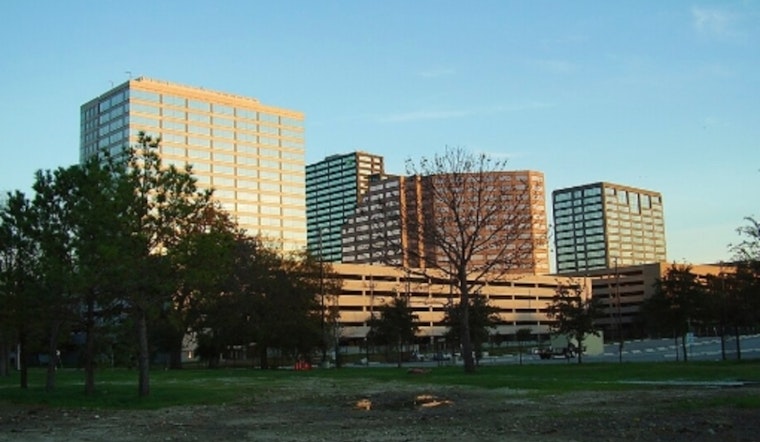
On a Thursday evening business panel in the Energy Corridor, Houston-area master-planned community developers acknowledged that land is tighter and construction costs are higher, but they insisted the region’s growth engine is not stalling out. Smaller lots, new financing structures and closer coordination with counties and municipalities, they said, are quickly becoming the new normal for Houston-area master-planned communities.
Panelists at a Bisnow event, including Duane Heckmann of Land Advisors Organization and Maple Development’s Itiel Kaplan, told attendees the market is clearly changing yet is nowhere near collapse. As reported by Bisnow, they argued that special-purpose districts and creative capital sources now sit at the center of keeping large projects feasible in today’s market.
The region's sheer scale helps explain why builders keep pushing outward. The metro added more than 1.5 million residents from 2010 to 2023, and the Houston-Galveston Area Council projects roughly another 3.6 million people by 2050, according to the Kinder Institute. Much of that growth is landing in suburban counties such as Fort Bend and Montgomery, shifting both housing demand and infrastructure needs farther from the urban core.
Developers Lean On Special Districts
To cover the large up-front costs of water plants, roads and other infrastructure, builders routinely rely on special-purpose taxing districts, most notably municipal utility districts, or MUDs. These entities can issue bonds and levy taxes to repay the debt. The number of special districts in Texas has nearly doubled since 1998, and MUDs now account for roughly half of them, according to data tracked by the state and reported by the Houston Chronicle. That setup lets developers break ground outside city limits while shifting long-term repayment to future homeowners and the broader tax rolls.
How Developers Make The Numbers Work
Panelists said these financing tools are often what allow large communities to pencil out at all. "Without the special districts, without the MUDs, our numbers don't work," one attendee observed, as reported by Bisnow. They added that a growing share of capital now comes from outside the U.S., helping to fund big buys of raw land and long-term infrastructure bets. That combination of outside investment and special-district finance is a key reason builders continue to plan new villages despite higher interest rates and rising costs.
Local Projects Show The Math
Developers pointed to specific communities to show how the formula plays out on the ground. Maple Development’s Azalea, outside Katy in Pattison, is planned as a roughly 250-acre village with about 847 lots, according to developer announcements and local reporting from Covering Katy. And established master-planned projects like Towne Lake, a 2,450-acre community in Cypress, illustrate how large-scale planning has already reshaped Houston's suburbs, per Caldwell Companies' community page. Together, those examples highlight how lot counts, amenities and district financing are blended to create buildable, marketable neighborhoods.
Policy Pressure And Housing Choices
Not every local government is thrilled about more outward growth. Developers say some city councils have explicitly told them they do not want additional growth, which can steer projects toward counties perceived as more welcoming. Local land-use rules also play a big role. Minimum lot-width and lot-size rules can limit what builders are able to offer and can reduce the supply of smaller, more affordable homes, a dynamic detailed in a Pew analysis of Houston's lot-size reforms. That tension, with some counties eager for development and some cities more guarded, helps explain why financing structures and local politics are now central to master-planned community planning.
For Houston-area residents, the likely result is more neighborhoods farther out, different home footprints and a shifting tax map that helps pay for the roads, sewers and lakes that make those suburbs livable. As developers adjust their financing strategies and product mixes, local officials and homebuyers will be watching closely to see how the tradeoffs between growth, infrastructure costs and housing affordability play out in the years ahead.




