

























































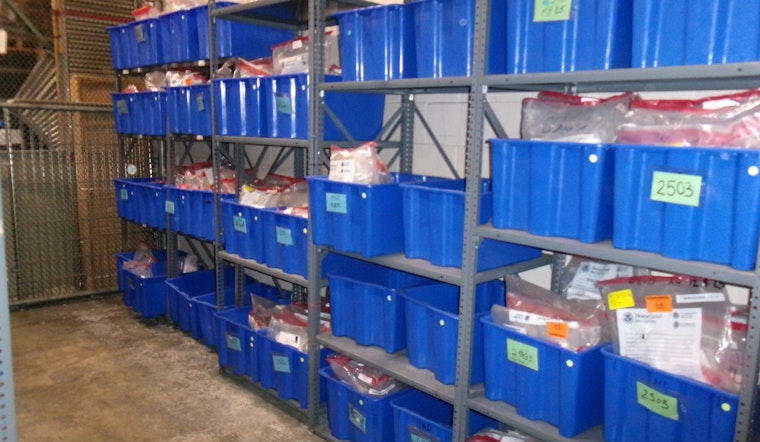
The U.S. Attorney's Office in Houston is pulling back the curtain on what happens after big drug busts, spotlighting a rare peek inside a Customs and Border Protection vault stacked with seized narcotics. In a short video clip, viewers see packaged meth, cocaine, and fentanyl that federal agents say are being stored as evidence and lined up for eventual destruction.
The U.S. Attorney's Office for the Southern District of Texas boosted the video on X, retweeting a CBP post that calls out meth, cocaine, and fentanyl among the vault's contents. In its caption, the office said agents are "keeping literal tons of dangerous and deadly drugs out of the blood of Americans." As shared by the U.S. Attorney's Office for the Southern District of Texas, the clip has been circulated to highlight enforcement results and the sheer volume of narcotics being intercepted.
Customs and Border Protection says seized drugs flow through its Fines, Penalties and Forfeitures (FP&F) system into permanent, secure vaults while cases move through the courts. According to the agency, high‑risk narcotics are controlled under strict chain‑of‑custody rules and are scheduled for destruction once all legal requirements are satisfied. That operational role is detailed by U.S. Customs and Border Protection.
Oversight and safety questions
Federal watchdogs have flagged problems with how CBP handles those vaults, warning that the way narcotics are stored can itself create safety and security risks. A 2021 audit by the DHS Office of Inspector General reported that many items in CBP drug vaults exceeded agency quantity limits and remained in storage for years. The audit recommended tighter controls and stronger oversight. CBP told auditors it agreed with the findings and has worked on improving procedures, but reviewers have continued to push for clearer timelines and more transparency, according to the DHS Office of Inspector General.
Numbers behind the stacks
CBP's own statistics hint at why those vaults can look so packed. In its March 2025 monthly update, the agency reported 760 pounds of fentanyl seized in that single month and noted sharp month‑to‑month increases in meth and cocaine seizures. Those numbers help explain how a single vault can end up holding what officials describe as "tons" of narcotics at any given time, according to U.S. Customs and Border Protection.
What this means locally
For prosecutors in the Southern District of Texas, headquartered in Houston, having secure storage for seized narcotics is central to building and trying federal drug cases. It preserves physical evidence while also giving agencies a way to highlight what they see as successful interdiction work. The U.S. Attorney's Office has leaned on its social channels to showcase those seizures as part of its broader public messaging, according to U.S. Attorney's Office for the Southern District of Texas.
The video is a blunt snapshot of the volume of illegal drugs that never make it to the street, but it also reopens long‑running questions about how seized narcotics are tracked, stored and ultimately destroyed. Federal officials maintain that strict procedures are in place, even as oversight bodies continue to scrutinize how closely those rules are followed.





