

























































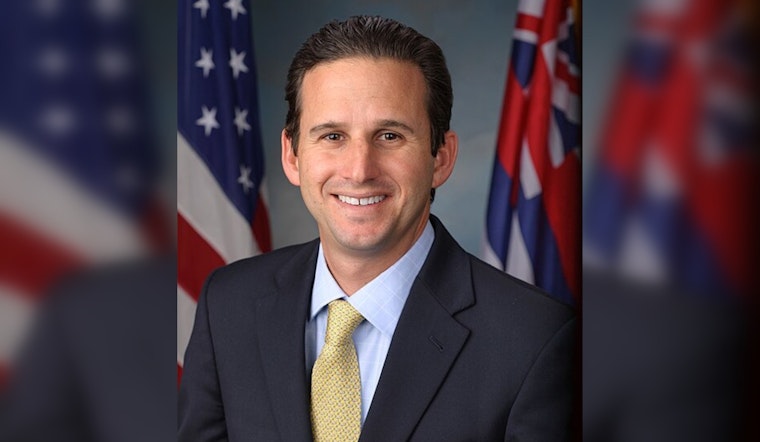
Hawaiʻi just scored a sizable federal payday. The U.S. Senate on Friday signed off on a bipartisan spending package that carries nearly $75 million in home-state earmarks for local projects, a haul steered by Sen. Brian Schatz and aimed squarely at community services, health care and infrastructure across the islands.
“We secured nearly $75 million in new earmark funding to support Native Hawaiians and communities across Hawai‘i,” Schatz said in a press release via Sen. Brian Schatz, casting the deal as a way to protect local services as national budgets tighten.
Local coverage and Schatz’s own list show the money spread across dozens of recipients, with allocations that run from six-figure upgrades to multi-million dollar builds. That includes $7.3 million to plan and design a highway on Hawai‘i island, $5 million to Child & Family Service on Maui to purchase a facility for family-strengthening programs, $3 million for Palama Settlement on Oʻahu to construct a community center, $1.6 million for the Hawai‘i Food Bank’s Waipahu facility and $1.9 million for Hale Makua Health Services nursing-home beds, according to the Honolulu Star-Advertiser. The paper also notes the larger spending package cleared the Senate on Friday.
Which Projects Landed The Cash
The list of winners reads like a tour of local needs, from museum archives to runways and ports. Schatz’s release highlights $1.6 million for Bishop Museum to digitize collections, a move that could help protect and share cultural material far beyond the archives themselves. On Hawai‘i island, The Food Basket is in line for $2 million to build a 7,000 square foot farmers market pavilion, meant to support local producers and food access at the same time.
Another $2 million would go to Dynamic Community Solutions to support infrastructure for a permanent supportive housing site on Oʻahu, according to Sen. Brian Schatz. Other earmarks cover runway rehabilitation at Molokaʻi Airport, shared-use paths on Maui and Kauaʻi, and utilities and shade structures for ports and harbors around the state.
Taken together, the awards are meant to sprinkle federal money across health, housing, transportation and cultural priorities, rather than funneling everything into a single mega-project.
How This Fits Into The Bigger Money Picture
This is not the first round of home-state earmarks for Hawaiʻi in the current budget cycle. Earlier appropriations added roughly $34 million this month and about $38 million in November, figures the Honolulu Star-Advertiser traces to Schatz’s office.
Supporters of earmarks argue that these line-item projects can move along smaller, locally tailored capital work that might otherwise get lost in the shuffle of big, competitive federal grant programs. Even with a member of Congress backing them, though, the money is not instantly spendable. Agencies still have to vet the projects, and state and county partners have to clear the usual permitting and planning hurdles.
What Happens Next In D.C. And Back Home
The Senate approved the Consolidated Appropriations Act, H.R. 7148, by a 71 to 29 vote on Friday. The measure now heads to the House, and if it passes there, the bill will go to the president for a signature, according to the Senate Democratic Caucus’ floor wrap-up.
Once the bill is signed into law, county agencies and nonprofits named in the earmark list will begin working with federal program offices to turn those line items into actual grants or contracts and to lock in construction and implementation timelines.
For many of the smaller organizations on the list, these earmarks represent a rare surge of federal capital that can make or break a building project or disaster-resilience upgrade. Exact schedules for each award will roll out as agencies and recipients work through the formal steps needed to obligate the federal funds, a process that tends to move more slowly than the headlines announcing the cash.





