

























































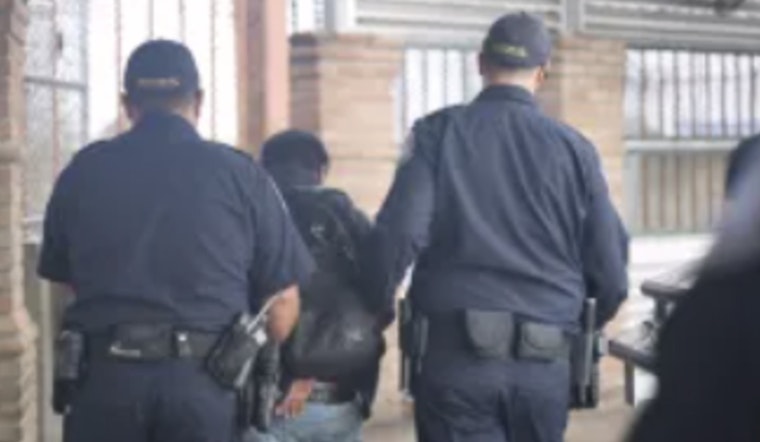
Laredo — In a busy three-day stretch in late January, U.S. Customs and Border Protection officers at ports of entry across the Laredo Field Office detained three men wanted on felony sex-related charges. The separate encounters took place Jan. 23, Jan. 24 and Jan. 25 at the Juarez-Lincoln Bridge in Laredo, Eagle Pass International Bridge I and the Anzalduas International Bridge near Mission. Authorities identified the men as 26-year-old Ezekiel John Glick, 33-year-old Adrian C. Moreno and 52-year-old Victor Manuel Pena.
According to News 4 San Antonio, CBP officers used biometric verification to match Glick to a first-degree child sexual assault warrant issued by the Taylor County (Medford), Wisconsin, sheriff’s office. Moreno was linked to Weslaco Police Department warrants for indecency with a child by exposure and by sexual contact, and Pena was tied to a sexual-assault warrant from the Cass County Sheriff’s Office in Logansport, Indiana.
How CBP found them
CBP officers routinely send some travelers to secondary inspection, where fingerprints and other biometrics are checked against federal law-enforcement databases, including the National Crime Information Center, to confirm identities and flag outstanding warrants. That identity-verification process has led to multiple fugitive arrests at Laredo-area ports of entry in recent months. The agency notes in its public releases that criminal charges remain allegations until they are adjudicated in court and that suspects are turned over to local authorities for processing, in line with standard procedure, U.S. Customs and Border Protection.
Turned over to local authorities
News 4 San Antonio reports that Glick was taken to the Webb County Jail for adjudication of the Wisconsin warrant, Moreno was handed to Maverick County sheriff’s deputies in the Eagle Pass area and Pena was turned over to Mission police for warrant adjudication. Laredo Field Office Director Donald R. Kusser said the arrests highlight officers’ vigilance in protecting communities, according to the outlet. Local authorities will determine extradition and any additional steps in each case.
Why it matters here
The Laredo Field Office oversees numerous ports of entry from Laredo down to the Rio Grande Valley and processes millions of travelers along with billions of dollars in trade every year. In that high-traffic environment, biometric screening is a regular tool for intercepting fugitives and contraband. CBP has repeatedly highlighted similar arrests at local bridges to show how identity-verification systems can pull up long-standing warrants during what begin as routine inspections, U.S. Customs and Border Protection. For residents on both sides of the border, officials stress that these remain allegations until they are proven in court.
Anyone with information related to these cases is urged to contact the local law enforcement agencies handling them. For confirmation and updates, media and community members can reach out to CBP’s Laredo Field Office public affairs channels.





