

























































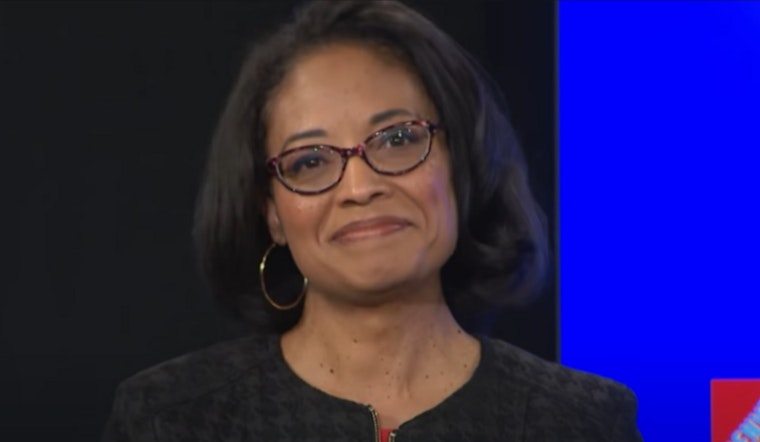
Lisa Calderón is making another run at Denver's top job, filing election paperwork and preparing to kick off her 'We Love Denver' mayoral campaign next Wednesday, Feb. 11. The longtime justice advocate and former city reentry director is centering her challenge to Mayor Mike Johnston on restoring public-sector jobs, channeling new revenue into social housing and rolling back some of Johnston's downtown and surveillance policies. Calderón, who finished third in the 2023 mayoral race, is again framing the contest around housing, public safety and small-business relief, hoping a second try can broaden the base she built last time.
As first reported by Denverite, Calderón plans to file her official paperwork and hold a launch event at Su Teatro Cultural and Performing Arts Center on Wednesday, Feb. 11. The outlet reports her slogan as 'we love Denver and we're building a city that loves us back with safety, affordable housing and good jobs,' and notes she will position her campaign directly against Johnston, who has signaled he will seek reelection. According to Denverite, she will be the third announced candidate in the 2027 field.
Background and credentials
Calderón, 57, serves as executive director of Women Uprising, a progressive training nonprofit that lists her as its leader. Women Uprising highlights her decades of work on justice issues. She has also taught criminology at Regis University and previously oversaw Denver's reentry programs for people returning from incarceration. That mix of nonprofit leadership, academic work, and city experience is central to the story she is telling voters about why she should run the city.
Where she landed in 2023
Calderón is hardly a newcomer to Denver's mayoral politics. She finished third in the crowded 2023 race with roughly 18 percent of the first-round vote, narrowly missing a runoff spot, according to The Denver Gazette. That result gave her a measurable base in progressive-leaning neighborhoods that campaign strategists say she will try to grow into a citywide coalition. Observers will be watching to see whether last cycle's name recognition can translate into more fundraising and bigger endorsements this time.
Platform: jobs, taxes and housing
Calderón's early policy agenda leans heavily into the bread-and-butter fights over jobs, taxes, and housing. She says she would restore nearly 1,000 city positions cut under Johnston's budget decisions, bring back voter-approved social housing and infrastructure bonds, and push for new revenue by taxing people who earn more than 1 million dollars a year while supporting a higher corporate tax rate. As reported by Denverite, she is also calling for a tax holiday for small businesses hurt by Colfax bus-rapid transit construction and for reinstating seniority protections for city workers. She presents the package as a way to jump-start downtown activity while keeping neighborhood employers afloat.
Surveillance, crime and Flock Safety
On public safety and surveillance, Calderón is staking out a clear line in the sand. She has pledged to end Denver's contract with Flock Safety, the private license-plate-reader system that critics argue functions as a broad surveillance network. The contract, along with Johnston's move last year to extend it under limited terms, sparked intense criticism from some councilmembers and civil-liberties advocates, who raised alarms about data sharing and potential implications for immigration enforcement. The Denver Gazette detailed the extension and Johnston's argument that additional safeguards were being added.
Colfax construction and business relief
Calderón has also zeroed in on the Colfax bus-rapid transit project as a cautionary tale about how major public works can batter small businesses when support is thin. The City of Denver's Colfax BRT page notes that construction began in October 2024 and will roll out in phases through 2027, with efforts pledged to maintain access to storefronts throughout the work. DenverGov outlines the schedule and mitigation steps that Calderón argues need to be strengthened if the city is serious about keeping those businesses alive long enough to see the project completed.
What to watch next
Calderón's first test comes at her Su Teatro kickoff next Wednesday, where turnout and the energy in the room will offer an early read on how much her 2023 run still resonates. A strong launch could attract endorsements and donors who stayed neutral or sat out last time. The larger contest is shaping up as a contrast between Johnston's record on homelessness and public safety and Calderón's promise of restored public-sector jobs and more aggressive housing-first spending. In the weeks ahead, voters can expect a steady stream of policy rollouts, endorsement announcements, and first-wave fundraising numbers that will start to show how competitive this rematch might be.
Legal implications
Several of Calderón's tax ideas would bump up against Colorado's Taxpayers' Bill of Rights, which generally requires voter sign-off for new taxes or increases in tax rates. Article X, Section 20 of the state constitution limits local tax changes and spending unless voters approve them, meaning any municipal tax hikes she envisions would almost certainly need to go on the ballot. The Colorado Constitution spells out those limits and the process for voter-approved revenue changes in the text of Article X, Section 20; see the full language in the Colorado Constitution.



