

























































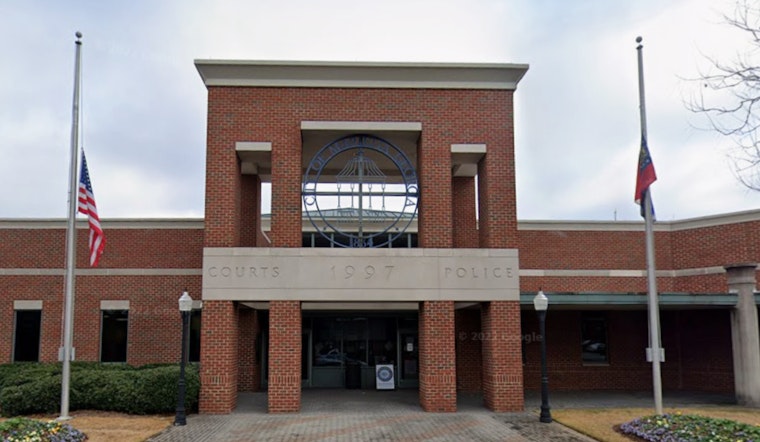
Marietta has officially put some of its police work under federal immigration supervision, joining U.S. Immigration and Customs Enforcement through the 287(g) task force model and clearing the way for designated officers to question people about immigration status and make immigration-related arrests. The agreement, finalized in January, is one of the most high-profile signups by a municipal department in metro Atlanta. Immigrant advocates say the move risks chilling crime reporting and cooperation with police in a city where many residents were born outside the United States.
The partnership surfaced publicly in a document from Immigration and Customs Enforcement that was highlighted by The Atlanta Journal-Constitution. Under the 287(g) task force model, ICE says participating local officers can carry out limited immigration enforcement while performing their normal duties. According to the AJC, Marietta is now the largest municipal police department in the Atlanta area to join the program.
Police spokesperson Chuck McPhilamy told The Atlanta Journal-Constitution the department entered the agreement in response to a new state law and has assigned just one officer to handle immigration tasks. McPhilamy said the officer has completed ICE’s required training and that the department has not yet made any immigration arrests under the program. “We have no intention of changing our mission or how we serve the public in any way,” he said, adding that the department does not plan to seek ICE funding for the extra work.
The state push behind this move started last year, when lawmakers passed House Bill 1105, a measure that pressures local agencies to cooperate with federal immigration enforcement. Gov. Brian Kemp signed the bill into law in 2024. The statute requires jurisdictions to “seek” arrangements like 287(g), a mandate that sparked strong objections from immigrant advocates and some local officials. Georgia Public Broadcasting reported on the bill’s passage and its requirement that local governments pursue these kinds of federal partnerships.
How the task force model works
Under the 287(g) task force setup, ICE effectively extends part of its authority to local officers, using them as a “force multiplier.” Deputized officers can refer cases to ICE, ask people about immigration status during routine encounters, and make arrests tied to immigration violations, as long as they operate under federal supervision. To qualify, ICE generally requires that nominees be U.S. citizens with at least two years of sworn law-enforcement experience and complete about 40 hours of training that covers immigration law, civil-rights protections and cross-cultural issues. The National Immigration Forum details the recent tweaks to task force training and eligibility rules.
Community groups push back
Immigrant-rights organizations say there is nothing “limited” about the impact this kind of agreement can have on daily life. They argue that broadening 287(g) through the task force model will fuel racial profiling and make people think twice before dialing 911 or talking to investigators. A coalition that includes Advancing Justice-Atlanta and the Georgia Latino Alliance for Human Rights has sharply criticized HB1105, warning that mandatory cooperation with ICE will “terrify immigrant communities” and deter victims and witnesses from coming forward. Local advocates describe the task force model as the most intrusive version of 287(g), saying it turns otherwise routine police stops into potential immigration screenings.
Local stakes
All of this is playing out in a city where immigrants are a substantial slice of the population. The U.S. Census Bureau estimates that about 18 percent of Marietta residents are foreign-born, a figure that puts the city near one-in-five residents born outside the country. Opponents of HB1105 argue that when people worry that any interaction with local police could trigger immigration questions, they are less likely to report crimes or cooperate with investigations, which they say undercuts public-safety goals. U.S. Census Bureau data shows the city’s foreign-born share hovering at roughly that level.
City officials stress that, for now, the 287(g) designation applies to only one trained officer and that Marietta will operate under ICE’s supervision. Advocates and some local leaders, meanwhile, say they will be watching closely for any shift in how the department carries out enforcement and how residents respond. For the moment, the new agreement leaves Marietta weighing a familiar 21st-century tradeoff: balancing neighborhood policing and community trust with state and federal demands on immigration enforcement.



