

























































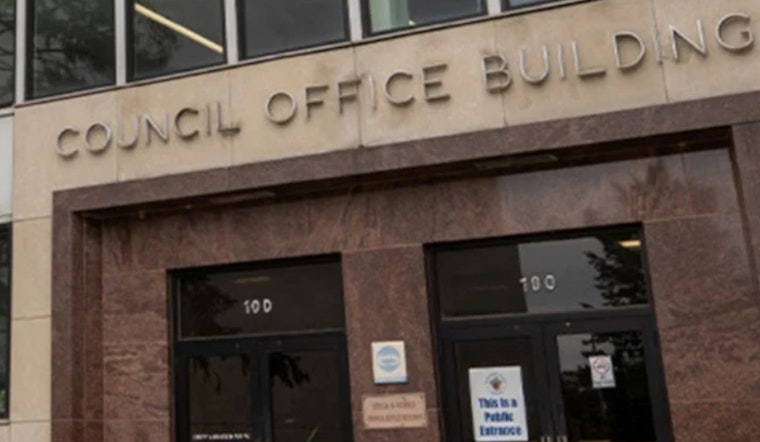
The Montgomery County Council has a busy agenda on February 2nd, starting with the Public Safety (PS) Committee's review of Bill 4-25, which proposes new regulations on surveillance technology, followed by the Planning, Housing, and Parks (PHP) Committee's examination of the Clarksburg Gateway Sector Plan. The PS Committee meeting, scheduled for 9:30 a.m., has on its table Bill 4-25; this legislation aims to increase transparency and implement safeguards relative to the county's use of surveillance technology, including facial recognition. According to the Montgomery County press release, the bill demands thorough impact reports and public hearings before any new surveillance tech is employed.
Chairs Sidney Katz, Dawn Luedtke, and Kristin Mink, who are on the PS Committee, will scrutinize the regulations that are designed to align with state law restrictions and facilitate annual reports on the county's tech use Hill, Council President Natali Fani-González, and Councilmember Will Jawando comprise the PHP Committee, which will gather at 1:30 p.m. to delve into the proposed amendment to the Clarksburg community's master plan which envisions creating a comprehensive, interconnected, and eco-conscious locale.
Furthermore, the Clarksburg Gateway Sector Plan, introduced by the PHP Committee, covers close to 969 acres and proposes enhancements in transportation, housing, recreation, and environmental stewardship within the Clarksburg area. Drawing from the press release, the sector plan is set to modify parts of the 1994 and 2014 master plans with the goal of steering future development towards a collective vision for the community. The Clarksburg Gateway Sector Plan has already stirred initial dialogues and invited public input at preceding sessions, including a briefing on January 20 and a public hearing at Rocky Hill Middle School on January 21.
The Montgomery County Council infuses government proceedings with a degree of accessibility by broadcasting committee meetings live and streaming them through multiple digital channels, effectively allowing residents to tune in to real-time deliberations over crucial legislative and community planning matters. Content from these sessions is available for public consumption on platforms like YouTube, Facebook Live, and the local cable network County Cable Montgomery; with technology and transparency converging, this fosters an atmosphere where governance is not just observed but visibly dissected in the light of day.



