

























































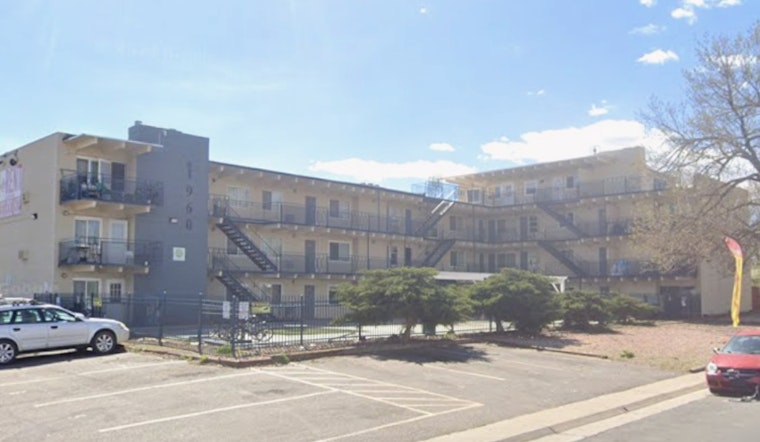
Two modest North Aurora apartment buildings, just a half-mile apart, have landed in federal bankruptcy court at the same time, pulling tenants, lenders, and brokers into a high-stakes fight over repairs, missed payments, and what happens to the properties next.
The 32-unit buildings at 1592 Boston St. and 1960 Dallas St., each owned by a separate LLC tied to the same landlord, both filed for Chapter 11 protection on Jan. 9. BusinessDen reports that Adams County values the Boston property at about $4.3 million and the Dallas property at about $4.1 million, and that bankruptcy paperwork lists roughly $3 million owed to U.S. Bank on Boston and about $4.8 million owed to Wilmington Trust on Dallas. Both properties reported double-digit revenue drops last year.
What the court files show
Court dockets list Jan. 9 as the petition date for both cases, with early deadlines already set for a disclosure statement, a Chapter 11 plan, and government proofs of claim. It is a fast-moving timetable that limits how long the landlord can linger in legal limbo.
According to Bankruptcy Observer and Bankruptcy Observer, the filings classify both debtors as single-asset real estate entities and list local counsel for each petition, signaling to the court that these are straightforward property cases rather than sprawling corporate collapses.
How lenders and receivers got involved
The Dallas Street property hit legal trouble before the bankruptcy. Wilmington Trust sued the Dallas ownership entity in April 2025, alleging missed payments on the loan secured by the building. A judge responded by ordering a brief receivership, and the case list on Receivership Specialists shows Kevin A. Singer was appointed as receiver for the property.
That move put management and cash flow under a court-supervised third party and signaled rising creditor pressure well before the Chapter 11 filings, a common pattern when a lender is no longer willing to wait for a turnaround.
Tenant lawsuit and living conditions
Conditions at 1960 Dallas St. are not just a financial problem. Several tenants there have filed a civil lawsuit alleging that flooding in May 2023 caused “a massive infestation of toxic mold” that ownership did not remediate. The plaintiffs say many tenants are refugees from the Democratic Republic of the Congo.
Those allegations, which remain to be tested in court, could complicate any sale or reorganization and add legal exposure for both the current owner and any would-be buyer, according to BusinessDen.
Properties on the market
Even as the bankruptcy cases get underway, brokers are trying to move the buildings as a package deal. The two assets are being marketed together as a 64-unit portfolio, with each property listed at around $4.025 million and combined prices in the neighborhood of $8.05 million on MLS and LoopNet.
Marketing materials spotlight strong Section 8 demand and promise to “convey the existing team” of on-site staff, a pitch aimed at investors who want immediate, stabilized cash flow rather than a ground-up turnaround project. See the broker listing on Madison & Company and the property page on LoopNet for the full marketing packages.
What’s next
With Chapter 11 cases now open, the next few months will be crucial. The court has already set early milestones that could force a reorganization plan or a court-approved sale onto the docket sooner rather than later.
Lenders will be watching closely. They can push for a sale of the properties or negotiate a restructuring of the existing loans, while prospective buyers weigh the income potential against repair obligations and tenant claims. Any bid will have to factor in not only current rents and vacancies but also the cost of addressing alleged damage and deferred maintenance.
Legal implications
The Wilmington Trust foreclosure action, the brief receivership, and the tenant lawsuit together create a thicket of overlapping legal issues. That combination could reduce recoveries for secured creditors or delay any sale if buyers grow wary of the litigation and potential remediation costs.
Any new owner will need to build a serious due diligence budget, accounting for potential mold remediation, outstanding loan balance,s and the outcome of the tenant suit before the deal pencil-outs.
For neighbors and residents in North Aurora, all of this means more uncertainty around maintenance, management, and long-term tenancy at two unassuming apartment buildings that suddenly carry a lot of legal baggage. We will continue to monitor court dockets, broker listings, and future filings that push the properties toward either a sale or a reorganization.





