

























































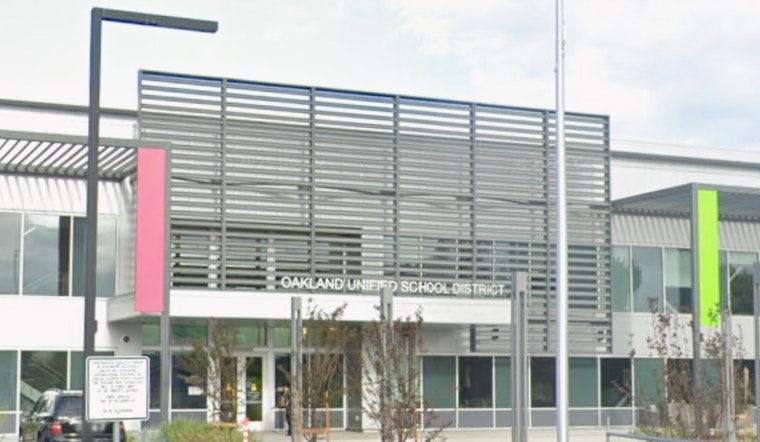
City funding that covers school-based violence interrupters at Oakland high schools is set to run out at the end of the school year, leaving the teams that mediate fights and coach students in limbo as district leaders wrestle with deep budget cuts. Without a firm commitment from Oakland Unified to pick up the tab, work that has prevented conflicts and connected students to services is staring down a June deadline.
Funding timeline and who pays
The city’s Department of Violence Prevention has used Measure Z dollars to place three-person VIP teams, a life coach, a violence interrupter and a gender-based violence specialist, at seven high schools and has directed more than $8 million to that work over the last four years, according to The Oaklandside. On campus, the teams mediate conflicts, provide life coaching and respond to gender-based violence. The Oaklandside reports that the current contracts run through June 2026, after which there is no committed city or district funding on the books.
City grants and short-term fixes
City records show the department accepted a $1.3 million grant from OUSD for Jan. 1, 2025 through June 30, 2026 and then awarded contracts to community partners, including roughly $425,000 to Youth ALIVE with similar awards to other nonprofits, to staff the school teams, according to public agenda documents from the City of Oakland. Those agreements were framed as short-term support while the city and district sorted out longer-term plans. The public filings are clear that the current dollars are tied to specific grant periods rather than a guaranteed ongoing line item.
What the evaluation shows
A December evaluation by the Urban Institute found the pilot reached more than 600 students across seven high schools and documented high rates of life-goal completion, along with stronger bonds between students and VIP staff. The report labeled the pilot "promising" but noted that the sample size was too small to show statistically significant changes in absences or suspensions. Evaluators recommended clearer roles and stronger district support for the teams to boost consistency and outcomes.
District math complicates a lifeline
The money crunch is hitting just as Oakland Unified tries to close an estimated $100 million budget gap for next year, a shortfall that board members and staff say will require deep cuts across the district, according to reporting by Oakland Report and local outlets. The board has been told to identify hundreds of millions in savings over time and will not finalize a budget until June, which leaves little room to take on new recurring costs. That timing makes it especially hard for OUSD to promise fresh, ongoing funding for the VIP teams.
On the ground, staff warn continuity matters
Violence interrupters and life coaches say the model depends on consistency, not start-and-stop grants, and that students quickly notice when teams disappear. Reporting from campuses including Castlemont describes life coaches mediating fights, running peer groups and tracking students who are at risk, while community providers say pulling funding in June would unravel those routines almost overnight. "Just to be clear, everyone wants us there," Youth ALIVE executive director Joe Griffin told CBS as he urged stable support.
Where funding decisions could go next
City officials have already issued a request for proposals for community violence intervention contracts that would run from October 2026 through September 2029, signaling an interest in multi-year agreements if the dollars are there, according to the City of Oakland's DVP RFP. Those procurement timelines, though, mean any new, sustained school funding still depends on future city budgets and school-district priorities. Upcoming school board votes and city funding cycles will decide whether the teams survive beyond June.
For students, staff and community groups, the choice on paper looks simple: keep a model that builds trust on campus or let it lapse and watch relationships and services dissolve. Local advocates including Valarie Bachelor and Laura Blair have said the looming end of funding is urgent, and that city and district leaders will have to decide quickly where, and whether, to replace those Measure Z dollars, as reported by The Oaklandside.





