

























































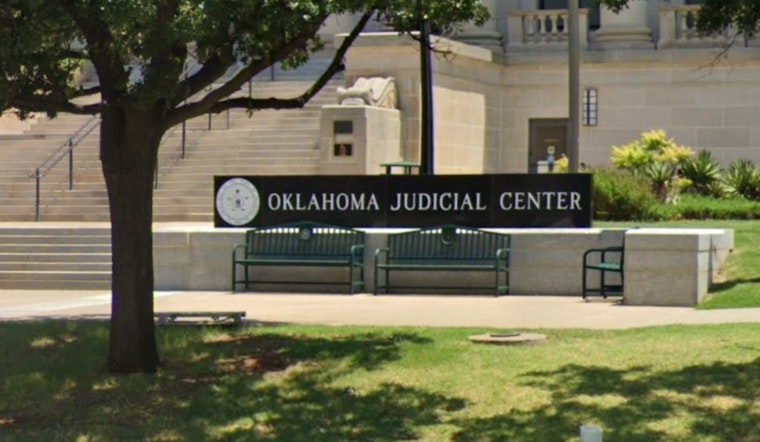
Oklahoma’s highest criminal court has officially told lawyers that if a robot helped write their brief, a human had better double check it first.
On Wednesday, the Oklahoma Court of Criminal Appeals signed off on a new rule that requires attorneys to verify any portion of a filing that was produced or altered by generative artificial intelligence before it hits the court’s docket. The move is aimed at stopping bogus or inaccurate citations from slipping into the record and, as the court bluntly warned, unverified AI output can mislead judges and opposing parties. Lawyers who ignore the rule could face formal sanctions.
New rule requires human verification
The order creates Rule 1.17, which says that when generative AI has been used in drafting any document filed in the Court of Criminal Appeals, the party or counsel must ensure that every portion produced or modified by generative AI “has been verified as accurate by a person responsible for the document.” The order also defines generative AI and makes the rule effective on the date it was issued.
As outlined by Justia, the court spelled out potential penalties for violations, including waiver of the affected issues on appeal, striking non compliant documents, or a finding of contempt.
Presiding judge’s warning
Presiding Judge Gary Lumpkin filed a special concurrence that reads like a pointed reminder to the bar. He stressed that when an attorney signs a filing, it is a certification that the authorities and quoted language inside are accurate, writing that a signer "certif[ies] that all citations of authority ... are true and correct" and risks sanctions if they are not.
Lumpkin’s message is that AI does not change the basic rules of professional responsibility. Human oversight, he wrote, remains the non negotiable baseline, even if new drafting tools are brought into the mix. His concurrence appears alongside the court’s order as recorded by Leagle.
Local ripple effects
The decision is already prompting ripple effects beyond the appellate courthouse in Oklahoma City. Oklahoma County District Court Presiding Judge Sheila Stinson said she plans to forward the OCCA rule to the district court’s rules committee and views the state level approach as a middle ground between outright bans on AI and more sweeping federal disclosure requirements.
On the legislative side, House Speaker Kyle Hilbert said state level rules could help fill the gap while Congress argues over national AI policy. He also suggested that filings should disclose AI assistance when it affects substantive research or citations. Those comments were reported by The Journal Record.
Why courts are moving
The Oklahoma order lands after a series of high profile embarrassments in which unverified AI work product turned into fake citations and court sanctions. In 2023, a federal judge sanctioned attorneys after fictitious, AI generated authorities appeared in a brief in Mata v. Avianca.
The trend has reached appellate courts as well. The Tenth Circuit warned about so called "AI hallucinations" in its decision in Moore v. City of Del City, where the court, after spotting multiple apparently fabricated cases, ordered a litigant to disclose any use of generative AI and to verify citations under penalty of perjury, according to the Tenth Circuit.
What lawyers should do
Ethics guidance and bar trainings have been repeating the same basic rule: treat AI output like a first draft, not a final product. Every citation, case name, and factual assertion still needs to be checked by a real person before it shows up in a filing.
The Oklahoma Bar Association has urged lawyers to verify citations and sources and has offered practical suggestions for using generative tools without tripping over ethics rules. See the Oklahoma Bar Association’s guidance for attorneys for more on verification and risk management.
Legal implications
The new OCCA rule leaves little room for interpretation. Verification is no longer a best practice, it is a codified obligation. Failing to confirm an AI produced citation or factual claim can bring sanctions in an individual case and potentially trigger professional discipline.
For Oklahoma practitioners, Rule 1.17 adds a specific certification duty for filings in the Court of Criminal Appeals and gives the court a clear enforcement mechanism when AI related errors make it into the appellate record.
For now, the order is narrow in scope, it applies only to filings before the OCCA, but it does not take a crystal ball to see where the trend is headed. In combination with state bar guidance and recent appellate decisions, the message is that attorneys should adopt consistent verification habits in every court, not just at the criminal appeals level.
Oklahoma County’s rules committee will consider whether to track the OCCA language at the district court level, a move that could expand these requirements to a broader slice of the state’s docket and further standardize how Oklahoma judges deal with AI assisted drafting.





