

























































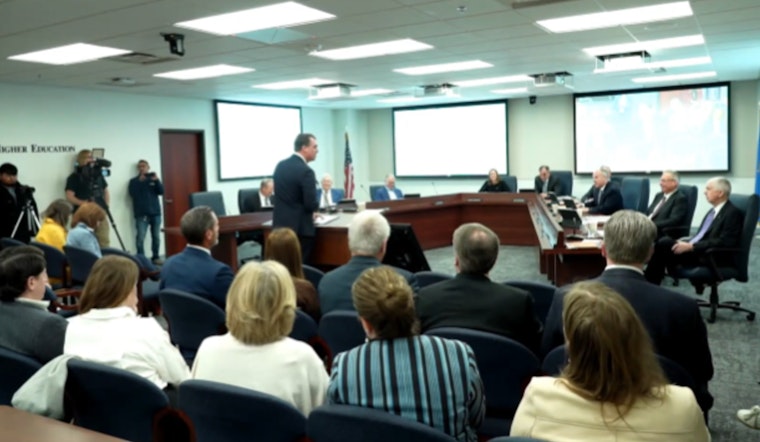
Oklahoma Governor Kevin Stitt recently addressed the importance of aligning higher education with the state's workforce needs during a meeting with the Oklahoma State Regents for Higher Education in Oklahoma City. Stitt pointed out the 88 percent alignment of degrees with Oklahoma's top employment sectors and highlighted significant research developments at the University of Oklahoma and Oklahoma State University, specifically in areas such as weather, radar, defense, aerospace, and cancer at University of Oklahoma, and rural health, drones, and agriculture at Oklahoma State University, as reported by the Governor's office.
The Governor is looking to further tightly integrate academic programs with practical workforce requirements, proposing initiatives like tenure reform and apprenticeship expansion. According to a release from the Governor's office, Stitt is also promoting the development of 90-hour bachelor's pathways to accelerate entry into the workforce. He emphasized the successes in higher education but also called for continuous improvement, suggesting the need to "reimagine education" to better prepare students for the current job market.
Stitt's proposed measures include an executive order for an outcome-based system for public colleges, which would require institutions to consider student wages and employment rates when evaluating academic programs. He celebrated the increase in nursing graduates from OU, following an expansion of their nursing program after benchmarking against other universities like Texas A&M. This improvement has resulted in over 1,000 new nurses graduating in 2024 alone and the addition of an LPN-to-RN program as well as an online option, as detailed by the Governor's office.
In terms of collegiate sports, the Governor didn't hesitate to point out the competitive drive that has captured the universities, with University of Oklahoma and Oklahoma State University amassing multiple national championships across different disciplines. Additionally, the uptick in public higher education enrollments, accomplishing five consecutive years of fall enrollment growth, is something Stitt considers worth noting. He has set a clear target of reaching 40,000 students at each university, aiming to grow beyond the stagnant numbers prevailing since his own college days. The Governor mentioned that University of Oklahoma and Oklahoma State University have now collectively reached 36,000, which hints they are close to realizing this ambitious goal.
Looking forward, Governor Stitt’s attention on Oklahoma’s education system seems fixed on ensuring that state institutions not only equip students with knowledge but also with the practical skills necessary for them to stay competitive in a shifting economic landscape. His focus on tenure reform, where he said, "No taxpayer-funded job should skip performance reviews," signals a push for accountability and productivity among faculty. Emphasizing the need for education to meet industry demand, Stitt is advocating for a pragmatic approach to higher education, striving to keep Oklahoma students and talent within the state, as noted by the Governor's office.





