

























































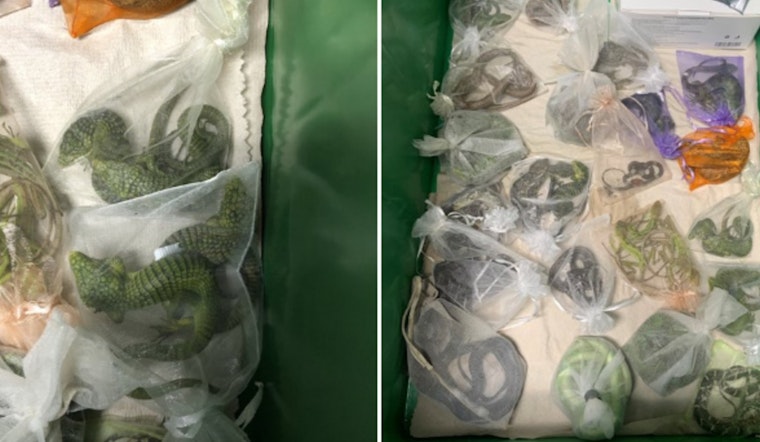
Federal prosecutors in Los Angeles were scheduled to have a sentence hearing for Jose Manuel Perez, 34, of Oxnard on Thursday, but the hearing has been postponed until March 19 as the court considers several defense motions, capping what authorities say was a yearslong scheme to sneak live reptiles into the United States and flip them to buyers across the country. Investigators say Perez moved dozens of animals at a time, sometimes literally strapped to his body, in a case that has raised eyebrows for both the sheer volume of wildlife involved and the inclusion of protected species.
Perez pleaded guilty in August 2022 to two counts of smuggling goods into the United States and one count of wildlife trafficking. In court, he admitted to illegally importing more than 1,700 animals over approximately six years, with prosecutors pegging the market value at more than $739,000. According to the U.S. Attorney's Office, Central District of California, the plea came after a multiyear federal investigation.
Seizure at San Ysidro
The scheme unraveled dramatically at the San Ysidro Port of Entry on Feb. 25, 2022, when border officers discovered roughly 60 live reptiles tied up in small bags and hidden inside Perez’s clothing, according to court records. Three of those animals did not survive the attempt. Filings list Yucatan box turtles, Mexican box turtles, baby crocodiles, and Mexican beaded lizards among the species involved, and investigators say the animals were brought into the country without the permits required by international law.
The U.S. Fish and Wildlife Service detailed the seizure, while CBS News relayed Customs and Border Protection’s standing warning that smugglers will try “every possible way” to move animals across the border.
How Investigators Say the Ring Operated
According to court filings, Perez and his associates relied heavily on social media to arrange purchases and shipments from Mexico and Hong Kong from January 2016 through February 2022. For wildlife coming out of Mexico, authorities say accomplices picked up animals at Ciudad Juarez International Airport, then drove them by car to El Paso, Texas, where they were moved into the United States.
From there, shipments were allegedly sent to Perez’s family home in Oxnard and resold to customers around the country. The U.S. Attorney's Office, Central District of California says Perez sometimes operated under the alias “Julio Rodriguez” while running the operation.
Sentence, Penalties and Next Steps
Perez faces a statutory maximum sentence of 20 years in federal prison for each smuggling count, plus up to five years for the wildlife trafficking charge. A hearing was slated for this week after Perez informed the judge he needed more time to prepare and requested a ruling on his motions regarding the validity of the evidence and his prior plea agreement. MyNewsLA reported the new hearing date is set for March 19 in downtown Los Angeles.
Why This Case Matters
Wildlife experts say the case highlights how easily online platforms can be exploited to support illegal animal trade and underscores why permits under the Convention on International Trade in Endangered Species (CITES) exist in the first place. The U.S. Fish and Wildlife Service, which led the investigation, has stressed that pulling animals from the wild and shipping them across borders can spread disease and further threaten already vulnerable species.
Prosecutors say the sentence in Perez’s case is intended not only to punish one trafficking operation, but also to send a broader message aimed at disrupting commercial wildlife smuggling networks and deterring would-be copycats.
Editor’s Note: This article has been updated to reflect the correct information of the sentencing hearing.



