

























































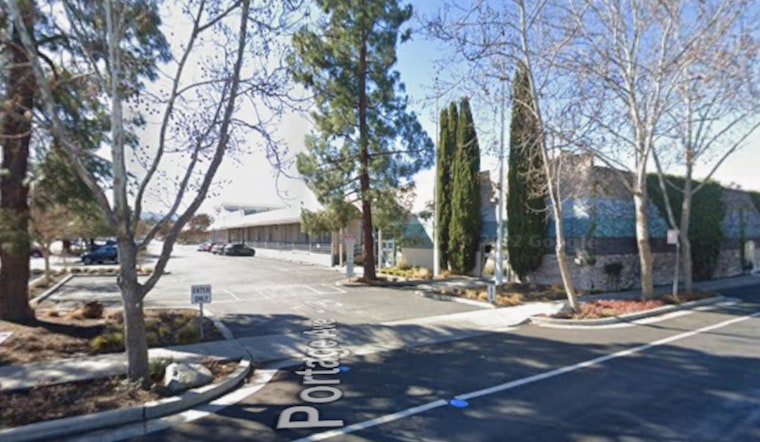
An affiliate of The Sobrato Organization is moving to turn the long-closed Fry’s Electronics property in Palo Alto into roughly 74 condominium units, setting the stage for a major remake of one of the city’s most talked-about empty big-box sites. The proposal would carve residential parcels out of the site’s larger commercial footprint and would require at least partial demolition of the old cannery building along Matadero Creek. The housing portion is concentrated along Park Boulevard near Olive Avenue, while other office and R&D buildings on the 14.65-acre property would remain in place in some form. Both the developer and the city emphasize that the plans are still early and will go through environmental review and public hearings before any construction begins.
As reported by The Mercury News, public planning filings show that an affiliate of Sobrato has submitted a vesting final map that would merge and subdivide the roughly 14.65-acre property into five lots. According to those filings, the housing parcel would occupy roughly 3.9 acres and is sketched for about 74 townhome-style units clustered near Park Boulevard. The application is logged in city records as part of the 3200 Park Boulevard / 340 Portage Ave project and is listed under application 25PLN-00104.
What the proposal would build
Early drawings show three-story townhomes arranged in groups of four to seven units, each with two-car garages and dedicated bicycle parking. Public plans and local coverage name architects and landscape teams and describe a palette of stucco, wood-look siding and fiber-cement panels in the renderings. The developer’s submission also calls for converting an 11,600-square-foot auto-services space to research-and-development use and for building a single-story parking garage to replace parking lost to the housing parcels, according to reporting and the project materials.
These design and entitlement details are summarized in project coverage and filings reviewed by SF YIMBY and in the city's public project pages.
Historic resources and public review
The cannery building that once housed Fry’s has been identified by city staff as eligible for the California Register of Historic Resources, and that finding complicates plans to remove portions of the structure. Because an environmental review process has already produced a Draft and Revised Final EIR for related proposals on the site, the new proposal must still clear formal CEQA review and multiple hearings before any demolition or major construction begins. Those procedural steps and the council’s summary of conditions are laid out in the city's statement on the council action.
Details on the site's historic-resource eligibility and neighborhood reaction were discussed in local reporting that highlighted residents’ skepticism about partial demolition and how historic preservation rules should apply to the cannery building. That coverage captured a range of community concerns about what would be lost and what public benefits the city should secure.
Public benefits and tradeoffs
The Sobrato development agreement approved last year includes commitments to dedicate land for public benefit and to contribute funds to off-site affordable housing and park improvements. City summaries of the action note a planned dedication of acreage for parkland and an affordable-housing parcel as part of the overall deal. Those tradeoffs, housing in exchange for parkland and cash contributions, are central to the public conversation as the project moves through review.
Next steps
The proposal is still preliminary, and the developer has not posted a construction timeline. Project materials say the plan remains subject to revision as it proceeds through the entitlement process. The next formal steps include additional hearings before the Architectural Review Board, the Planning and Transportation Commission and ultimately the City Council if the project moves forward. Reporting on the filings notes that public input and design refinements will shape the final scope and schedule.
How other Fry's sites have fared
Across the Bay Area, former Fry’s properties have taken different paths. Some parcels have been eyed for housing, while others were acquired for industrial or tech uses. In San Jose, for example, Supermicro bought the Mayan-themed Brokaw Road Fry’s and is advancing plans for a large tech campus rather than housing, underscoring how ownership and market demand drive divergent outcomes for similar big-box footprints. Those contrasting outcomes help explain why community advocates are watching the Palo Alto proposal closely.
For Palo Alto, the Sobrato plan would add market-rate homes near a commercial corridor that has been shifting for years, but it also reopens a fraught debate over preservation, parks and how much public benefit to expect from private development. Project filings, city summaries and upcoming hearings will be the best places for neighbors to follow changes, and we will report updates as the city posts new materials and schedules public meetings.





