

























































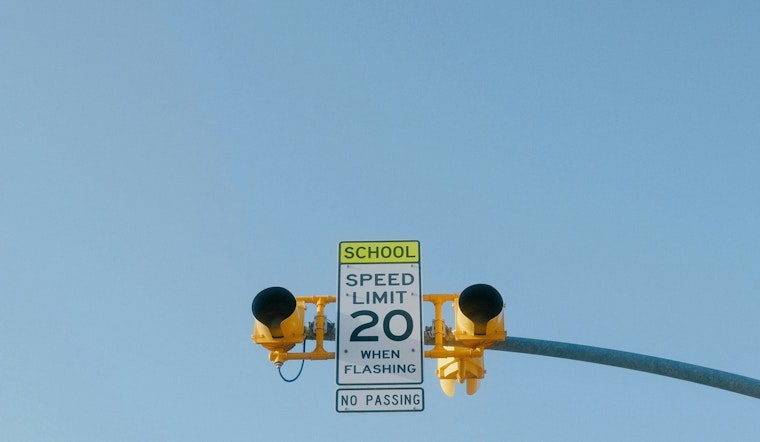
Drivers who like to punch the gas near Alcoa schools are about to get some high-tech company. City officials and the Alcoa City School District are moving ahead with a Blue Line Solutions "three-warnings" enforcement program aimed at slowing traffic around local campuses. The plan relies on LIDAR-equipped devices, clearly posted warning signs, and flashing beacons that operate during arrival and dismissal times, while city and school leaders hammer out how to split costs and any future revenue. Officials are framing the move as a safety push as new development adds traffic near the district's downtown edge.
City commissioners and the Alcoa City School Board agreed to keep the partnership in place and start work ahead of, and into, fiscal year 2027, according to The Daily Times. The paper reports that the cameras would only run on school days, roughly one hour before classes begin and one hour after students are dismissed. Blue Line would install, monitor, and operate the equipment at its own cost for at least two years, and any remaining revenue would be directed to school-zone roadway improvements. The proposed cost and profit-sharing plan still needs sign-off from the commission.
How the three-warnings system works
The setup is designed to tap the brakes on drivers long before a ticket enters the picture. First, motorists see digital speed displays and flashing beacons that highlight the school zone and the limit. If a driver keeps speeding, a LIDAR unit records the license plate for later review. Blue Line and other vendors have used a 30-day warning phase, along with low or no upfront installation costs, in other communities, according to WDEF. Supporters argue that layering warnings with automated detection cuts down on dangerous speeding without tying up officers on school-zone duty, while critics counter that cities need tight oversight on contracts and revenue sharing.
Where cameras could be placed and timeline
Officials have floated portions of Faraday Street, Tesla Boulevard, Marconi Boulevard, Lodge Street, Vose Road, and Springbrook Road as possible coverage areas. They say a full rollout could take six to twelve months. The Daily Times reports that once the hardware goes in, drivers would face roughly a 30-day grace period when they receive warnings instead of tickets. In other words, even after the poles and cameras appear, actual citations would not start hitting mailboxes right away.
Money and oversight
Automated speed camera programs often include revenue sharing with private vendors, and that structure has raised eyebrows in more than a few town halls. Reporting by The Vindicator found that Blue Line retained sizeable fees in earlier programs. Municipal lawyers in other cities have also urged officials to use requests for qualifications to limit legal exposure, as noted in coverage of Trenton's deliberations by the Gilchrist County Herald. Those same kinds of debates are now playing out in Alcoa as leaders weigh whether to seek competitive bids or go straight to a deal with Blue Line.
What residents can expect next
City and school officials say they plan to roll out public outreach so residents are not blindsided by the new gadgets. That includes social media updates and an open house hosted by Blue Line to walk people through how the system works. The Alcoa City Schools calendar lists upcoming board work sessions where traffic safety and related funding are expected to be on the agenda, according to Alcoa City Schools. If the commission signs off on the cost-sharing plan, the city and district expect to move into the multi-month installation phase, followed by the 30-day warning period before any citations begin.
Bottom line
Supporters say the combination of flashing lights, digital reminders, and automatic detection should cool down speeds where kids cross the street. Skeptics say the public needs to keep a close eye on contract terms and who pockets what from fines. For now, parents and drivers can expect more meetings, more discussion, and a gradual build-out that could stretch into fiscal 2027 before full enforcement actually kicks in.





