

























































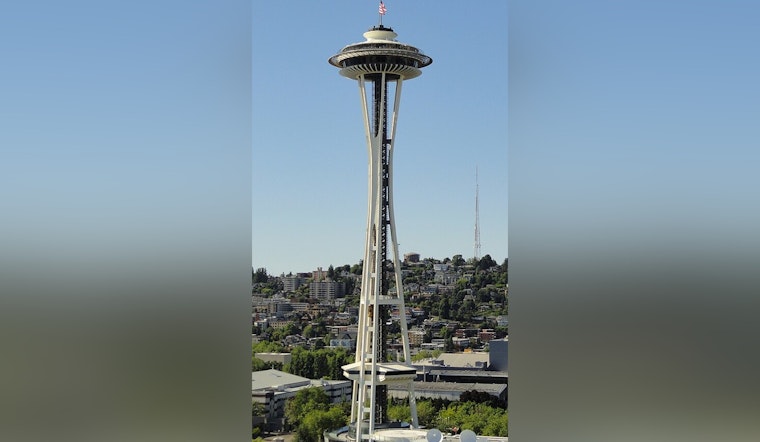
The Space Needle is moving in next door in a big way. The Seattle icon has agreed to buy the northeast corner of the Pacific Science Center campus, a slice that represents less than 25% of the site, the two institutions announced on Wednesday, Feb. 11, 2026. PacSci leaders say the deal will provide one-time capital to stabilize operations and bankroll new projects, including a planned $20 million Maker & Innovation Lab, while the Space Needle takes over the Boeing IMAX theater for renovations and a reopening targeted for this spring.
What the Space Needle Is Buying
The sale covers Building 1, the Carnevali Pavilion, the Boeing IMAX Theater and a portion of the Ackerley Family Exhibit Gallery, according to a press release from Pacific Science Center. PacSci says the parcel amounts to less than a quarter of its campus and that its board signed off on a purchase-and-sale agreement after a multi-year review led by an ad hoc real estate committee. “We had more property than we could operate sustainably,” PacSci President and CEO Will Daugherty said in the release.
IMAX Plans and Daily Operations
The Space Needle plans to run the Boeing IMAX theater after a short renovation, and the venue is expected to reopen in May as an IMAX experience, KOMO News reports. Space Needle CEO Ron Sevart has said keeping the Boeing IMAX in operation is the immediate priority, with the two organizations planning to explore additional programming and guest-experience upgrades over time. PacSci, for its part, will continue to operate its separate PACCAR IMAX theater elsewhere on the campus.
New Makerspace and a More Open Feel
PacSci says money from the sale will support ongoing operations and major capital projects, including a 14,000-square-foot Maker & Innovation Lab that the organization values at about $20 million. The Maker & Innovation Lab page on PacSci’s website notes initial support from King County’s Doors Open program and state capital requests as the nonprofit ramps up private fundraising. The two organizations say their new partnership will include joint promotion, add-on ticket options and reciprocal membership benefits intended to keep strong ties between the attractions.
Landmark Rules Still Apply
The Pacific Science Center campus was declared a City of Seattle landmark in 2010, and both organizations say they remain committed to preserving Minoru Yamasaki’s arches and courtyard while following the city’s review process. As outlined on the city’s Historic Preservation pages, any changes to designated landmark features must go before the Landmarks Preservation Board and secure a Certificate of Approval before work can move ahead. Seattle P-I covered the original designation and the preservation constraints that shape future alterations.
Why Seattle Should Care
The transaction is being framed as a way to right-size PacSci’s footprint while generating capital for exhibits, infrastructure and programs. At the same time, it transfers prominent parts of the campus to a major tourist operator, which has raised questions about access, pricing and programming. The Stranger and other local outlets have already pointed to concerns about whether the Boeing IMAX will continue showing the same slate of first-run films or pivot toward more specialized immersive programming. PacSci and the Space Needle say the deal is intended to stabilize the science center’s finances while expanding opportunities for visitors and the broader Seattle Center campus.




