

























































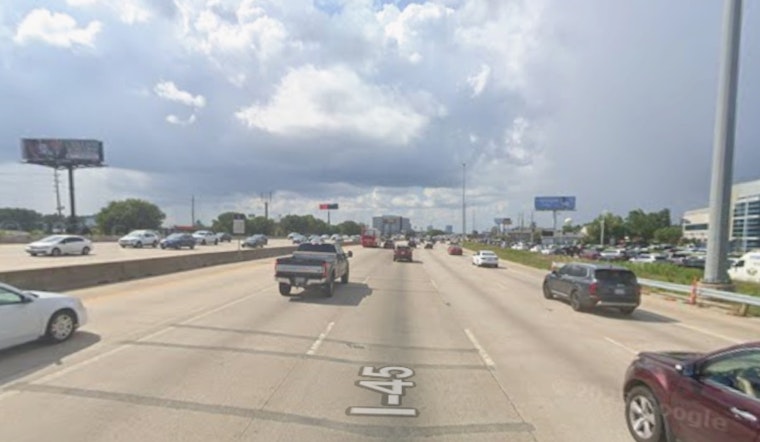
If it feels like driving I-45 through North Houston is a high-stakes gamble, the data backs you up. A national review of two decades of crash records has crowned a 10-mile slice of the freeway as the deadliest stretch in the country.
The segment of Interstate 45 between exits 49B and 60A logged roughly 142 fatal crashes and 148 deaths over the study period. Those numbers land on top of an already grim reputation for a corridor that mixes constant congestion with major, long-running construction.
The ranking comes from a 2023 analysis by personal-injury firm Elk & Elk and data partner 1Point21 Interactive, which examined National Highway Traffic Safety Administration records from 2000-2019. According to that report, the Houston segment averaged 7.7 fatal crashes a year and had a worst year that saw 15 people killed. Elk & Elk also found that seven of the ten deadliest 10-mile stretches in the country were in Texas, with Dallas claiming five of those spots.
Recent numbers have not offered much comfort. As reported by KPRC Click2Houston, TxDOT recorded 97 fatal crashes on I-45 in 2023 and said 105 people died that year on the corridor between Dallas and Galveston. Those totals help explain why safety and congestion fixes along I-45 have become a top priority for transportation planners.
How the study measured danger
The Elk & Elk analysis carved NHTSA fatal-crash data into 10-mile segments, then ranked each stretch by the total number of deadly crashes, a method similar to other national studies of highway risk. Fleet analytics company Teletrac Navman has separately flagged I-45 as one of the most dangerous roads in the United States when measured by deaths per mile, reinforcing the freeway’s recurring appearance on national worst-of lists.
What makes the stretch so hazardous
Traffic engineers and safety advocates point to a cocktail of risk factors: heavy freight traffic, high speeds, confusing ramps and tight interchanges that leave minimal room for error. According to TxDOT NHHIP materials, planned fixes include replacing outdated left-lane exits, rebuilding ramps and improving sight lines, all aimed at reducing known design problems that contribute to severe crashes. With commuter, commercial and long-distance drivers all funneled into the same corridor, those design choices can quickly become life-or-death details.
A darker history along the route
The danger around I-45 is not limited to traffic statistics. Parts of the corridor south of Houston are tied to a notorious criminal history in an area known locally as the Texas "Killing Fields," where multiple disappearances and bodies were discovered starting in the 1970s. That legacy has fueled a chilling reputation for stretches of the highway, documented in reporting by the Houston Chronicle.
Where officials are putting their money
State and local leaders are already pouring resources into a massive rebuild. The Texas Department of Transportation’s North Houston Highway Improvement Project outlines phased reconstruction of I-45 in the area, new managed lanes, realigned ramps and more flood-resilient drainage in an effort that is expected to stretch over 18 years. TxDOT describes the undertaking as a multibillion-dollar overhaul, and reporting has placed the total price tag in the roughly 9 to 13 billion dollar range, with construction and related work projected to run into the 2030s, according to background coverage by SlashGear.
The study is a blunt reminder that road design, enforcement and driver behavior all help determine how deadly a freeway becomes. As NHHIP construction phases move forward, drivers can count on more lane closures, detours and orange barrels, and officials continue to urge extra caution through work zones and on nighttime runs along I-45.





