

























































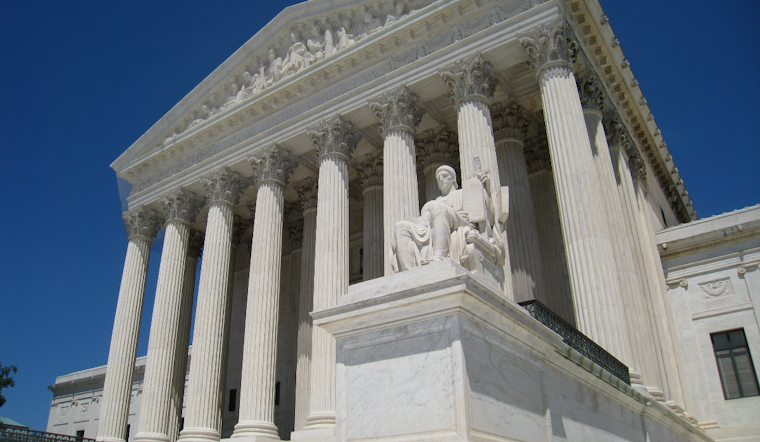
The U.S. Supreme Court has declined to take up a challenge to Maryland’s gun disqualification law, leaving in place a state high court ruling that blocks people sentenced to two years or more from possessing firearms. For Robert L. Fooks, the man at the center of the case, that means the Maryland decision stays put, at least for now.
According to the Supreme Court, the justices denied Fooks’ petition for a writ of certiorari on Monday. The short, unsigned order, issued without comment, closes off his federal appeal after a lengthy state court fight. The petition was docketed in September 2025, and the State filed its response in January 2026.
Maryland high court: statute functions like a felon ban
In a June 6, 2025, opinion, Chief Judge Matthew Fader wrote that Public Safety §5-133(b)(2) “is, in substance, a prohibition on the possession of firearms by felons” and therefore passes Second Amendment scrutiny. That approach treats certain common law convictions followed by lengthy prison terms as functionally equivalent to felonies for gun dispossession purposes, as laid out in the Maryland Supreme Court.
Local reporting says Fruitland police seized guns tied to Fooks in 2021 during an investigation into roughly 13 stolen firearms, and that Fooks had been convicted in 2016 of constructive criminal contempt for failure to pay child support and sentenced to four years and six months. He later entered a conditional guilty plea to two counts of illegal possession while reserving his Second Amendment challenge, according to Maryland Matters.
The dissent and the history question
Justice Jonathan Biran dissented, warning that the majority could not point to historical laws that disarmed citizens who did not pose a threat to public safety and that the opinion could open the door to broad disqualifications simply by raising statutory maximum sentences. His critique, and the majority’s extended historical response under the Bruen and Rahimi framework, appears in the Maryland Supreme Court.
How this fits into post-Bruen doctrine
The Maryland ruling lands against a backdrop of recent Supreme Court guidance on how to apply Bruen’s history-and-tradition test, most notably in the Supreme Court, where the Court held that individuals adjudged to pose a credible threat may be disarmed. Lower courts remain split over how closely a modern regulation must track a historical analogue, and The Washington Post has recently outlined how those disagreements have played out in the Fourth Circuit and in challenges to Maryland firearm laws.
What it means for Marylanders
For now, the decision leaves intact the state’s list of disqualifying categories under Public Safety §5-133, including the provision that bars gun possession by anyone “convicted of a violation classified as a common law crime and received a term of imprisonment of more than 2 years.” That language is codified at the Maryland General Assembly, and changing it would take another court decision, a future Supreme Court review, or action by lawmakers in Annapolis.
The Supreme Court’s denial ends this particular chapter for Fooks, but it does not resolve the broader fight over where public safety concerns stop and constitutional rights begin. Expect litigants, advocates, and legislators in Maryland to keep pressing those questions in courtrooms and at the State House.





