

























































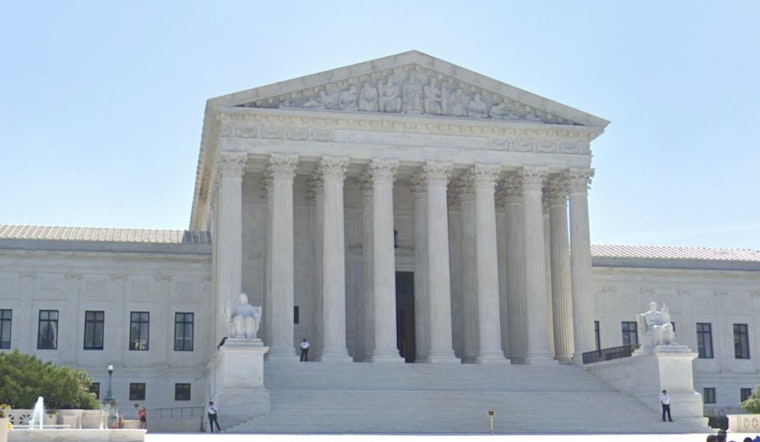
The Supreme Court on Friday, Feb. 20, 2026, struck down former President Donald Trump’s sweeping tariff program, ruling that his reliance on a 1977 emergency law went beyond what presidents are allowed to do. In a 6-3 opinion written by Chief Justice John Roberts, the court delivered a major legal blow to a central piece of the administration’s economic agenda. The ruling throws the status of dozens of tariff orders and the billions of dollars collected under them into uncertainty, setting up complicated refund battles for U.S. importers.
What the court said
Chief Justice John Roberts concluded that the International Emergency Economic Powers Act does not give presidents the kind of broad and long-running tariff authority the administration claimed. “The Framers gave 'Congress alone' the power to impose tariffs during peacetime,” the opinion said, according to the San Francisco Chronicle. The majority stressed that moves with far-reaching economic consequences belong to Congress unless lawmakers clearly hand that power to the White House.
How high were the levies?
The tariff series started with at least a 10% duty on most imports, then layered on steeper rates for certain key partners. Canada and Mexico faced duties of about 25% at first, with Canada later pushed up to 35%, while some Chinese products were hit with rates that at points climbed close to 145%. That volatility and the difficulty of planning around shifting rates are what drove businesses and states to sue, according to WFAE/NPR.
Who challenged the policy
The litigation pulled together small importers, winemakers and a multistate coalition, with Learning Resources and V.O.S. Selections among the lead plaintiffs. Hoodline has chronicled the toymaker’s struggle, reporting that the tariffs led firms to hold off on hiring and put growth plans on ice, as detailed in Chicago toymaker takes case.
Billions at stake
U.S. Customs records show more than $133 billion in revenue tied to the IEEPA-based tariffs through December, according to The Associated Press. Separate Penn-Wharton estimates cited in Reuters coverage put the amount that might ultimately be refundable at about $175 billion, a mismatch that could make the responses from the Treasury Department and Customs and Border Protection especially tricky. Economists and trade attorneys caution that rolling back the collections will be a logistical grind and could trigger a wave of importer protests and follow-on lawsuits.
What the ruling changes legally
The majority’s analysis centered on how to read the statute and on the major-questions doctrine, which says Congress has to speak clearly before agencies or presidents take steps with enormous economic impact. In the consolidated cases, Learning Resources v. Trump and V.O.S. Selections v. Trump, the court was asked whether IEEPA’s authority to “regulate” imports stretches far enough to cover setting tariff rates, as summarized by the Legal Information Institute at Cornell Law School. If the decision stands, it will significantly narrow a tool presidents have used to roll out broad economic measures without direct, specific instructions from Congress.
Next steps for importers and officials
The ruling does not instantly wipe out every duty that was imposed, but it triggers a series of administrative and court processes. Importers can file protests with U.S. Customs and Border Protection, and judges will sort out who qualifies for refunds. The administration has said it may look to more targeted statutory trade powers, although those options do not offer the same speed or reach as IEEPA, according to reporting republished from Reuters. Agencies and affected companies now face a stretch of legal and regulatory turbulence as both officials and market players adjust.
For shoppers and supply-chain managers, the short-term takeaway is likely less day-to-day tariff whiplash. The longer chapter will be written in refund decisions, shifts in executive-branch strategy and any move Congress makes to clarify the limits of tariff authority, with the fallout showing up at ports, warehouses and stores in the weeks ahead.





