

























































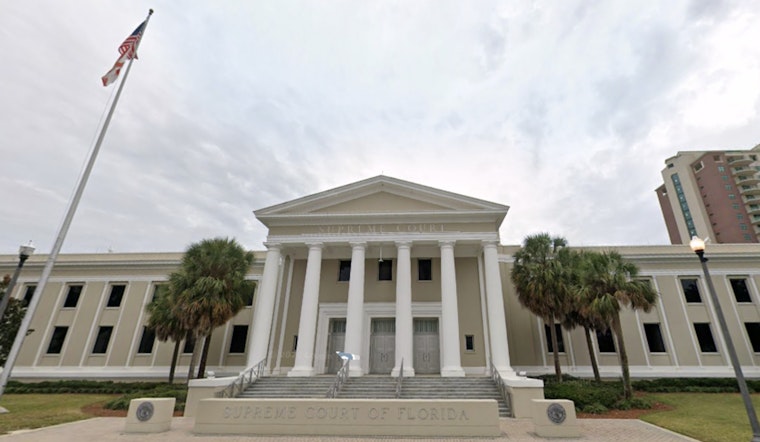
A high-stakes federal trial kicked off in Tallahassee this week, with a judge set to decide whether Florida's newly rewritten rules for citizen ballot amendments pass constitutional muster. The plaintiffs say the 2025 law, known as HB 1205, effectively shuts grassroots campaigns out of the petition process. The outcome could reshape how Floridians place constitutional questions before voters for years to come.
Opponents of the overhaul, led by Florida Decides Healthcare and joined by campaigns such as Smart & Safe Florida, argue that HB 1205 piles on new hurdles: petition circulators must meet residency and registration requirements, signers must provide partial Social Security or driver's license numbers, and filing windows are shortened. They say the combination makes large-scale signature drives practically impossible. The bill spells out those duties and penalties, including criminal sanctions for some violations, in text published by the Florida Senate. Organizers have told reporters that the changes chilled volunteers and fundraising, a trend detailed by Florida Phoenix.
Campaign leaders point to a stark scoreboard so far: none of roughly two dozen amendment drives managed to reach the ballot this cycle. They are urging the court to treat that failure as early proof that the law is already shutting down ballot access. "Whether it's classroom size, water quality, access to care," Florida Decides Healthcare executive director Mitch Emerson told reporters, voters are being denied a say, as FOX 13 Tampa Bay reported. Arguments ran all day in the Tallahassee courtroom, and the trial is expected to last up to two weeks, the station added.
Federal judges have already taken a partial whack at the statute. Chief U.S. District Judge Mark Walker previously blocked the ban on non-Florida residents and non-U.S. citizens serving as circulators, while leaving other restrictions in place. It was a mixed ruling that allowed the broader legal fight to keep moving through the courts, according to reporting by Florida Phoenix.
State officials, for their part, defend HB 1205 as a necessary anti-fraud measure, rolled out after investigators reported irregularities in earlier petition efforts. They argue that tighter rules protect the integrity of the process. Plaintiffs counter that the same provisions chill political speech and association by turning routine petition work into a legal minefield. That back-and-forth is laid out in coverage from the News Service of Florida.
High-Stakes Legal Fight Over Ballot Access
The case tees up core First Amendment questions about political speech and association: can the state bar entire categories of people from circulating petitions and attach steep criminal penalties to paperwork missteps? An appeals-court panel has at times allowed parts of the law to stay in effect while the lawsuit plays out, adding uncertainty for organizers trying to plan for 2026, as explained by WLRN. How the court weighs Florida's anti-fraud rationale against the real-world burdens on volunteers could influence initiative campaigns statewide.
For now, both sides are parading witnesses and documents through the Tallahassee courtroom, with attorneys saying the trial could stretch up to two weeks and potentially fast-track appeals to the 11th Circuit. The result will determine whether 2026 amendment drives can realistically qualify under the new rules and whether the state's approach survives judicial review, as FOX 13 Tampa Bay reported.
Readers following the fight can find local coverage and video of the proceedings collected by Spot On Florida, along with deeper reporting from The Florida Trib. We will keep watching how the rulings, and any appeals, shape the already tight window for qualifying measures in 2026 and beyond.




