

























































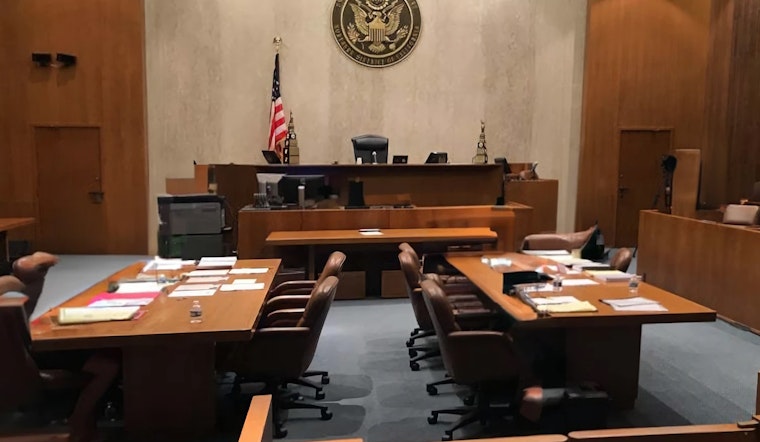
A 39-year-old man is back in court on a murder charge tied to a 2003 Hollywood shooting that had sat cold for nearly twenty years, after prosecutors filed the case and he entered a not guilty plea this week. Because he was 17 at the time of the killing, the case is starting in Los Angeles Juvenile Court while prosecutors push to move it into adult court, a process that has reopened old wounds for the victim’s family and revived long-stalled investigative leads.
The killing and the family
The shooting unfolded around 10:30 p.m. on Nov. 28, 2003, when 42-year-old Rosalba Acosta was gunned down while sitting in the back of her family’s pickup on Fountain Avenue in Hollywood, according to court testimony. Relatives told the court that moments before the gunfire, her husband had swapped seats with her. One of Acosta’s sons, who was driving, later described seeing a car pull alongside them and someone firing from a passenger window. Family members have depicted Acosta as the steady center of the household and its primary caregiver, and investigators recovered multiple cartridge casings at the scene, Los Angeles Times reporting shows.
How detectives say they cracked the cold case
At a juvenile-court hearing, prosecutors said the key break did not come from new DNA work but from witnesses and informants who eventually pointed detectives to the man now charged. Officials testified that an informant years earlier had linked the suspect to the shooting and that Perez was later questioned after a separate arrest in 2022. Detectives told the court that he gave inconsistent versions of events, failed a polygraph test and ultimately admitted at least to handing off a firearm. “He made an adult decision,” the victim’s son told the paper about the person now in custody, according to the Los Angeles Times.
What a transfer hearing looks at
The next pivotal step is a transfer, or fitness, hearing, where a judge decides whether the case should leave juvenile court and be tried in adult criminal court. In making that call, judges weigh factors that include the seriousness of the alleged offense, any prior record and whether the youth is considered amenable to rehabilitation under Welfare and Institutions Code Section 707. The hearing is set for Eastlake Juvenile Court in East Los Angeles, the county courthouse that handles delinquency matters. Background on the law is available in Section 707 at eLaws, and procedural details are outlined by California Courts for the Eastlake Juvenile Courthouse.
What could happen next
If prosecutors secure a transfer and the defendant is later convicted in adult court, the sentence would hinge on the degree of murder and any special-circumstance findings. In California, adult murder convictions can carry penalties that range from roughly 15 years to life to life without the possibility of parole. For defendants who were 16 or 17 when they committed the crime, the California Supreme Court has held that sentencing law gives courts discretion between life without parole and terms such as 25 years to life in the most serious special-circumstance cases, and that judges must factor in youth-related considerations consistent with Miller-era precedents. The defense has countered that the interview tactics used on the suspect produced unreliable statements, and the court is expected to scrutinize those claims as part of both the transfer proceedings and the probable-cause review. For recent California guidance on juvenile sentencing and judicial discretion, see the state high court’s decision in People v. Gutierrez as published by FindLaw.





