

























































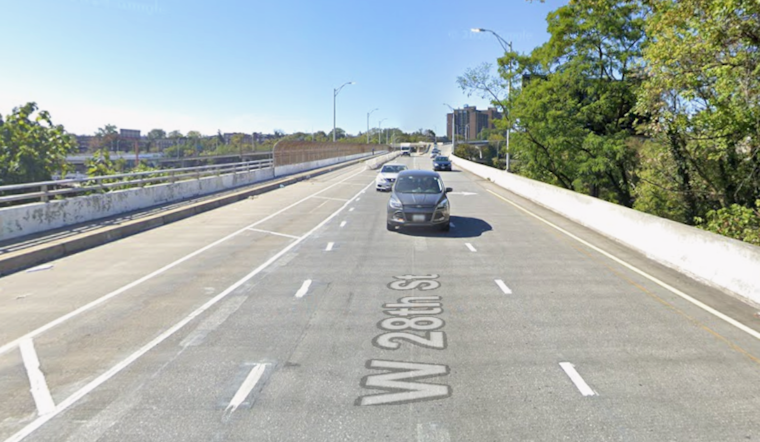
Bright orange paint flakes have been drifting off the West 28th Street bridge and landing on Falls Road, the Jones Falls, and the nearby trail, and state tests say those chips are packed with lead and PCBs at dangerously high levels. The Maryland Department of the Environment has now hit Baltimore City with a formal violation after collecting samples beneath the overpass. Environmental advocates who first raised the alarm say the contamination puts park visitors, cyclists and nearby waterways at risk. City officials say they plan to follow up as state regulators sort out what enforcement comes next.
State investigation and the violation
According to The Baltimore Banner, Maryland Department of the Environment investigators documented the scattered orange chips under the West 28th Street overpass on Feb. 6, then took multiple samples for lab analysis. The resulting report found lead concentrations far above safety thresholds and detected PCBs in some of the samples, which prompted MDE to issue a violation notice to Baltimore City. The Banner reports that Blue Water Baltimore had already flagged the problem for the agency after commissioning its own independent testing.
What locals are finding on the trail
On the ground, the mess is hard to miss. Local photos and accounts show bright flakes strewn along Falls Road and the Jones Falls bike trail, with some pieces reportedly as long as a forearm. Baltimore Brew has documented residents and trail users spotting paint in bushes, on icy mounds, and floating in the stream, fueling anxiety among people who walk and bike the corridor. Advocates say the scene is a grim reminder of earlier episodes of flaking industrial paint in Baltimore and a sign of how aging infrastructure can shed hazardous coatings right into public spaces.
Why this matters for health
Lead is toxic even at very low levels and can damage nearly every organ system, with children especially vulnerable, while PCBs are long-lasting chemicals associated with endocrine, immune, neurological, and reproductive problems. The U.S. Environmental Protection Agency warns that lead exposure can impair learning and development in children, and that PCBs create long-term risks for both ecosystems and human health. The EPA has detailed guidance on lead, and the EPA also outlines the dangers of PCBs. With both contaminants turning up in the same paint chips, officials say cleaning up and safely disposing of the debris will be more complicated than simply sweeping the trail.
City response and next steps
In an email to The Baltimore Banner, MDE spokesperson Jay Apperson said, “we will follow up to ensure that the environment and public health are protected.” In a news release, Blue Water Baltimore’s executive director, Alice Volpitta, labeled the situation an emergency and warned that “lead paint is literally raining down on our residents and landscape.” The MDE notice gives the city a short window to respond and, according to state documents and local reporting, could carry financial penalties that run into the thousands.
Regulatory context
Notices like the one MDE issued can trigger mandatory cleanup orders and fines under Maryland’s lead laws, and owners of public infrastructure can face civil penalties or daily fines if they fail to comply. For more details on how those enforcement powers work and what penalties can apply, residents can consult resources from the Baltimore City Health Department and related state legal guidance. Officials advise anyone who finds paint chips in public areas not to touch them and to contact the city’s Childhood Lead Poisoning Prevention Program for testing and guidance.





