

























































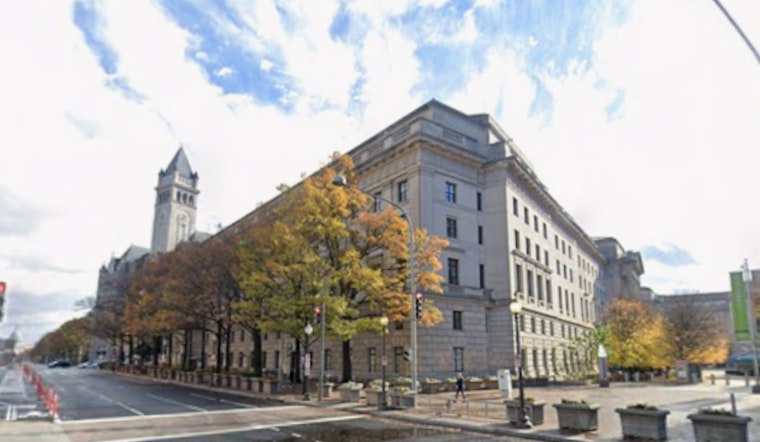
Federal moves at the Environmental Protection Agency have knocked the wind out of several North Texas environmental justice efforts, leaving community groups scrambling to replace lost cash for clean-energy job training and neighborhood air monitoring. Residents and organizers say this is not just a paperwork snafu; it is costing people work, data, and, potentially, their health in places from West Dallas to Echo Heights in Fort Worth.
Big federal cuts, local fallout
In 2025, the agency moved to end the Biden-era Solar for All program and to halt parts of a $3 billion Environmental and Climate Justice block grant, decisions that froze dozens of projects planned by cities and nonprofits. The EPA announced the Solar for All termination in August 2025, according to the AP. An audit by the EPA’s Office of Inspector General later flagged weak oversight and gaps in subrecipient monitoring, which the watchdog said raised program risk as it was being rolled out. The review urged the agency to fix those issues before trying to run similar programs at large scale, per EPA OIG.
Local training programs were left without a lifeline
On the ground in North Texas, groups that had banked on those grants to build green-jobs pipelines say the pullback landed like a gut punch. The Dallas Morning News reports that Green Careers Texas, which had been awarded roughly $440,000 to train about 120 people, ultimately decided to close after Solar for All awards were rescinded. That left recent trainees and local contractors without the steady demand that had justified ramping up the program in the first place.
Monitors and missing data
Advocates also warn that the rollback has hollowed out efforts to track pollution where people actually live. Community group Downwinders at Risk created the SharedAirDFW network to place calibrated, hyperlocal monitors across the region, but the loss of environmental justice grant funding stripped away planned support and slowed deployments in frontline neighborhoods. Echo Heights resident Letitia Wilbourn told reporters she is “tired of being overlooked,” underscoring how much local monitoring matters to people living beside trucking centers and industrial sites, according to The Dallas Morning News.
Legal fight moves forward
The funding battle has now landed in federal court. Harris County, which led the Texas Solar for All coalition and had been awarded one of the largest grants, filed suit seeking restoration of roughly $54 million and arguing that the EPA lacked authority to revoke money that had already been awarded, per the Harris County Attorney's Office. In mid-January, a federal judge ruled that targeted cancellations of certain clean-energy awards were unlawful, a decision that could increase legal pressure on similar grant rescissions, according to The New York Times.
Why this matters for public health
Public health experts say the timing could hardly be worse. The Dallas-Fort Worth area ranks among the nation’s worst metro regions for high-ozone days in recent national tracking, a statistic local advocates routinely cite when they argue that monitoring and mitigation efforts need to expand, not shrink. The American Lung Association’s “State of the Air” data places the D-F-W region among the higher-ranking metros for unhealthy ozone days, a measure tied to asthma and cardiovascular risks, per the American Lung Association.
Some federal money is still trickling in for narrower efforts. In May 2025, EPA Region 6 announced a slate of Brownfields assessment grants that included a $500,000 award for the city of Garland to study downtown and industrial corridors (EPA Region 6). Local organizers counter that one-off assessment checks do not replace multi-year investments in jobs, monitoring and community resilience.
For now, residents and advocates in Joppa, West Dallas, Echo Heights and other neighborhoods are watching the courts and city halls closely. The next big test, they say, is whether judges restore the rescinded awards or whether new streams of money, whether local, state or future federal, arrive quickly enough to revive training classes and get air monitors running where they are needed most.





