

























































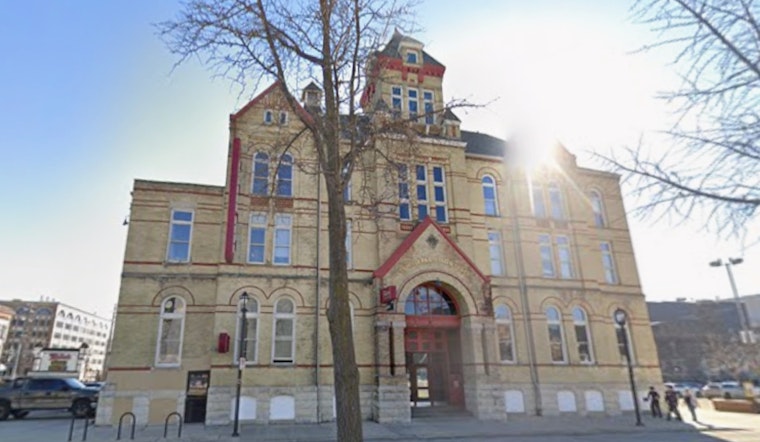
Turner Hall was standing room only Monday night as more than 100 Milwaukee-area residents, local officials and reporters packed in to press for straight answers on the data center rush sweeping across Wisconsin. What was billed as a Q&A on tech infrastructure quickly felt more like a neighborhood cross-examination over water, power and who is going to be stuck with the tab, according to the Milwaukee Journal Sentinel.
The Milwaukee Journal Sentinel organized the town hall after asking readers to send in questions and getting roughly 300 before the doors even opened. Emcee Kristin Brey kept the conversation moving while Business Editor Jim Nelson, reporter Caitlin Looby and environmental and energy lawyer Art Harrington took turns unpacking the jargon and tradeoffs. The newspaper said this was the first in a planned series of town halls to track major developments and how state and local officials respond.
Water Is Mostly An Energy Problem
One of the first myths the panel tried to puncture: that the main water issue is data center cooling towers. Speakers stressed that most of the water tied to these facilities is actually used to generate the electricity they burn through, not to cool the buildings themselves.
The Lawrence Berkeley National Laboratory's 2024 U.S. Data Center Energy Usage Report estimates that in 2023, direct onsite water use by data centers was about 66 billion liters, while their indirect water footprint was roughly 800 billion liters tied to power generation, according to Lawrence Berkeley National Laboratory. That means more than 90% of the sector's water footprint shows up at power plants, not at the data center fence line.
Locally, that distinction matters because Wisconsin requires any property with the capacity to withdraw 100,000 gallons per day to register with the Department of Natural Resources, under rules from the Wisconsin DNR. Residents making sense of the numbers were told to watch both the direct withdrawals and the hidden water hit from the extra electricity demand.
Energy And The Rate Debate
It did not take long for the conversation to move from water to wallets. Audience members and advocates zeroed in on how new power plants and grid upgrades to feed massive computing campuses will be financed, and what happens if the big customers walk away.
We Energies has floated a Very Large Customer tariff that would let major users subscribe to dedicated generation, with filings noting that customers could be responsible for remaining net book value if they end their agreements early, according to WEC Energy Group filings. Residents and environmental groups told regulators and panelists they want stronger guarantees so ordinary ratepayers are not left holding the bag for stranded costs if the market turns.
Port Washington Shows The Scale
For anyone still wondering about scale, the Port Washington proposal supplied a reality check. Vantage Data Centers' planned campus there has been described in filings as a project that could eventually require up to 3.5 gigawatts at full build-out, a level of demand that would reshape regional grid planning, according to DataCenterDynamics.
Developers have highlighted closed-loop and recirculating cooling systems they say can sharply reduce onsite water withdrawals. Independent analysts, however, caution that those designs do not solve the larger, indirect water strain that comes from the power plants behind the plug, as reported by Circle of Blue. The message to the crowd: the plumbing inside the data center is only part of the story.
What The Law Allows
Underneath the technical charts and billing formulas is a simple question: what does state law let utilities and developers do, and who gets a say? Wisconsin statutes require utilities to obtain Public Service Commission approval before starting certain operations, and the PSC oversees tariffs and certificates that decide who may serve retail customers, according to the state statute.
That oversight power is exactly why attendees kept pressing developers and regulators for binding contract terms and long-term service commitments instead of temporary assurances. The structure of the deals now could lock in costs and impacts for decades.
The newspaper says it plans more town halls, and the PSC docket on the Very Large Customer tariff remains open for public comment while filings continue. The company has suggested an early May decision could be possible, according to filings and event materials. Residents walked out Monday with a clearer sense of the technical tradeoffs and a rough timetable: more hearings, more paperwork and plenty of political heat as the 2026 campaign season ramps up. For now, neighbors say they intend to scrutinize every step.




