

























































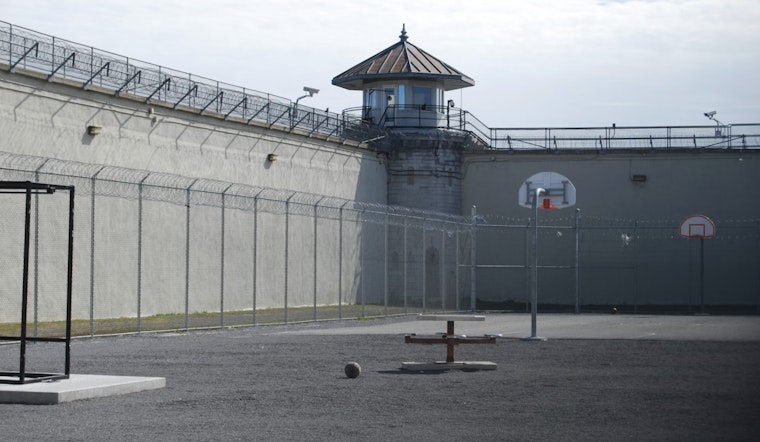
A year after a wildcat walkout by New York state correction officers, county jails across the state, from Erie County onward, report they are continuing to shoulder the impact and associated costs. Individuals who have already been sentenced to state prison remain housed in local facilities, and sheriffs say the effects of the strike are still straining staffing levels and budgets.
Erie County Sheriff John Garcia told Spectrum News that at the height of the crisis the county was holding more than 160 people who were already sentenced and state ready. As of mid February, he said, that number was still about 32. Erie County expects roughly $2 million in reimbursement tied to the backlog that ran from April through September 2025, but Garcia said the rules are stacked in a way that leaves counties eating a big chunk of the cost.
Garcia told Spectrum that counties receive no reimbursement between the first and tenth day of a detainee’s stay. Starting on day 11, counties are paid $100 per day if the individual remains in their custody. He added that this $100-per-day rate, combined with the lack of reimbursement for medication expenses, has left local taxpayers shouldering far more costs than expected.
The backup started in mid February 2025, when some Department of Corrections and Community Supervision staff launched a wildcat walkout that was not authorized under union rules. The state leaned on the National Guard to keep prisons running during the stoppage, according to the AP. The action dragged on for several weeks, and the state later fired more than 2,000 officers who did not return to work, a move that left prisons short staffed and slowed transfers to state facilities, the Los Angeles Times reported. With intake into state prisons throttled, county jails were forced to hold people sentenced to more than a year in state prison far longer than usual.
On paper, the state tries to offset that burden. The reimbursement policy offers counties $100 per inmate per day beginning on the 11th day in local custody, but sheriffs told WIVB that this does not actually cover the full tab. Housing costs, overtime and especially medication expenses quickly outstrip the daily rate. Erie County and others have had to keep extra units open, shift around staff and swallow unplanned medical bills while they wait for the state to take custody.
Several sheriffs have told county lawmakers that local property taxpayers are effectively subsidizing a state-level backlog. They say what they view as a state problem is being addressed with county funds, and note that there is still no clear timeline for when the system will fully recover.
Why Transfers Remain Slow
During and after the walkout, DOCCS repeatedly suspended intakes and then slowly brought them back online. The department has only gradually increased transfers from county jails, and New York Focus reported that in mid 2025, jails across the state were holding far more state ready people than they had in 2024.
Officials at DOCCS say they have boosted intake rates as staffing recovered, but county leaders argue the pace is still not fast enough to erase the backlog or free up badly needed beds for people who are awaiting trial. Advocates and local officials say the ripple effects inside county jails have been hard to miss: canceled programs, heavier use of lockdowns and more forced overtime shifts for already stretched staff.
Legal And Budget Fallout
The walkout itself violated New York's Taylor Law, which bars public employee strikes. State officials raced to restore operations while negotiating a consent award to address the underlying labor dispute, as per The City. The state used emergency measures to keep prisons running and later dismissed thousands of officers who never returned to duty, a shakeout that left DOCCS understaffed for months.
County executives and sheriffs say the episode laid bare how fragile the handoff between county jails and state prisons can be, especially when staffing collapses. They argue the strike underscored long running questions about who should pay for what when it comes to incarceration, and how quickly the state must act when its decisions put extra strain on local lockups.
Sheriffs such as Garcia are now pressing the state to speed up reimbursements and shore up prison staffing so county jails can get back to something like normal operations. They point not only to budget headaches, but also to what months of mandatory overtime and uncertainty are doing to morale among deputies and jail staff.





