

























































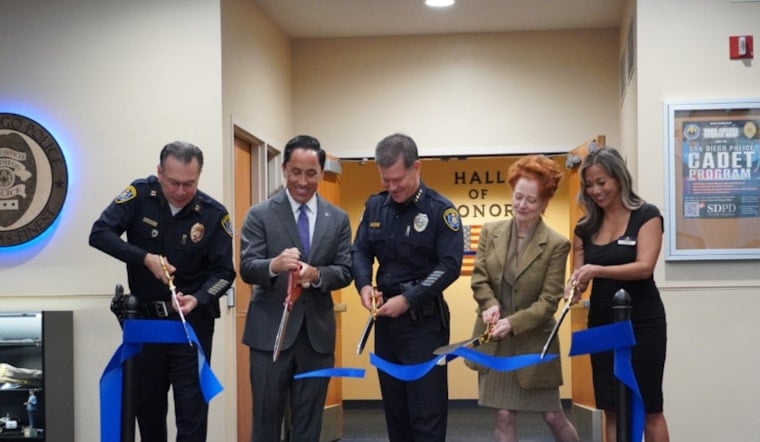
San Diego Police Chief Scott Wahl spent today talking about two of his biggest pressure points: runaway overtime and a department trying to look more like a modern, fully staffed force than a burned-out one. He said the San Diego Police Department is starting to rein in overtime costs at the same time it is rolling out a newly renovated Police Plaza training and recruiting hub in Kearny Mesa, framing both moves as part of a broader push to stabilize staffing, improve officer wellness and tighten fiscal oversight.
In an interview with CBS 8, Wahl fielded questions about overtime spending while pitching the revamped campus as a draw for recruiting and a workhorse for training. He told the station the renovations and new overtime controls are intended to cut down on costly shift stacking without slowing response times, a balancing act the department has struggled to pull off in recent years.
Police Plaza Gets a Kearny Mesa Facelift
The department formally unveiled the updated Police Plaza last week, turning the former Chargers practice site in Kearny Mesa into a hub for training, recruiting and community events, according to the City of San Diego. The project was funded by the San Diego Police Foundation and a state grant, not the city's general fund, and it added murals, a Hall of Honor, a redesigned lobby and upgraded fitness and training spaces.
City officials are betting that a sleeker campus will help the department sell would-be recruits on joining the force, while also giving current officers a space that feels less like a relic and more like a workplace built with wellness in mind.
Overtime: Signs of Progress, but Pressure Remains
Wahl's comments on overtime come after years of steadily climbing extra hours that investigators and local outlets have flagged as both a budget headache and a potential safety issue. As reported by KPBS, some officers previously logged thousands of overtime hours, pushing total pay above $400,000. Wahl has publicly acknowledged that pattern and says he wants to bring those numbers under control while still keeping shifts covered.
According to the City of San Diego, the department now projects that most nonreimbursable overtime will come in close to budget this fiscal year, with only a small portion of extra costs tied to reimbursable work. Wahl has floated a slate of operational changes, including a 16 hour shift cap, mandatory eight hour breaks and centralized overtime approvals. He has said those ideas will go through a meet and confer process with the police union before anything becomes formal policy.
City leaders and advocates caution that SDPD is still short on officers, a lingering staffing gap that could easily drive overtime back up if hiring and retention do not improve, a trend documented by the Times of San Diego. Wahl and City Hall will be watching hiring metrics and upcoming budget tweaks closely. For now, the renovated Police Plaza and stricter overtime tracking function as both a fresh coat of paint and an early test of whether the department can match its fiscal promises with day-to-day reality.





