

























































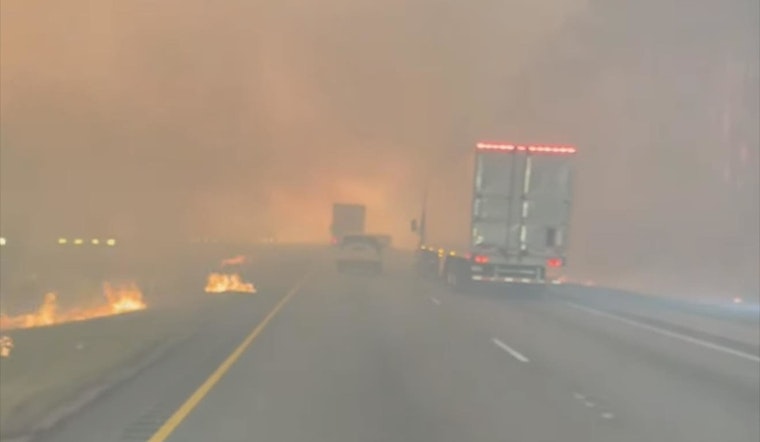
Interstate 12 turned into a smoky no-go zone near Lacombe on Sunday, as several active woods fires forced officials to shut down the highway in both directions. Thick smoke poured across the roadway, dropping visibility to hazardous levels while first responders worked the scene and urged drivers to stay away and find alternate routes. Residents were also asked to hold off on any outdoor burning while the fires continue, as reported by the National Weather Service.
According to the National Weather Service, a Dense Smoke Advisory covered I-12 near the Lacombe exit until 1 a.m. Monday, paired with a Red Flag Warning for critical fire weather. Forecasters reported north winds of 15 to 25 mph with gusts up to 35 mph, a setup that, combined with low humidity, can rapidly spread fires. The agency urged motorists and residents to use extreme caution under these conditions.
Road closure and emergency response
In a traffic alert, the City of Slidell said first responders were on scene along I-12 and asked drivers to avoid the area entirely while crews worked to get the blaze under control. Local reporting, including WBRZ, noted that the closure stretches between LA-434 and LA-59, with the fires located near Fish Hatchery Road. Outlets also reported there was no immediate threat to homes, even as visibility on the interstate remained extremely poor.
Why conditions worsened
Forecasters said the combination of the Red Flag Warning and gusty winds made roadside conditions unpredictable and helped the flames move quickly through dry brush along the corridor. The National Weather Service stressed that strong winds and low humidity can turn even small ignitions into fast-moving fires and advised residents not to burn outdoors while the warning remains in effect.
Travel impacts and safety tips
As WDSU reported, Louisiana State Police diverted eastbound traffic off I-12 to Highway 59 and routed westbound vehicles to Highway 434 while fire crews worked along the interstate. Authorities urged drivers to follow the posted detours, use low-beam headlights in smoky conditions, leave extra space between vehicles, and give emergency crews plenty of room to operate until conditions improve.





