

























































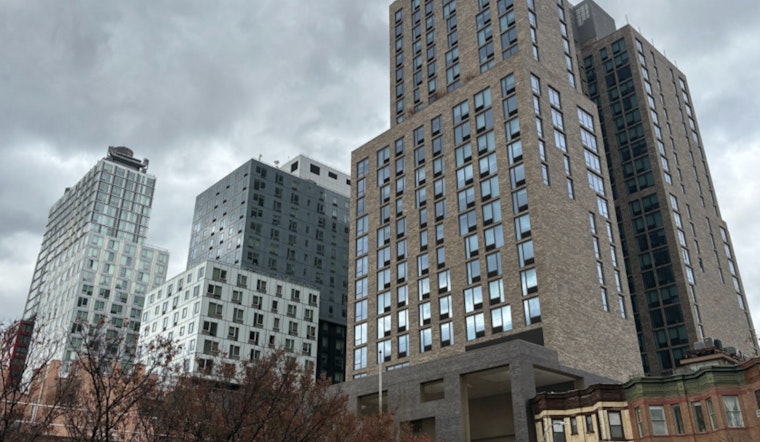
After years of big promises and slow motion, Empire State Development is floating a tight first move for the long delayed Pacific Park project: roughly 2,000 new apartments split between the block across from Barclays Center and a nearby solid ground site known as B6. About 500 of those homes would be income restricted, on average affordable to households earning around 60 percent of area median income. The outline arrives as state officials hash out terms with a new development team that would have to take on the pricey railyard decking work that has kept the project stuck for years.
ESD's first‑phase outline
At a public meeting last week, state officials described a first build that zeroes in on Site 5, across from Barclays Center, and Site B6, together holding about 2,000 units with roughly 500 designated as deeply affordable, as reported by The Real Deal. ESD presented the strategy as a way to get housing in the ground faster by starting on parcels that do not need platforms over the Metropolitan Transportation Authority's Vanderbilt railyard. Officials stressed the presentation was preliminary and meant to steer negotiations with the new developer team, not serve as a finished blueprint.
Numbers, history and where things stand
State workshop materials show that 3,212 units have been built so far, against an original approval for about 6,430 homes, while a successor development team has floated an alternative program that could lift the total to as many as 9,000 units, according to presentation slides published by Empire State Development. ESD's materials highlight a strategy that leans on "solid ground" sites to speed up construction and pushes the more complicated platform parcels into later phases. That balance is at the heart of arguments over how quickly the deepest affordable housing will actually be delivered.
Affordable shortfall and enforcement
A 2014 settlement required that 2,250 below market units be completed by May 31, 2025, which leaves roughly 876 units still missing, and critics say the liquidated damages that kicked in after that deadline have mostly stayed theoretical, according to reporting by City Limits. The state agreed not to immediately collect the 2,000 dollar per unit monthly fines while it works on a new plan, a pause local advocates have sharply criticized as too lenient, as detailed by Gothamist. ESD told advisory board members it could restart those liquidated damages if successor developers miss a deadline to sign a memorandum of understanding by July 31, 2026, a date that now doubles as a key accountability checkpoint.
Who’s building and who’s paying for the deck
The replacement development team assembled by creditors features Cirrus Real Estate and LCOR, a pairing that the U.S. Immigration Fund said it was backing when it announced the next phase of the project last year, according to a Business Wire release. Developers have told state officials they will need public subsidies to make the railyard platforms pencil out, and internal presentations have floated a figure of about 350 million dollars, as reported by the Atlantic Yards/Pacific Park Report. How much city or state money actually shows up will go a long way in deciding what gets built and how fast it moves.
Platform sites make later phases tough
Building over active rail tracks is the most expensive and time consuming piece of Pacific Park, which helps explain why state staff and the developers are eager to start on the easier solid ground sites. Observers note that the team has discussed shifting density away from the priciest platform parcels, a move that might trim short term costs but also alter the project's original affordability mix, according to reporting by Brownstoner. That tradeoff between speed and the depth of affordability is now one of the core policy questions on the table.
Community reaction and legal stakes
Local advocates and elected officials are resisting anything that looks like a quiet rollback of the project's affordable housing commitments, arguing that the public deserves compensation for the missing units and that enforcement tools cannot be rewritten without real community input, according to a statement from Brooklyn leaders and Shahana Hanif. Advocates say any subsidy package or revised plan that eases requirements for deeply affordable units should only move forward with firm, enforceable promises and clear community oversight, so that the long advertised benefits actually land in nearby neighborhoods.
What to watch next
Several milestones will show whether Pacific Park is finally shaking off its reputation as a stalled megaproject: whether developers and ESD sign a memorandum of understanding that satisfies the July 31, 2026 checkpoint, whether a subsidy package to pay for decking comes together, and how many affordable units are locked into the final deal. Together, those decisions will determine whether Pacific Park delivers the housing central Brooklyn was promised or morphs into something that produces a different set of winners and losers.




