

























































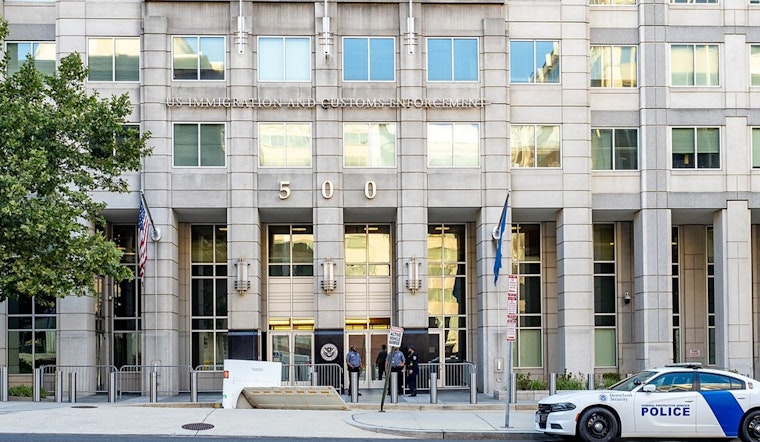
New York companies that do business with U.S. Immigration and Customs Enforcement could soon have to come clean about it or risk losing out on lucrative government work.
State lawmakers in Albany are considering a proposal that would force private vendors to disclose contracts they hold with ICE and could cut them off from future state and city deals if they hide those ties. The measure drags the normally sleepy world of procurement into the center of the fight over how much private support federal immigration enforcement should get, especially in a city where many officials want local institutions as far from ICE as possible.
What the bill would do
According to the New York Post, Assemblymember Grace Lee has introduced an “ICE Contract Transparency Act” that would compel businesses seeking state work to hand over copies of any contracts they have with ICE. The Post reports that Lee later revised the bill to add debarment as a potential penalty, so companies caught concealing immigration-enforcement work could be blocked from future state and city contracts. Supporters argue that tying disclosure to the threat of debarment would finally give procurement officials a clear enforcement tool when vendors keep their ICE relationships under wraps.
How debarment would work
If the debarment language stays in, agencies could move to suspend or remove a vendor from consideration while an administrative case runs its course, which is a standard remedy in New York procurement practice. State guidance on vendor responsibility shows that agencies routinely weigh a company’s integrity, litigation history and past performance when deciding whether it is fit to hold public contracts, according to the New York Office of General Services.
On the city side, procurement rules already allow for administrative hearings and the public posting of suspensions and debarments under the Procurement Policy Board rules. Those procedures give municipal officials a formal path to shut out vendors for cause, and Lee’s bill aims to put undisclosed ICE work clearly in that danger zone.
Where the pressure came from
The proposal follows months of organizing by community groups and pressure from elected officials over local ties to ICE, most notably a long-running parking arrangement at Pier 40. In January, more than a dozen elected officials, including Lee, signed a letter urging the Hudson River Park Trust to end its ICE parking agreement at the pier. The Trust lists that deal as set to expire in June.
Local reporting has mapped out the history of that lease and noted that the Trust told its advisory council it does not plan to renew the decades-old arrangement. Those details helped push the issue of who profits from ICE operations squarely onto lawmakers’ transparency agenda.
Where the city and state stand
City officials are already fighting over how far New York should go in cutting business ties with federal immigration enforcement. This year, the City Council advanced measures to prohibit municipal contracts that materially support ICE operations, as reported in coverage of the Council’s moves to cut off ICE contracts. At the state level, Governor Kathy Hochul has floated separate limits on local cooperation with ICE, according to City & State.
Taken together, those debates help explain why procurement rules, once a niche concern, are suddenly central to the push for more transparency around ICE.
What lawmakers are saying
Lee has not been shy about the politics driving the bill. As the New York Post reported, she said “ICE has become a four-letter word for many New Yorkers,” a line that neatly captures the mood among many of her colleagues.
Backers of the proposal cast procurement as leverage: if companies want taxpayer dollars, they argue, they should not secretly double as infrastructure for deportation machinery. Critics, meanwhile, frame the same contracts as necessary support for what they call legitimate federal enforcement work and warn against disrupting services ICE relies on.
Why vendors should pay attention
Advocates note that ICE’s local footprint is built on a web of government and private-sector deals, ranging from parking garages and firing ranges to data and surveillance vendors. They argue that mandatory disclosure would force businesses to weigh both reputational fallout and the prospect of being frozen out of public contracts.
Investigative work has documented ICE contracts across the country and unpacked the technology and data arrangements behind them, drawing on research from Sludge and reporting by TechCrunch. If New York procurement officials start demanding contract copies and enforcing disclosure requirements, a broad swath of vendors could find themselves under new administrative scrutiny.
Next steps
For now, the bill has surfaced publicly but its path in Albany is unclear. Like any measure, it will have to move through committee before it can get a floor vote. Companies that hold government work or provide services to federal enforcement agencies would be wise to review their agreements and talk to procurement counsel about what disclosure might mean for them.
Assemblymember Lee’s office lists district contact information for constituents and businesses looking for details or clarification on the proposal.
Whatever happens to this specific bill, it is a sign of where the fight over ICE is headed in New York. Procurement, once a technocratic back office function, is quickly becoming a frontline tool for activists and officials who want vendors to put their ICE contracts on the record and, ultimately, to loosen federal immigration enforcement’s grip on local institutions.





_(53831699221).jpg)