

























































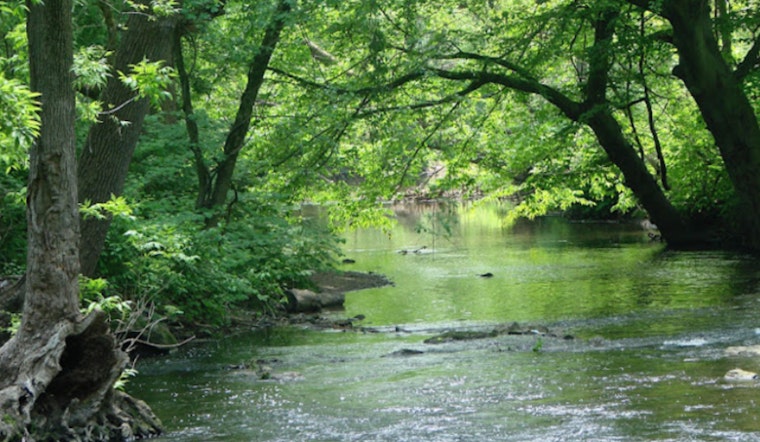
The U.S. Army Corps of Engineers is dialing back its once‑towering levee idea for Philadelphia’s low‑lying Eastwick neighborhood, shifting from a previously floated 15‑foot earthen wall along Cobbs Creek to a shorter structure that would rise about 8 feet above ground. That change leaves residents weighing tighter tradeoffs: the lower barrier could lessen the neighborhood’s chronic flooding but would be overtopped during bigger storms, while the taller version risked pushing water into neighboring townships. City planners say the shift raises the stakes for other tools, including wetlands projects and voluntary buyouts, that are bundled into a forthcoming flood‑resilience strategy.
What the Corps changed
The Corps has dropped the 15‑foot levee concept and is now studying an alternative design that would be roughly half as tall, according to local reporting. Earlier Army Corps modeling suggested the higher berm would have sharply reduced the damage from a 100‑year storm, avoiding on average more than $4 million in flood losses per year. The same modeling also showed that the taller structure could increase flooding for as many as 328 buildings along Cobbs and Darby creeks in Delaware County.
“We’re really taking our time and looking at this thoroughly, because we don’t want to put a solution in place that moves the problem somewhere else,” said Scott Sanderson, who leads the planning division in the Corps’ Philadelphia office, as reported by WHYY.
Study history and trade‑offs
The levee idea first appeared in a 2023 draft feasibility report that sketched out a nearly 1,400‑foot earthen berm, about 15 feet high, running behind homes along Cobbs Creek and the Clearview Landfill. The Army Corps’ Eastwick Flood Risk Management Study lays out engineering, environmental and economic analyses and notes that any final recommendation would need a non‑federal sponsor, easements and several years of design work before a shovel hits the ground.
The original price tag for the levee structure was estimated at about $13 million, as reported by The Philadelphia Inquirer.
City strategy and buyouts
Philadelphia’s Office of Sustainability is putting the finishing touches on an Eastwick Flood Resilience Strategy that groups seven possible moves into a single roadmap. Those options include levees, nature‑based stormwater projects, temporary barriers for near‑term protection and voluntary buyouts.
City fact sheets note that buyouts can permanently remove homes from danger but are especially complicated in Eastwick, where many properties are attached rowhouses. Federal buyout programs typically require that purchased properties be converted to open space, a standard that is difficult to meet when units share walls. City officials say they are focusing on community engagement and exploring a mix of federal, state and local funding sources while they sort out which measures are actually workable. As outlined by the City of Philadelphia Office of Sustainability.
Money, timing and what’s next
Any recommendation from the Corps would still require the city’s approval and a local cost share of roughly 35 percent, planners said. Even if everything lines up, the agency estimates construction would not start before about 2030.
In the meantime, the Corps is running more detailed models to see whether a shorter levee would still push water downstream and is reviewing complementary ideas, such as dredging or wetlands projects, to avoid causing new flooding elsewhere. Officials in both Philadelphia and Delaware County have pressed for clearer modeling results and a broader study area before signing off on any permanent barrier. As outlined by U.S. Army Corps of Engineers.
Neighbors want more answers
Residents in nearby Delaware County have long warned that a hard structure in Eastwick could simply divert water into their communities, rather than solving the region’s flooding problems. Public meetings on the proposal have consistently drawn calls for a broader, regional strategy that looks beyond one neighborhood’s levee line.
Officials say the road ahead will likely involve more technical work, more public input and a search for funding to support a package of solutions instead of a single wall. Past meetings and community reactions have been chronicled in local coverage. See reporting by CBS Philadelphia.





