

























































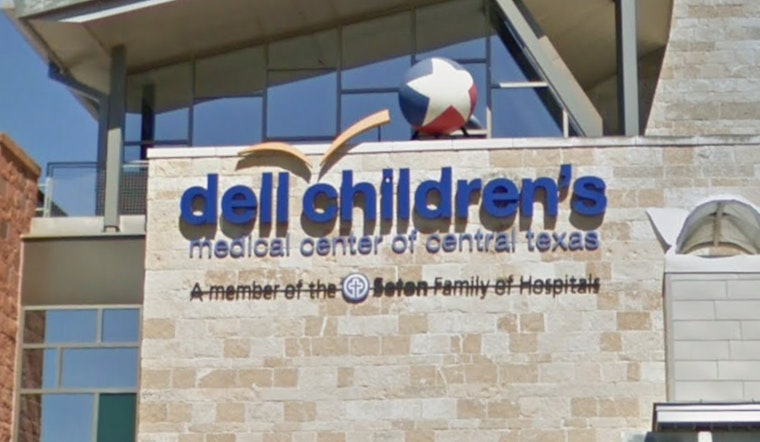
Dell Children's Medical Center quietly crossed a very loud milestone this winter: surgeons there have now completed 50 pediatric heart transplants, less than five years after the first one in October 2020. In that short window, the Texas Center for Pediatric and Congenital Heart Disease at the Mueller campus has gone from startup to regional heavyweight, adding mechanical hearts, ventricular assist devices and a partial heart transplant technique for infants. Hospital leaders say the five-year transplant survival rate sits near 89%, even as the team routinely takes on very high-risk newborns and infants. For Central Texas families, that has meant life-saving care down the road instead of long, anxious drives to Houston or Dallas.
Built Fast, Built For Complexity
In a statement from Ascension Texas, the 50th pediatric heart transplant is held up as proof that Dell Children's has become a destination for some of the toughest congenital heart cases. The release credits aggressive recruitment of highly specialized surgeons and rapid expansion of clinical capacity, including new catheterization labs and deeper mechanical-support expertise, for the program's swift climb.
From Concept To First Cut
The Texas Center for Pediatric and Congenital Heart Disease began to take shape after renowned heart surgeon Dr. Charles Fraser Jr. arrived in Austin in 2018 with a mandate to build a full-scale pediatric heart program. According to the Dell Children's Foundation, the team performed its first heart transplant on Oct. 3, 2020. Since then, the program has layered on left ventricular assist devices and a Berlin mechanical heart program to keep the sickest children stable while they wait for a donor organ.
Rare Procedures, Broader Reach
Surgeons at Dell Children's carried out Texas's first partial pediatric heart transplant in June 2023, a rare procedure that uses donor tissue to repair part of an infant's heart instead of replacing the whole organ. Clinicians have also developed strategies that combine donor valves and mechanical devices to bridge fragile infants to a full transplant. Those capabilities, hospital leaders told Ascension Texas, are drawing referrals from across the region and allowing the Austin team to accept some patients that other centers turn away.
How Outcomes Stack Up
Program data submitted to the Scientific Registry of Transplant Recipients show Dell Children's completed 12 heart transplants in the 12-month period ending June 30, 2024, with outcomes that reflect both the relatively small volume and the high-acuity mix of patients. The SRTR analysis, released Jan. 6, 2026, lays out survival and graft-failure metrics and compares Dell Children's performance to national benchmarks in technical detail. Scientific Registry of Transplant Recipients
Waiting List, Donor Shortage and The Road Ahead
Even with the milestone, organ scarcity is still the choke point. Reporting by the Austin American-Statesman notes that Dell Children's had about 10 patients waiting for a heart and that the program's roughly 89% five-year transplant survival rate comes while clinicians are intentionally taking on higher-risk cases; some centers decline. According to the outlet, hospital leaders are eyeing an interim goal of 15 to 20 transplants a year, with a 10-year ambition of reaching roughly 150 total transplants.
Why It Matters For Austin
Hospital leaders and local academics say the ripple effects for Austin go beyond any single surgery. The expanding heart program is helping build research muscle, train future specialists, and keep complex pediatric care in town. A recent Top-10 U.S. News ranking in pediatric cardiology, they argue, will only add fuel, making it easier to attract faculty, funding, and collaborations for Dell Medical School and the Texas Center, according to Dell Medical School.





