

























































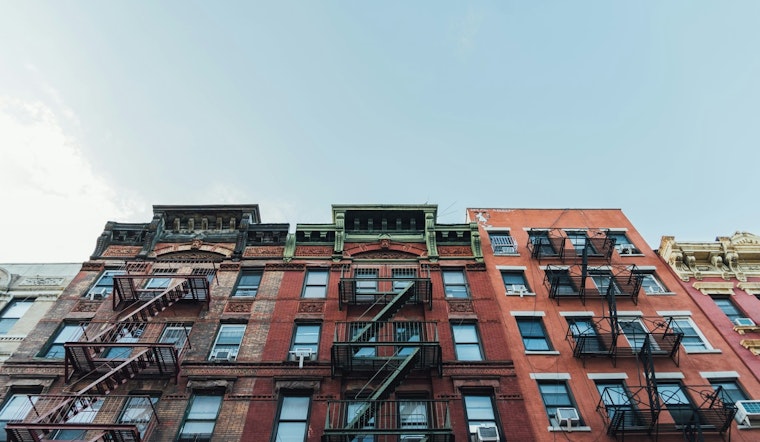
New York’s rent‑stabilized housing is running low on oxygen in the one place it cannot: the debt markets. Lenders that once happily financed the city’s older multifamily buildings are stepping back, leaving owners with aging or repricing loans to hunt for scarce refinancing options. Delinquencies are rising, and they are clustering in the very buildings that house the city’s most regulated apartments. The result is a growing mismatch between where capital is available and where it is needed, with small owners and their tenants stuck in the middle.
Flagstar And The Vanishing Local Lender
According to Bisnow, Atrium data shows lenders financed roughly $27.6 billion of mortgages on majority rent‑stabilized buildings in 2019. By last year, that total had fallen to under $11.3 billion. The pullback stings even more because a once prominent local backstop, New York Community Bancorp, now operating under the Flagstar name, sharply shrank its lending to this sector, issuing roughly $58 million of new debt to stabilized buildings in 2025. With that regional bank capacity largely off the field, many small and mid‑sized owners are scrambling for alternative lenders who are not exactly lining up.
Flagstar's Filing
Flagstar spelled out its shift in strategy in a 2025 regulatory filing, writing, "To mitigate our exposure to rent‑regulated properties, we are curtailing future originations of loans secured by rent‑regulated properties," per Flagstar's 10‑Q filing. The same disclosure shows the bank still holds billions in loans tied to New York’s regulated market even as it narrows new originations. That combination, a large existing book and a cooler attitude toward fresh credit, explains why owners who once leaned on long‑standing relationships are now facing very real refinancing risk.
Debt, Scale And Who's On The Hook
A May 2025 presentation from Maverick Real Estate Partners lays out just how big the exposure has become. Roughly $131 billion of mortgage debt is secured by rent‑stabilized properties across Manhattan, Brooklyn, Queens and the Bronx. Those loans cover about 851,706 residential units, of which roughly 664,923 are stabilized. Maverick’s figures also show nearly 220,000 stabilized units sit in buildings with no mortgage debt at all, and that the average stabilized loan age has climbed past five years. In practice, that means a large number of loans are now hitting maturity after years without a functioning repricing market. The concentrations are large enough that this is a system‑wide refinancing problem, not a few unlucky buildings on the wrong block.
Where Capital Is Coming From
Nationally, the story sounds different. Alternative lenders have stepped into the void in a big way: CBRE’s Q4 2025 U.S. Capital Markets report found that these players accounted for about 40% of non‑agency loan closings in that quarter. Yet those same firms have mostly avoided the hairier underwriting work on New York’s rent‑regulated stock, creating a patchwork response in the city. Some huge, one‑off financings have filled part of the gap, such as Wells Fargo’s roughly $3.15 billion mortgage to refinance Stuyvesant Town–Peter Cooper Village. Reporting by The Real Deal shows how a few blockbuster deals can make the overall market look liquid on paper even while smaller owners struggle to find any lender willing to talk.
Loan Performance Is Diverging
Under the hood, loan performance is splitting into two very different stories. Trepp’s analysis shows securitized loans tied to older, rent‑regulated buildings have moved into double‑digit delinquency territory, while market‑rate multifamily delinquencies have remained near zero. That gap is being driven by a straightforward but painful math problem: higher debt service costs, rising operating expenses and legal caps on rent growth are pinching cash flow exactly where it is least flexible. It is the kind of pattern underwriters are trained to treat as a flashing red light, according to Trepp.
Why Lenders Are Stepping Back
Values for stabilized buildings have also been reset. Ariel Property Advisors’ year‑end reporting shows average price declines across many submarkets since 2019, leaving a number of owners effectively underwater and lenders with slimmer collateral cushions. At the same time, some opportunistic investors have started buying up distressed loans or participation interests, aiming for foreclosure or workout strategies rather than classic long‑term ownership. Those two dynamics, falling asset values and a growing secondary market for distressed paper, help explain why relationship lenders have pulled in their horns, a trend Ariel Property Advisors has highlighted as private capital moves into troubled positions.
Legal And Market Risks
The legal backdrop is adding one more layer of risk. Lenders and brokers report that owners with documented housing violations are finding it harder to secure replacement credit, and regulators’ rent‑regulation framework, especially the Housing Stability and Tenant Protection Act of 2019, remains central to every underwriting model. If private buyers of distressed debt push aggressively into foreclosure, tenants and small owners could see fast and messy operational disruption. On the flip side, owners who can show current compliance and lower leverage profiles are the ones most likely to win scarce new loans. Legal exposure and regulatory compliance are now front‑page items in rent‑stabilized underwriting, not footnotes.
What to watch next: looming loan maturities, portfolio sales by regional banks and any policy moves that tweak rent rules or create targeted refinancing support. For many mom‑and‑pop landlords, the next 12 to 24 months will decide whether “stabilized” means steady, sustainable housing or a long, drawn‑out bout of financial distress.





