

























































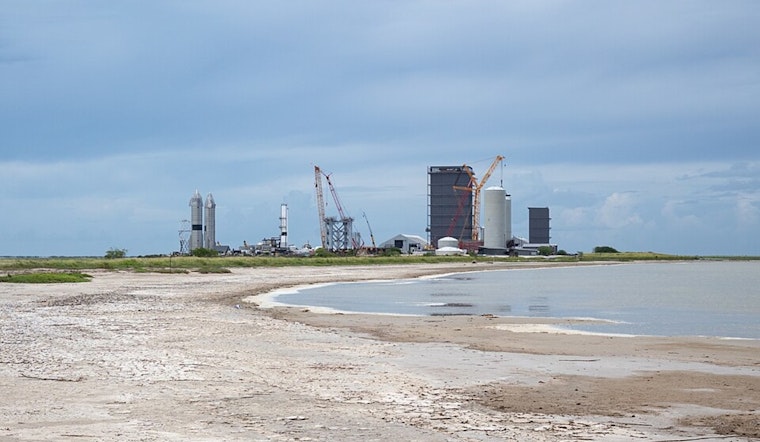
On Thursday, March 5, 2026, the Texas Supreme Court took its show on the road to Edinburg, hearing oral arguments over whether the newly incorporated city of Starbase can shut down Boca Chica Beach and State Highway 4 to clear the way for SpaceX launches. The courtroom at the University of Texas Rio Grande Valley was packed with local residents, schoolkids and environmental advocates who say those closures have repeatedly boxed the public out of the shoreline. The justices grilled lawyers on both sides, then took the case under advisement. A ruling could still be months away.
What the court was asked to decide
The legal fight traces back to a 2021 lawsuit filed by Save RGV, joined by the Sierra Club and the Carrizo/Comecrudo Nation. The plaintiffs want to stop routine shutdowns of State Highway 4 and Boca Chica Beach, arguing that the closures violate the Texas Open Beaches Amendment and effectively serve a private company at the expense of public access. They have been pushing that argument through the state courts for years, according to Save RGV.
A new law and a new city
In 2025, the Legislature tucked new language into House Bill 5246 allowing the Texas Space Commission to coordinate with a city to temporarily close highways, venues and beaches - a move that shifted closure authority from Cameron County to the freshly incorporated city of Starbase, whose officials and many residents are tied to SpaceX. That seemingly small tweak is a key reason the dispute has landed in front of the state’s highest court, according to The Texas Tribune.
State's defense: safety and statute
During oral arguments, lawyers for the state and Cameron County told the justices that the closures are allowed under a 2013 amendment to the Open Beaches Act and are necessary to keep people out of harm’s way when rockets are tested or launched. They also pointed to FAA-required exclusion zones around launches that sweep across large sections of the shoreline, as reported by MySA.
“These closures facilitate the very risky, hazardous activity,” Save RGV attorney Maria Perales told the court, arguing that the law cannot be stretched to bless a private company’s recurring use of public land. Her remarks sharpened the plaintiffs’ claim that the public’s constitutional right of beach access is being eroded. See MySA for the full hearing coverage.
FAA filings and closure hours
Federal environmental filings show SpaceX estimated roughly 500 closure hours per year for normal operations and warned that anomaly-response hours could push total shutdown time to about 800 hours annually. Those numbers have become a major flashpoint in court and in public comment. The FAA’s draft programmatic environmental assessment and its comment matrices spell out those estimates and chart the agency’s hazard and exclusion areas. See the FAA.
What a ruling could change
If the court sides with the plaintiffs, it could scale back the legal framework that has allowed repeated closures and force tighter limits on when beaches and highways can be shut for launches. A decision for the state would do the opposite: it would affirm the Legislature’s 2025 change and give Starbase and the Texas Space Commission wider latitude to manage access during spaceflight activities. As noted by The Texas Tribune, whatever the justices decide could ripple into other coastal communities where commercial space companies are setting up shop.
Local reaction
Save RGV has urged supporters to pack the March 5 hearing in Edinburg and to keep pressing elected officials, while Starbase’s official website now posts beach and road-access notices for residents and visitors trying to navigate launch schedules. The standoff highlights a broader Rio Grande Valley debate over economic development, environmental protection and who ultimately calls the shots on public land. For updates see Save RGV and Starbase.
The Texas Supreme Court will now weigh the arguments and issue a written opinion on its own timeline. But the question at the heart of the case - who gets to shut a public beach - will linger long after the next launch window opens. For residents who cherish Boca Chica as a quiet slice of coastline, the stakes are simple enough: wide-open access or an appointment-only shoreline.





.jpg)