

























































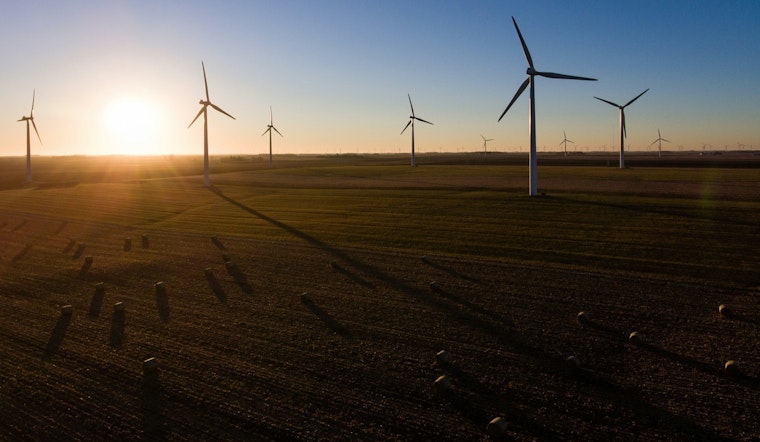
Minnesota’s long-odds bid to make its own low-carbon fertilizer just got a lot more real. A new coalition says it has locked in roughly 14,000 tons a year of locally produced "green ammonia," pairing modular producer TalusAg with a southern Minnesota farm cooperative that has agreed to buy the product under a long-term contract. The first TalusAg units are slated for Blue Earth and could start feeding local fields within a few years, if everything breaks their way.
The Minnesota Made Ammonia Coalition announced its launch on March 5 and said it reached a deal with TalusAg to manufacture more than 14,000 tons of anhydrous ammonia annually using wind energy, according to the Star Tribune. The paper notes that Minnesota growers bought more than 200,000 tons of anhydrous ammonia in 2024, and that fertilizer prices have been unusually jumpy since the pandemic. Supporters argue that making fertilizer closer to home could trim shipping costs and cut the carbon footprint of a gas-based global supply chain.
How the plan would work
TalusAg sells modular, container-style systems that produce ammonia from electricity, water and air at or near the farm gate, a sharp contrast with the giant centralized plants that dominate the market, the company says. The idea is to park these units next to wind farms and run electrolyzers during curtailments, when turbines would otherwise be told to shut down, to tap lower-cost power. Industry reporting notes that the approach has already been piloted commercially in the Corn Belt with Landus, giving TalusAg at least one real-world example it can point to.
What it means for farmers
Under this week’s rollout, Central Farm Service has signed a 10-year offtake agreement to buy a portion of the output at a fixed price, partners said in a press release via GlobeNewswire. The contract is meant to protect member-owners from the fertilizer price spikes that have hit wallets hard in recent years. The roughly 14,000 tons a year covered by the deal would still account for only a small slice of statewide demand. Minnesota growers purchased more than 200,000 tons of anhydrous ammonia in 2024, and analysts estimate the new capacity could cover about 5% of that market, according to the Star Tribune. Fertilizer consultant Denton Bruening, cited by the paper, said the project "has the opportunity ... to really make a considerable dent" if it scales as planned.
Timeline, funding and next steps
Project partners say they are seeking support from the state’s Renewable Development Account to help pay for the needed infrastructure, and they are working with Blue Earth Light & Water on power supply and interconnection details. Minnesota already has grant programs aimed at homegrown green fertilizer. The Minnesota Department of Agriculture launched a Green Fertilizer Grant program in late 2024 to help shovel-ready projects and cooperatives move into local production. Backers say those state efforts, paired with federal clean-hydrogen tax incentives, will be key if modular green ammonia is ever going to compete on price with conventional, gas-based fertilizer.
What to watch
Researchers at the University of Minnesota West Central Research and Outreach Center in Morris helped pioneer wind-to-ammonia work and now run an expanded demonstration that produces roughly a ton a day, a test bed that partners say will help guide commercial scaling. Big questions still hover over the project. Can distributed, modular production actually lower delivered costs after capital and operating expenses are tallied? Will local siting and safety reviews move quickly enough for impatient farmers? And can state support and cooperative purchasing provide the long-term offtake security investors insist on? Observers are also eyeing whether this setup can meaningfully reduce wind curtailment while keeping more economic value in rural counties.
Supporters frame the coalition’s deal as a chance to blunt fertilizer price shocks and trim supply-chain emissions from farming. For Minnesota growers who still import most of their nitrogen, the promise is more stable, local supply, as long as the modular units, public policy and cooperative buying all line up the way planners hope.





