

























































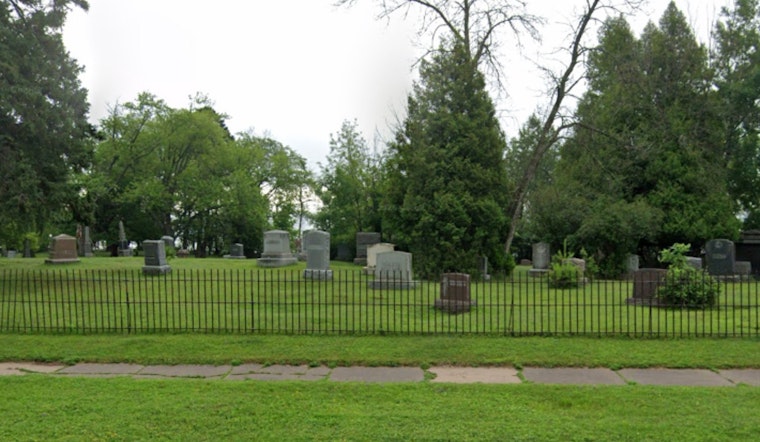
On Duluth’s Lake Superior shoreline, Scandia Cemetery is literally falling apart. The 19th‑century burial ground is slipping toward the water as erosion eats away at the bluff. Headstones have already slid downhill, and fragments of human remains have washed up on the beach below. County and city engineers say this is no longer a problem that routine mowing and minor repairs can address. After visitors discovered bones along the shore in 2024, local officials say they are again preparing to lobby state funders this year for a permanent fix.
The county frames the problem as an ethical, environmental emergency
In a formal funding request, St. Louis County stated that “the county recognizes that the continued exposure of human remains presents an ethical and environmental dilemma that requires action and a permanent solution,” and is asking for roughly $2.55 million for design work, easements, and a concrete retaining wall to shore up about 300 feet of shoreline. The county’s request emphasizes that a hardened wall, paired with riprap and regrading, would avoid the far more disruptive step of disinterring graves while still providing long‑term protection for the site. The technical approach and project schedule are laid out in the county’s submission to the Environment and Natural Resources Trust Fund, posted by LCCMR.
Engineers say a wall is the most durable option
County staff, working with consultants from LHB, have surveyed the eroding bank and concluded that a permanent retaining wall is the most cost‑effective and least invasive solution when compared with relocating burials or attempting large‑scale work from the water. The Duluth News Tribune reports that the county has already spent about $253,000 on preliminary engineering and that project estimates now range from roughly $2.3 million to $2.55 million, depending on permitting requirements and the price of securing easements. The Duluth News Tribune also notes that commissioners this month approved pursuing another round of state grant applications.
Private ownership complicates who pays and who acts
On paper, Scandia Cemetery belongs to a small private cemetery association that county officials say does not have the resources to take on a multi‑million‑dollar shoreline project. County materials point out that St. Louis County has no legal duty to repair privately owned burial grounds. Even so, the county is proposing to build, own, and maintain any new retaining wall, and to secure permanent easements that would allow inspections and ongoing upkeep. A detailed project packet from St. Louis County underscores that the goal is to preserve graves in place and avoid disinterment whenever possible.
Funding options and timeline
County leaders say they sought state support last year and came up empty. They plan to try again with the Environment and Natural Resources Trust Fund this cycle, while also exploring other state or bonding avenues. The county’s ENRTF submission anticipates design and permitting work in 2026 and, if funding comes through, a shift to construction in mid‑2027 with completion by mid‑2028. Phase I planning and smaller feasibility grants have already been authorized to keep the effort moving, according to the documents filed with LCCMR.
In the meantime, officials have fenced off the most vulnerable portions of the bluff and are urging visitors to stay away from the shoreline, citing safety concerns and respect for families with loved ones buried there. Northern News Now reported that county crews closed off affected areas in 2024, and county documents warn that if no structural fix is built, the long‑term plan would default to indefinite monitoring and the collection and storage of remains. Officials say that scenario would be both costly and traumatic for relatives.
For now, county engineers are focused on delivering a shovel‑ready design and lining up the state or federal dollars that would cover most of the construction cost. Local matching funds and permanent easements would still be required. Families with relatives at Scandia and visitors to nearby Glensheen can expect limited access to the most at‑risk sections of the bank until a stabilization project is funded and built.



