

























































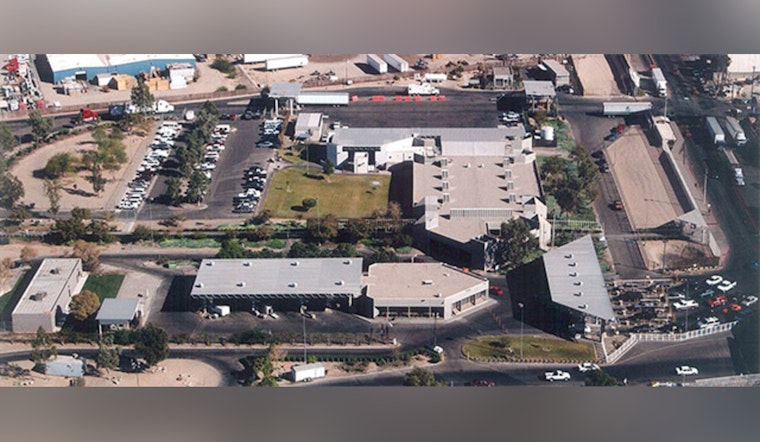
Relief is finally on the horizon for drivers inching toward the San Luis border crossing. Sixteen new northbound vehicle inspection lanes are set to come online this spring, effectively doubling the port’s capacity and promising shorter waits for motorists heading into the United States from Mexico. The upgrade is part of a multi‑hundred‑million‑dollar overhaul of the 1984-era facility designed to keep the crossing open and functioning throughout construction.
What’s opening and when
According to the General Services Administration, the project increases northbound lanes for privately owned vehicles from eight to 16 and boosts pedestrian inspection booths from 10 to 14. The agency lists the total budget at roughly $355.2 million and notes that the port currently handles about 3 million drivers and 2.5 million pedestrians each year. In other words, this is not a sleepy little crossing.
Green tech and pedestrian upgrades
Slides circulated by the city outline a net‑zero design that leans heavily on renewable power. The plans call for a roughly 1,885‑kilowatt solar array paired with a 1,200‑kVA battery storage system sized to keep the port running 24/7 without tapping the grid. The same project update shows a new 21,000‑square‑foot pedestrian inspection building that is expected to streamline foot‑traffic processing and add capacity, according to the city’s project slides.
Officials say capacity gains will be immediate
Local and federal officials are selling the new vehicle lanes as the near-term win for commuters, shoppers, and cross‑border workers who battle daily backlogs. As reported by KTAR, Carlos Gonzalez said the expansion "will significantly increase inspection capacity, strengthen border security, support economic growth and provide a more efficient crossing experience," while Andrew Heller called the work "an investment in the future of Arizona and the U.S.–Mexico border region." Translation: this is as much about commerce as it is about cutting down the wait.
Roadwork, local economy and travel impacts
City and county leaders say the improvements should reduce peak‑hour congestion and give a boost to the region’s agriculture and retail sectors, both of which rely heavily on cross‑border traffic. Road projects tied to the port expansion, such as upgrades to César Chávez Boulevard to handle higher approach volumes, were reported by KYMA as part of the local build‑out.
How travelers should prepare
The General Services Administration indicates the new vehicle facilities are slated to open in spring 2026, with pedestrian upgrades and additional phases continuing through spring 2029. Drivers should brace for shifting traffic patterns as new exits at William Brooks Avenue and Second Avenue come online and temporary lane changes move around during construction. For current closures and travel advisories, check the GSA.





