

























































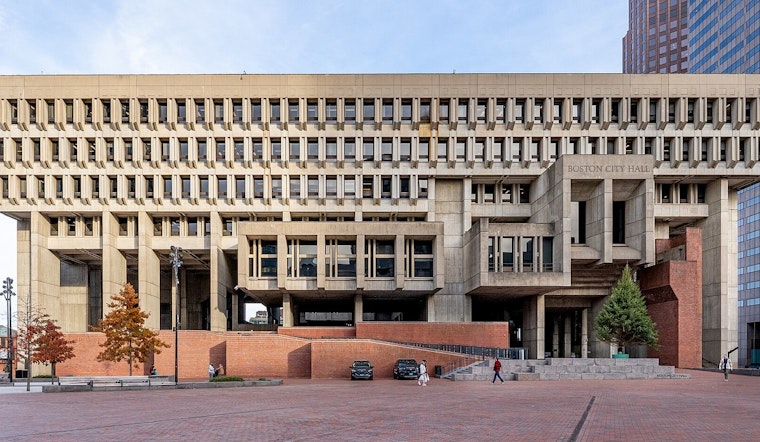
Boston City Council is gearing up for a potential citywide crackdown on kratom, moving toward an ordinance that could ban sales inside city limits after an emotional public hearing on Monday. Councilors, addiction experts, and grieving relatives described the widely available product as dangerous and virtually unregulated. A mother who testified said her 25-year-old son died after consuming what she believed was a marketed kratom product, and council sponsors signaled they plan to work with health officials on an ordinance they can actually enforce. Options on the table range from tighter labeling and age limits to a full retail ban.
The push grew out of an order filed Jan. 28, listed as Docket #0175, which asked the Committee on Public Health, Homelessness and Recovery to "discuss the regulation of Kratom in the City of Boston" and names Councilors John FitzGerald and Edward M. Flynn as sponsors, according to the official council filing. The City of Boston notice set the hearing for 2 p.m. in the Iannella Chamber and invited city departments and members of the public to weigh in.
At Monday's hearing, relatives and panelists urged councilors to move fast. In testimony reported by the Boston Herald, Holly Trouville said her son Tyrell, a 25-year-old who served in the U.S. Army Reserve, died on Feb. 6, 2024, from kratom toxicity. She said the product he consumed was marketed as "sugar-free, alcohol-free, caffeine-free" and as containing less than 2% 7‑OH. Councilor John FitzGerald told the panel he would work with the Boston Public Health Commission to craft ordinance language, while panelists warned that kratom remains widely available online because it is not regulated at the state or federal level.
Federal regulators target concentrated 7‑OH
Federal regulators have already trained their sights on concentrated kratom derivatives. In July 2025 the U.S. Food and Drug Administration recommended that certain products containing 7‑hydroxymitragynine (7‑OH) be scheduled under the Controlled Substances Act and warned that concentrated 7‑OH products, often sold as gummies, vapes, or liquids, can be especially potent. The FDA announcement emphasized the agency's focus on isolated, concentrated 7‑OH rather than traditional kratom leaf.
Patchwork of local rules and state bills
Across Massachusetts, local officials are already testing their own approaches. The Lowell Board of Health banned kratom in December 2024, and other communities have debated similar measures. Coverage from WBZ NewsRadio and CBS Boston shows municipal bans and hearings are becoming common as state lawmakers weigh broader regulation. One proposal on Beacon Hill, House Bill H.2454, would require labeling and testing, prohibit kratom products with high levels of 7‑OH, and subject noncompliant retailers to fines and administrative penalties. The Massachusetts Legislature posting lays out draft language on labeling requirements, potency limits, and enforcement tools.
Supporters of a Boston ban argued the city should not wait for a slow state process to play out. Peter Barbuto, CEO of the Gavin Foundation and a witness at the hearing, told councilors that kratom is "a harmful, highly addictive substance" that is sometimes marketed as a wellness product, according to local reporting. Advocates for kratom counter that natural leaf products can help some people taper off opioids, a point state lawmakers and public health officials say highlights the need for careful rules rather than sweeping assumptions.
From a legal standpoint, any new ordinance could follow the model of past local controls, such as Boston's synthetic cannabinoid ban, and would likely assign public health staff and inspectors to enforce any sales restrictions or labeling rules. The council's hearing notice invited both city departments and residents to participate, and the committee recorded the meeting for the public record, according to the council posting. The City of Boston notice specifies that written comments and testimony will be included in the record while the committee reviews options.
What is next: the committee will compile testimony and could draft ordinance language in the coming weeks. No vote was taken at Monday's hearing, and sponsors said next steps will depend on staff analysis and public input. Residents and retailers can track the docket and watch committee recordings on the City of Boston website as the process moves along. At the state level, lawmakers are still debating bills that would regulate or restrict kratom products, and the parallel tracks of local ordinances and possible statewide rules make this a developing fight to watch in Boston and beyond.





.jpg)